Tossing disposable sheets into every laundry cycle leaves behind an invisible waxy residue that coats dryer vents, ruins towel absorbency, and degrades performance fabrics. In the ongoing debate over dryer balls vs. dryer sheets, reusable wool spheres eliminate these chemical coatings entirely while surviving up to 1,000 loads of laundry. While pulling warm, scented clothing from the dryer is an everyday comfort, standard single-use sheets come with hidden maintenance costs and potential appliance hazards. Understanding the physical mechanics behind both options reveals why one habit keeps fabrics intact while the other silently damages your wardrobe and your home.
Due to high traffic on this story, please verify you are not a bot to instantly unlock the remaining content. Takes only 5 seconds!
Verify & Continue ReadingThe Hidden Mechanics of Dryer Sheets
A standard dryer sheet consists of a thin sheet of polyester or fiber cellulose soaked in a combination of synthetic fragrances, liquid softeners, and lubricants. When exposed to heat during the tumble cycle, this coating melts and transfers directly onto the surface of your clothing. This melted layer lubricates fabric fibers, effectively neutralizing static electricity and leaving materials feeling slick to the touch.
However, because these sheets are purely single-use items, frequent laundry routines steadily increase household expenditure and add continuous synthetic waste to landfills. More critically, that same slick coating accumulates over time inside the dryer drum and across your garments, creating performance issues that standard detergents struggle to wash away.
Residue Buildup and Safety Hazards
The waxy chemicals embedded in dryer sheets do not distinguish between basic cotton and technical materials. Over repetitive cycles, the layer seals fabric fibers, drastically reducing the natural absorbency of cotton bath towels and stripping moisture-wicking capabilities from modern athletic wear. These synthetic lubricants also deposit a microscopic film across the lint trap mesh, restricting standard airflow.
According to Kevin Busch, president of Dryer Vent Wizard, this gradual blockage presents a distinct mechanical threat to the home. “Dryer sheets leave a waxy buildup on the lint screen and can lead to possible fires. If you use dryer sheets, washing the lint screen every three to six months is highly recommended.” Routine brushing with warm, soapy water and an old toothbrush is required to dissolve this stubborn film and maintain proper appliance ventilation.
How Wool Dryer Balls Work
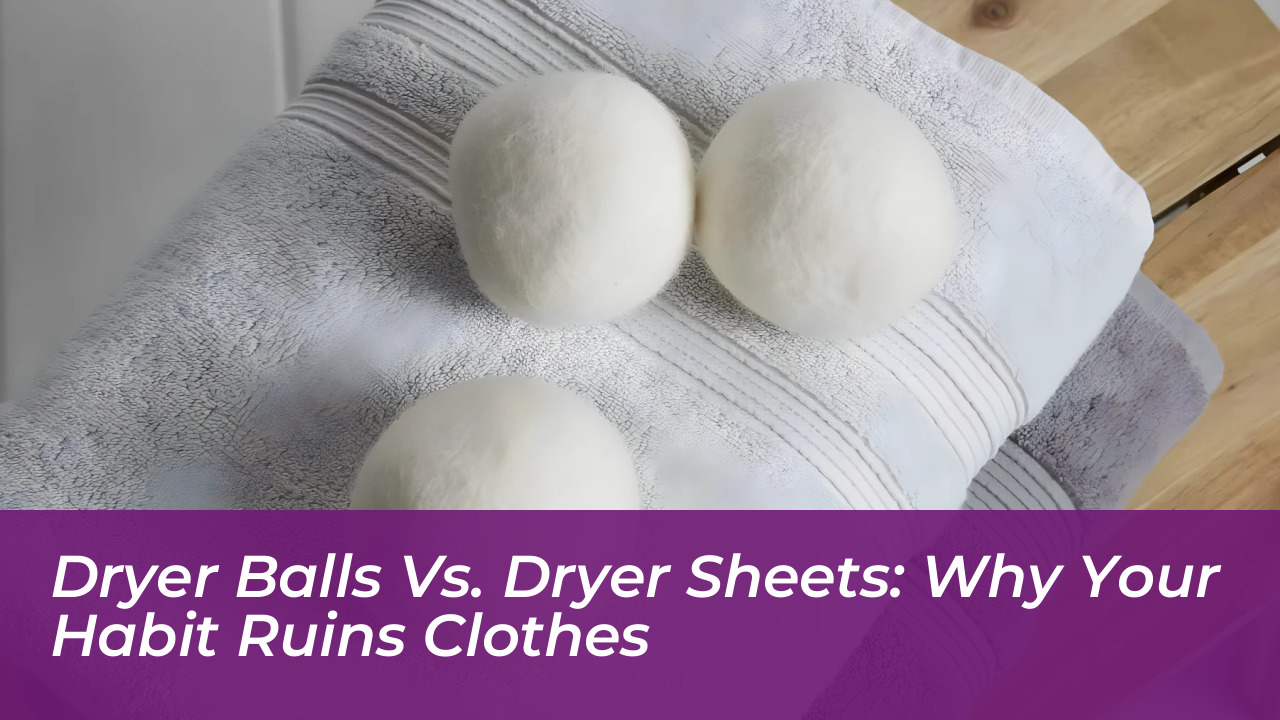
Constructed from tightly compressed wool, natural dryer balls are slightly larger than a standard tennis ball and operate through mechanical action rather than chemical transfer. As the dryer drum rotates, the dense spheres bounce between layers of wet clothing to physically break up clumps. This kinetic motion continually creates open pathways for heated air to circulate.
Kathy Cohoon, an area representative with professional cleaning service Two Maids and a Mop, highlights the functional advantages of natural materials over synthetics. “Wool dryer balls are popular due to their natural ability to absorb moisture and improve airflow, leading to faster drying times and enhanced softening of fabrics compared to synthetic alternatives.” Because wool spheres contain zero chemical softeners, artificial perfumes, or synthetic additives, they serve as a naturally hypoallergenic solution for individuals prone to contact dermatitis or perfume sensitivity.
Feature Comparison: Sheets vs. Balls
Choosing the right laundry conditioning method depends on whether you prioritize instant artificial fragrance or long-term efficiency and appliance longevity.
- Lifespan: Sheets last for 1 cycle; wool balls last up to 1,000 loads (2 to 5 years).
- Chemical Footprint: Sheets rely on chemical softeners and synthetic fragrances; balls use zero chemical additives.
- Appliance Impact: Sheets coat lint filters in wax and restrict airflow; balls leave zero residue in vents.
- Fabric Safety: Sheets damage activewear and reduce towel absorbency; wool balls protect moisture-wicking weaves.
- Acoustic Noise: Sheets run silently; balls create noticeable thumping during early tumbling cycles.
Correct Application and Maintenance Steps
Achieving maximum efficiency with wool dryer balls requires matching the quantity of balls to the exact size of your wet laundry load. Overpacking the drum restricts the physical movement necessary for separating damp fabric.
- Small to Medium Loads: Toss in three wool dryer balls to allow adequate bouncing space.
- Large Loads: Use five to six balls to maintain proper air separation across heavy fabrics.
- Custom Fragrance: Add a few drops of your preferred pure essential oil directly onto the wool before tumbling.
Over months of constant use, wool fibers attract loose pet hair, gather lint, and lose structural density. Follow this simple routine every one to two months to restore performance:
- Clear loose hair and surface lint from each ball using an adhesive lint roller.
- Place the balls inside a secure mesh laundry bag and run them through a gentle wash cycle.
- Dry thoroughly either on a high-heat dryer setting or via direct open-air drying to reset the wool fibers.
Once wool balls begin to unravel, shred, or lose their natural firmness, replace them to maintain balanced drum rotation.
Chemical-Free Softening Alternatives
For households seeking softer laundry without purchasing specialty accessories, common kitchen staples deliver comparable results. Adding one cup of distilled white vinegar to the washer’s final rinse cycle dissolves mineral stiffness and strips detergent residue without leaving behind any sour aroma. Alternatively, dampening a small cotton washcloth with white vinegar and tossing it directly into the tumble cycle cuts down static cling naturally. Liquid fabric softeners remain an option in the rinse basin, though they share the same wax-accumulating tendencies as traditional sheets.
Re-evaluating your everyday laundry habits protects your wardrobe investments while reducing fire risks inside appliance exhaust vents. Inspect your dryer lint trap under running water to see if water pools on the mesh-a clear indicator of waxy residue buildup. Share your experiences with us: Have you noticed faster cycle times and better towel absorbency after switching away from single-use sheets? Leave your thoughts in the comments below and tell us your favorite methods for keeping laundry fresh.
Frequently Asked Questions
Do wool dryer balls completely eliminate static electricity?
Wool dryer balls significantly reduce static cling by physically separating clothing items to limit friction, and by retaining natural moisture that elevates dryer humidity. However, in extremely dry winter climates, minor static may still occur, which can be mitigated by lightly misting the balls with water before starting the cycle.
Can dryer sheets permanently ruin athletic wear and towels?
While a single use won’t ruin your clothes, repeated exposure to the waxy residues from dryer sheets leaves a waterproof coating on fibers. This ruins the moisture-wicking technology in synthetic athletic gear and strips away the absorbency of cotton bath towels.
How many dryer loads will a single set of wool dryer balls last?
High-quality 100% wool dryer balls typically survive between 500 to 1,000 loads of laundry, translating to roughly two to five years of regular household use before they begin to shed or unravel.
Are plastic dryer balls as effective as wool dryer balls?
Plastic dryer balls use rigid spikes to agitate clothing and create separation, successfully reducing drying time. However, they lack the moisture-absorbing properties of wool, meaning they do not help control static electricity as effectively.
How can I add a fresh scent to my laundry using dryer balls?
Because wool dryer balls are completely unscented, you can easily customize your laundry scent by placing 3 to 5 drops of your favorite pure essential oil (such as lavender or lemon) onto each ball and letting them dry for an hour before tossing them into the dryer load.