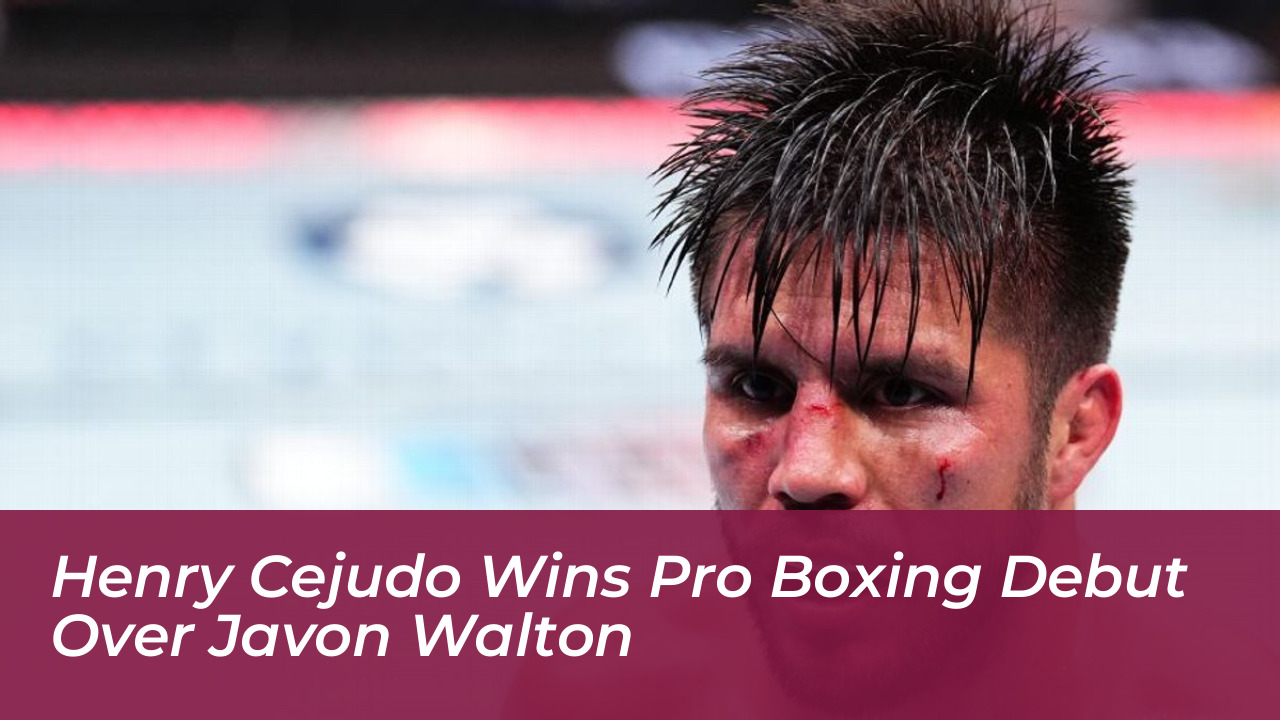
Former UFC champion and Olympic gold medalist Henry Cejudo successfully added professional boxer to his combat sports resume on September 26, 2026. Facing actor and young boxing prospect Javon “Wanna” Walton, the legendary combat sports competitor secured a hard-fought victory in his debut. The match headlined a high-profile Misfits Boxing card at the James L. Knight Center in Miami, Florida, drawing global attention from both MMA purists and crossover boxing fans.
- Introduction to the Historic Bout
- Tale of the Tape: Cejudo Versus Walton
- Physical Disparities and Stance Dynamics
- Short-Notice Opponent Shuffle
- Tactical Breakdown of the Four-Round Welterweight Fight
- Round-by-Round Progression
- The Scorecards and Judges Decision
- Post-Fight Reactions and Future Horizons
- Cejudo Assesses His Performance and Calls Out Shabazz
- Walton Proves His Mettle Despite the Defeat
- Frequently Asked Questions
- Who won the boxing match between Henry Cejudo and Javon Walton?
- What weight class did they fight in?
- Why did Javon Walton take the fight on short notice?
- What is Javon Walton background outside of boxing?
- What is Henry Cejudo combat sports background?
Introduction to the Historic Bout
Henry Cejudo built his legendary reputation inside the wrestling room and the MMA cage. Transitioning to the squared circle at age 39 presents unique physical and technical hurdles. Yet, Cejudo embraces challenges that test his combat grit. This bout marks his official entry into professional boxing, shifting from the small gloves of mixed martial arts to standard boxing gloves and Queensberry rules.
The James L. Knight Center in Miami served as an electric backdrop for this crossover clash. Fans packed the venue to witness a rare blend of athletic royalty and modern entertainment culture. Misfits Boxing consistently delivers spectacles that merge combat sports with mainstream personalities, and this main event captured the absolute peak of that promotional strategy.
When the final bell sounded, the judges delivered a split decision that reflected a tightly contested four-round war. Cejudo walked away with the victory, proving that elite fight IQ translates across disciplines. However, the path to victory required overcoming early adversity against a hungry, youthful opponent who refused to back down.
The energetic crowd roared as both fighters stepped through the ropes. Celebrities and athletes filled the ringside seats to watch the spectacle unfold under the bright arena lights. High-stakes boxing matches require absolute mental focus from the opening bell to the final conclusion. Both camps spent months preparing strategic game plans designed to expose opponent weaknesses and maximize individual strengths.
Tale of the Tape: Cejudo Versus Walton
Physical Disparities and Stance Dynamics
Henry Cejudo entered the ring at age 39 with an orthodox stance and an unmatched combat pedigree. His background as an Olympic gold medalist and a two-division UFC champion provides him with elite spatial awareness and mental toughness. However, boxing requires specialized footwork and defensive mechanics that differ significantly from wrestling takedown defense.
Opposing him was Javon “Wanna” Walton, a 20-year-old talent balancing a burgeoning professional boxing career with a successful acting footprint. Walton utilized a southpaw stance and held a defining three-inch height and reach advantage over the shorter Cejudo. This created an intriguing clash between wrestling royalty and a modern hybrid athlete.
The stylistic matchup added layers of intrigue to the card. Cejudo needed to close the distance against a longer fighter, while Walton aimed to manage range and utilize southpaw angles. These physical disparities shaped the tactical narrative of every single round.
Combat sports history proves that orthodox versus southpaw matchups always present unique geometric puzzles. Fighters must constantly manage lead foot battles to avoid devastating counter punches. Cejudo relied on his legendary wrestling explosiveness to bridge the gap against a naturally taller adversary.
Short-Notice Opponent Shuffle
The Miami main event nearly looked entirely different. Walton accepted the fight on short notice on September 15, stepping in to replace the original opponent, Nurideen Shabazz. Shabazz withdrew from the card due to a severe shoulder injury, throwing the initial fight camp plans into disarray.
Adjusting training camps on short notice places immense stress on any athlete. Walton seized the opportunity of a lifetime, stepping up to fight a combat sports legend without a full traditional preparation window. Cejudo also had to pivot quickly, changing his tactical approach from facing an orthodox fighter to neutralizing a dangerous southpaw.
Training camps usually last eight to twelve weeks for professional boxing bouts. Short-notice replacements force fighters to rely on core muscle memory and natural instincts. Both men proved their professionalism by making weight and delivering an entertaining fight despite the chaotic buildup.
Tactical Breakdown of the Four-Round Welterweight Fight
Round-by-Round Progression
The opening round favored the younger competitor. Walton leveraged his reach and southpaw angles to control the distance, taking the frame on aggression and clean scoring. Cejudo struggled to solve the southpaw jab early, resulting in accidental clashes of heads as both men fought for positioning.
Cejudo made intelligent corner adjustments before the second round began. The wrestling standout started ducking underneath the southpaw jab and firing sharp counter right hands. Walton experienced a noticeable dip in output as Cejudo shortened the distance and neutralized those troublesome angles.
Round three featured relentless forward pressure from Cejudo. He disrupted Walton rhythm and landed clean scoring blows that shifted the momentum of the bout. Walton fought back valiantly, but the relentless pace imposed by the former UFC champion began to wear down the younger athlete.
The fourth and final round erupted into high-octane exchanges. Both competitors traded heavy punches in the closing minutes, but Cejudo sealed the judges nod through effective counter-punching and ring generalship. The final bell signaled the end of a fiercely competitive welterweight battle.
Corner communication remains vital during high-pressure professional bouts. Coaches analyze defensive vulnerabilities between rounds and issue direct instructions to alter the tactical momentum. Cejudo listened intently to his cornermen, which ultimately paved the way for his successful comeback.
The Scorecards and Judges Decision
The bout went to the official scorecards, resulting in a split decision. Two ringside judges scored the contest 39-37 in favor of Cejudo, awarding him the professional victory. The third judge submitted an identical 39-37 scorecard in favor of Walton.
Cejudo successfully adapted his combat mindset to fit professional boxing scoring criteria. Instead of relying on control time or takedowns, he utilized ring pressure, volume, and clean counter right hands to sway the majority of the judging panel.
Professional boxing scoring heavily emphasizes clean punches, effective aggressiveness, and defense. Judges evaluate each round independently based on these strict commission guidelines. Close rounds often lead to split decisions that divide fans and boxing pundits alike.
Post-Fight Reactions and Future Horizons
Cejudo Assesses His Performance and Calls Out Shabazz
During his candid post-fight interview, Cejudo admitted that the first round did not go according to plan. He credited Walton for utilizing his length effectively early on. However, Cejudo praised his own ability to make mid-fight adjustments and take control of the later rounds.
Despite securing the victory, Cejudo expressed a desire to settle unfinished business. He used his microphone time to call out Nurideen Shabazz for a future matchup once the original opponent fully heals from his shoulder injury. Cejudo clearly wants to test himself against a traditional opponent in his next outing.
Veterans like Cejudo view every single fight as a learning experience. Winning a professional boxing debut at age 39 expands his legendary athletic resume. Fans now eagerly anticipate his next move inside the squared circle.
Walton Proves His Mettle Despite the Defeat
Walton saw his professional boxing record shift to 3-1-1 following the courageous short-notice test. Stepping up to face an elite combat sports veteran at age 20 demonstrates immense competitive drive. Industry analysts and fans offered widespread praise for Walton performance under extreme pressure.
Rather than diminishing his stock, the competitive loss highlights Walton willingness to take high-risk opportunities. His ability to push a legend like Cejudo over four rounds proves that he belongs in the professional boxing conversation as he continues to develop his skills.
Balancing a professional acting career with serious athletic training requires exceptional discipline. Walton manages multiple demanding professions while maintaining a high level of athletic conditioning. His bright future in combat sports remains entirely intact.
Frequently Asked Questions
Who won the boxing match between Henry Cejudo and Javon Walton?
Henry Cejudo won the professional boxing match by split decision. Two judges scored the bout 39-37 for Cejudo, while a third judge scored it 39-37 for Walton.
What weight class did they fight in?
The bout took place in the welterweight division, serving as the main event for the Misfits Boxing card in Miami, Florida.
Why did Javon Walton take the fight on short notice?
Walton stepped in as a replacement opponent on September 15 after the original opponent, Nurideen Shabazz, withdrew from the card due to a shoulder injury.
What is Javon Walton background outside of boxing?
Javon Walton is widely recognized for his successful acting career, most notably starring in the hit television series Euphoria alongside other major film and television projects.
What is Henry Cejudo combat sports background?
Henry Cejudo is an Olympic gold medalist in freestyle wrestling and a former two-division champion in the Ultimate Fighting Championship.