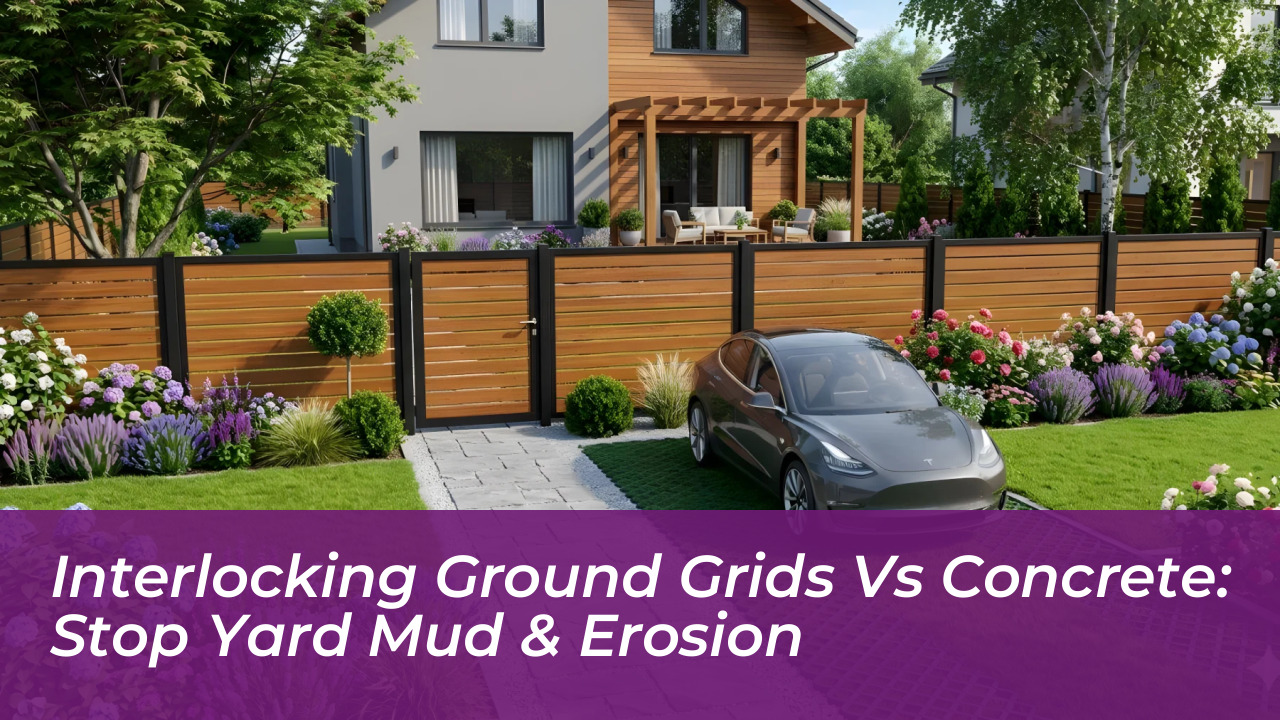
Every cold and rainy season brings the same frustrating reality to homeowners: rutted parking spots, saturated lawns, and persistent mud tracked inside the house. Traditional paving methods like poured concrete solve the mud issue, but they require heavy machinery, long curing periods, and complex excavation work. More importantly, standard rigid slabs are notoriously vulnerable to winter frost-heave damage. Fortunately, modern interlocking ground grids-commonly called cellular confinement systems or permeable pavers-offer a superior, DIY-friendly alternative that outperforms concrete while keeping surfaces 100% porous.
Due to high traffic on this story, please verify you are not a bot to instantly unlock the remaining content. Takes only 5 seconds!
Verify & Continue ReadingManufactured from high-density, durable plastics such as recycled polyethylene, these modular panels snap together seamlessly to create a continuous load-distributing matrix. When placed over a properly prepared sub-base, the hollow honeycomb cells disperse weight evenly across the entire footprint, protecting grass root systems and preventing gravel infill from scattering or sinking into underlying dirt.
The Engineering Behind Interlocking Ground Grids
The core principle of a geocell or grid stabilization system is lateral confinement. When load is applied to fill material within a cell, the material attempts to move sideways but encounters the rigid cell wall. This creates passive earth pressure that dramatically increases the load-bearing capacity of whatever aggregate or soil you choose to use.
A common misconception is that a durable parking pad requires an impervious concrete slab. In contrast, open-cell matrix grids transfer vehicular load across the stone sub-base while keeping the surface entirely porous. Surface runoff drops to zero because rainwater filters straight down into the subsoil. Homeowners avoid standing water hazards without needing to install complicated underground trench drains or concrete curbs.
Research published in civil engineering journals confirms that cellular confinement systems reduce soil erosion by 45% to 70% on open surfaces, and up to 93% when combined with proper vegetation. , data shows that using just 3 inches of confined gravel provides the same structural load-bearing strength as 12 inches of traditional loose gravel, delivering a 4:1 performance ratio.
Grass Pavers vs. Traditional Concrete Surfaces
Standard concrete remains popular for driveways, yet seasonal freeze-thaw cycles present severe structural challenges. Trapped groundwater expands as it freezes beneath rigid slabs, causing unsightly surface cracks, shifting seams, and expensive repairs over time. Flexible grid mats, however, adapt naturally to minor soil swelling and settling.
The table below outlines how modular grids compare directly with poured slabs across key outdoor design factors:
- Primary Materials: Heavy-duty recycled polyethylene vs. Portland cement mix
- Drainage Method: 100% permeable vertical drainage directly into the soil bed
- Frost Resistance: High; flexible matrix adjusts to subsoil freeze-thaw cycles
- Installation Labor: DIY-friendly hand placement without specialized heavy machinery
- Finish Options: Lush mowable grass turf or clean decorative crushed stone
- Load Capacity: Engineered to support daily passenger vehicle traffic and light trucks
Required Materials and Equipment
Completing a durable installation requires basic ground-prep supplies rather than specialized trade equipment:
- Permeable Grid Panels: Calculated to match the total square footage of the planned path or parking pad.
- Geotextile Membrane: Heavy-duty, water-permeable landscaping fabric that separates native soil from the stone base.
- Base Aggregate: Coarse crushed stone (0.6 to 1.25 inches) for the primary load-bearing foundation.
- Bedding Layer: Fine crushed gravel or coarse sand for final leveling before panel placement.
- Essential Tools: A square shovel, spade, wheelbarrow, standard utility knife or hand saw for cutting edges, and a manual tamper or vibrating plate compactor.
Step-by-Step Installation Guide
Transforming a muddy pathway, dog run, or parking bay into a solid, all-weather surface takes five distinct stages that can easily be accomplished over a single weekend:
1. Excavation and Site Grading
Dig out the topsoil to a depth of 3 to 6 inches for pedestrian walkways, or 6 to 10 inches for vehicular driveways to accommodate the heavier load-bearing base. Maintain at least a 2% slope away from structures for proper runoff.
2. Laying the Geotextile Membrane
Roll out durable landscape fabric across the excavated flat surface. This permeable barrier prevents crushed aggregate from sinking into underlying mud while permanently suppressing weed growth. Skipping this underlayment is the single most common installation mistake.
3. Installing the Base Layer
Spread coarse crushed rock over the fabric and compact it thoroughly with a plate compactor or hand tamper. Spread a thin, level layer of fine grit or coarse sand across the top to ensure a flat working plane.
4. Snapping Grids into Place
Align the cellular panels starting from one corner, locking their snap-fit connections or T-slug mechanisms together. Trim edge units using a utility knife or handsaw to conform to curved landscaping borders or fences.
5. Filling the Honeycomb Matrix
For a clean, zero-maintenance gravel surface, fill the cells to the top rim with angular crushed gravel (such as 3/8-inch to 3/4-inch stone) and add a 1/2-inch cover layer, then compact. For a green lawn appearance, pack the openings with quality topsoil, tamp lightly, and broadcast hardy grass seed.
Top Residential Applications for Ground Grids
Because of their modular versatility, ground stabilization grids solve multiple property challenges far better than poured concrete:
- Driveway Extensions & Parking Pads: Create stable parking for cars, RVs, boats, or trailers without cracking under heavy tire weight.
- Shed Foundations: Build level, well-drained bases for storage sheds or greenhouses without pouring concrete footers.
- High-Traffic Dog Runs: Eliminate muddy pet areas that track dirt into homes while providing firm, comfortable footing.
- Hillside Slope Stabilization: Lock soil and aggregate on slopes up to 45 degrees to prevent washout and erosion.
- Garden Walkways: Design neat, rut-free paths that remain entirely usable in any weather condition.
By choosing interlocking permeable ground grids, homeowners can permanently eliminate yard mud, reduce material costs by up to 75% compared to thick aggregate beds, and bypass the high expense and cracking risks of poured concrete.