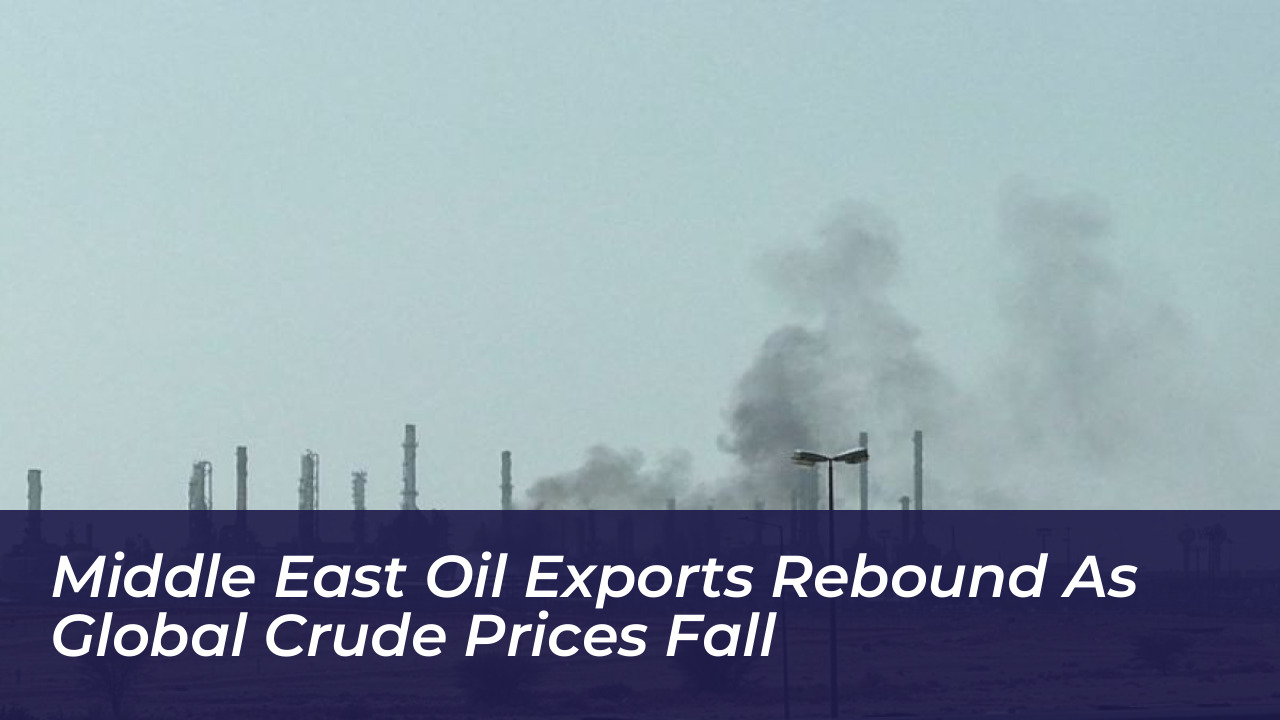



Middle Eastern crude oil exports rebounded to roughly 81% of pre-war levels in September. This recovery was driven by a significant surge in Saudi Arabian shipments, which helped lower global crude futures by nearly $2 at the start of October. The recovery in physical supply has begun to alleviate immediate market concerns, even as geopolitical friction and maritime transit risks persist.
On October 5, Brent crude futures dropped $1.93, or 1.89%, to settle at $100.32 a barrel. U.S. West Texas Intermediate (WTI) fell $1.68, or 1.84%, to close at $89.43 a barrel. The price retreat followed reports that crude flows from the Persian Gulf averaged between 18.6 million and 19.2 million barrels per day through the final weeks of September.
Saudi Shipments Lead Regional Recovery
The primary driver behind the export rebound was a sharp increase in Saudi Arabian shipments. Saudi crude exports rallied from a low of 2.45 million to 4.2 million barrels per day in August to approximately 6.6 million to 6.9 million barrels daily in September.
This operational increase successfully compensated for production and transit losses across other regional producers. Saudi Arabia achieved these gains by heavily utilizing alternative transport methods. These methods include the East-West Pipeline to the Red Sea port of Yanbu, shuttle tankers, and ship-to-ship transfers designed to bypass vulnerable maritime chokepoints like the Strait of Hormuz.
Global Market Impact and Strategic Reserves
The rebound in Middle Eastern crude flows coincided with broader international efforts to stabilize energy markets. Group of Seven (G7) nations agreed to release 100 million barrels of diesel and crude oil from emergency reserves to combat severe fuel inflation and tighten product balances.

Market analysts note that while crude supplies are normalizing, downstream refined products-particularly diesel-remain constrained due to regional refinery outages and infrastructure damage. Consequently, while crude futures have dipped below recent peaks, global refining margins and product prices continue to experience heightened volatility.
Ongoing Geopolitical and Shipping Risks
Despite the positive trajectory of export volumes, industry observers caution that higher physical shipments do not equate to a secure maritime environment. Commercial vessels transiting the Persian Gulf and the Strait of Hormuz continue to face operational hazards, elevated freight rates, and security threats.
Tanker transit data indicates that industry participants are increasingly absorbing higher operational costs. They are adopting complex logistical workarounds to maintain the flow of oil to international buyers, ensuring that basic supply channels remain open despite ongoing regional conflicts.