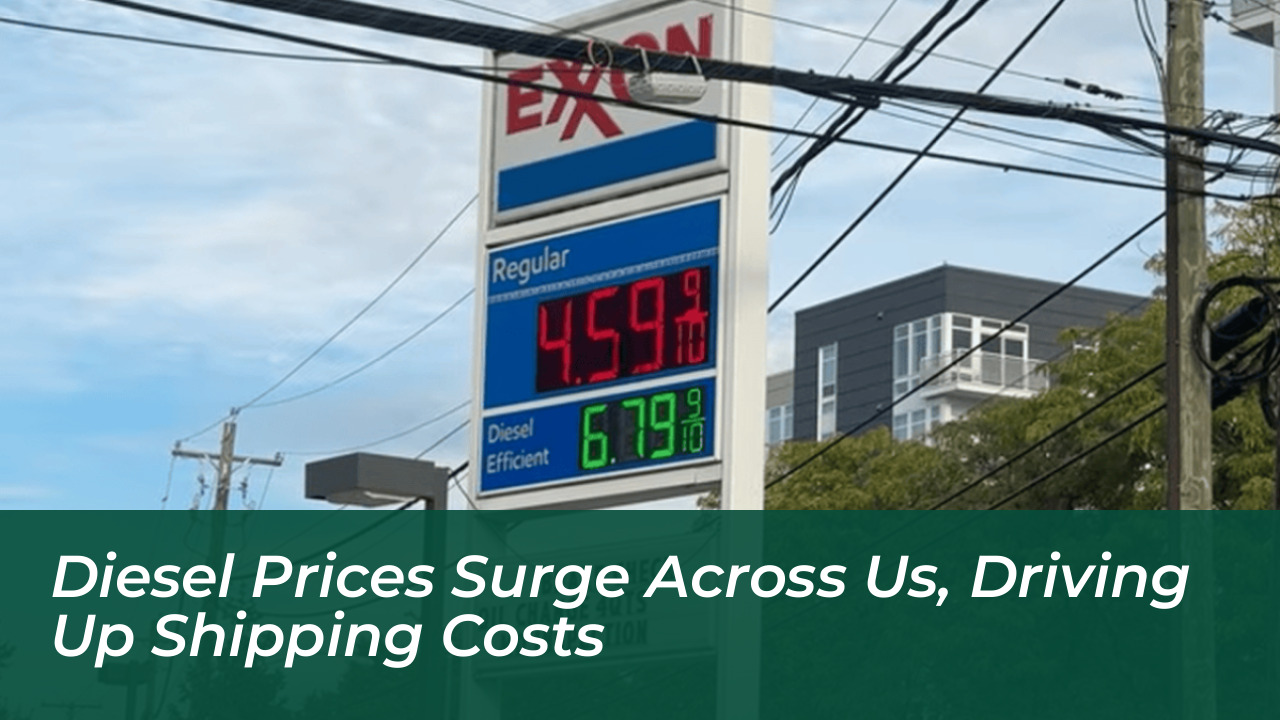


US diesel prices reached an average of $6.30 per gallon, marking a sharp increase from $5.90 a month earlier and $3.68 a year ago, according to AAA data. This ongoing surge in fuel costs is rippling through the economy and driving up expenses for commercial transportation, farming, and food distribution nationwide.
The national average remains just below the record high of $6.53 set on September 22, while regional figures vary significantly. In California, the average price for diesel climbed to $8.35 per gallon. Overall, diesel prices are approximately 75% higher than they were a year prior, according to USA Today reports.
Diesel powers roughly 76% of commercial vehicles, compared with only about 3% of passenger vehicles. Because of this, the fuel acts as a foundational cost throughout the freight and agricultural sectors. Economists note that while gasoline price fluctuations are immediately visible to everyday drivers at the pump, diesel increases operate more discreetly. These costs gradually infiltrate the prices of consumer goods, groceries, and retail products over time.
Impact on Freight, Shipping, and Retail Supply Chains
Virtually all heavy trucks, freight trains, and cargo ships rely on diesel fuel to transport manufactured goods and produce to retail shelves. Major trucking companies and freight rail operators routinely pass increased operating expenses on to manufacturers and retailers through fuel surcharges. Those businesses then adjust retail pricing to offset higher logistics costs.
Analysts point out that trade routes are largely fixed, meaning shipping companies cannot easily shorten distances to conserve fuel. As a result, higher diesel input prices are absorbed across the supply chain and ultimately passed down to consumers. Goldman Sachs research indicates that these elevated transportation and production expenses will likely keep pressure on overall inflation figures through the upcoming quarters.
Consequences for Agriculture and Food Prices
Beyond transportation, diesel is a critical energy input for modern farming operations. It powers tractors, irrigation systems, and harvesting equipment. The current price spike coincides with the fall harvest season, raising operational costs for farmers who must purchase fuel in bulk.
Financial institutions estimate that fuel accounts for between 5% and 10% of total input costs across major crops. Consequently, higher diesel expenses directly translate into elevated food production costs. This threatens to push grocery store prices higher in the months ahead as harvested crops are processed, packaged, and distributed to markets.
Government Actions and Strategic Reserves
In response to mounting economic pressures, federal and international leaders have initiated steps to increase fuel availability. The Group of Seven (G7) nations agreed to a substantial release of strategic diesel reserves to combat soaring market prices. Additionally, executive measures have temporarily permitted broader usage of alternative diesel supplies-such as red-dyed diesel traditionally reserved for agricultural operations-in an effort to stabilize commercial markets and provide relief to consumers.