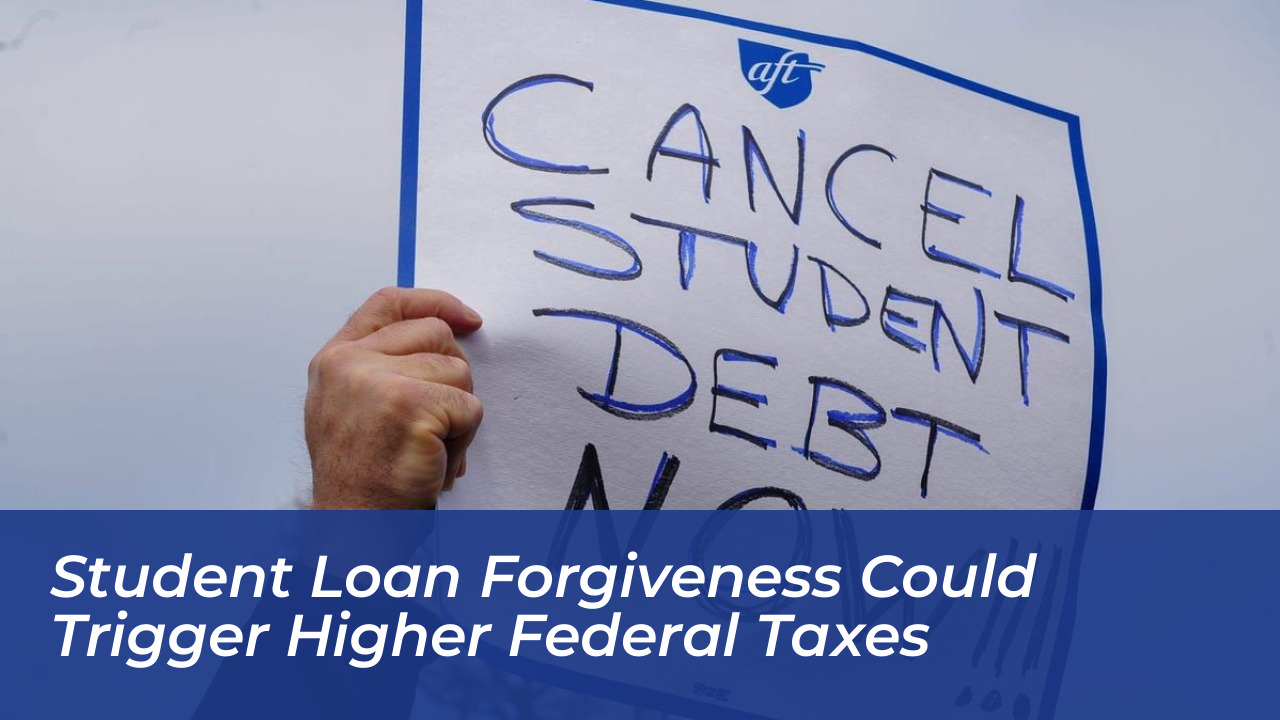


Millions of Americans pursuing federal student loan forgiveness face the prospect of substantial federal tax bills following the expiration of a temporary tax exemption at the end of 2025. A study published by the nonprofit advocacy group Protect Borrowers warns that this policy change could increase tax burdens for as many as 3 million middle- and working-class families over the next decade.
The temporary exemption, enacted by Congress under the American Rescue Plan Act of 2021, excluded canceled federal student debt from federal income taxes, including balances forgiven through income-driven repayment (IDR) plans. Because Congress did not extend or make the provision permanent, qualifying canceled debt is once again treated as taxable income under federal law. This shift can significantly increase annual tax liabilities and potentially reduce eligibility for vital tax credits.
According to Protect Borrowers, nearly 13 million Americans, representing almost half of all federal student loan borrowers currently in repayment, are enrolled in IDR plans and making steady progress toward potential debt cancellation.

The Return of the Student Loan Tax Bomb
Under Department of Education IDR plans, which were originally established in the 1990s, borrowers have their monthly payments capped at a share of their discretionary income. Any remaining loan balance is then excused after a specific period, typically 20 or 25 years. With millions of participants approaching these milestone years, financial experts note that the return of taxable forgiveness, often referred to as the “tax bomb,” requires careful and proactive planning.
The financial impact can be severe depending on a borrower’s income bracket and loan size. Higher education expert Mark Kantrowitz notes that the average loan balance for borrowers enrolled in an IDR plan sits at approximately $57,000. For an individual in the 22% tax bracket, having that amount forgiven would trigger an immediate federal tax burden of more than $12,000. Lower earners falling into the 12% tax bracket would still face an additional tax bill of around $7,000. Additionally, borrowers may incur supplementary state tax liabilities depending on where they live.
Despite the added tax liability, financial professionals emphasize that forgiveness is almost always financially advantageous. Paying taxes on a fraction of a forgiven balance is generally far less expensive than paying off the entire multi-thousand-dollar principal balance.
Exceptions and Protected Programs
Not all forms of federal student loan forgiveness trigger tax liabilities. Certain relief pathways remain permanently or conditionally exempt from federal income taxation:
- Public Service Loan Forgiveness (PSLF): Wipes out remaining federal loan balances after 120 qualifying monthly payments for government and non-profit employees. PSLF remains permanently tax-free under federal law.
- Teacher Loan Forgiveness: Qualifies eligible educators working in low-income schools for up to $17,500 in tax-free relief.
- Disability and Death Discharges: Total and permanent disability discharges and death discharges continue to be treated as non-taxable events.
- Insolvency Exceptions: Taxpayers who are legally insolvent at the time of debt cancellation may still exclude forgiven amounts from their taxable income under standard IRS rules.
How Borrowers Can Prepare for 2026 Tax Liabilities
Financial planners recommend that borrowers anticipating IDR forgiveness take immediate steps to mitigate potential financial shocks. Because canceled debt is treated as income in the year it is forgiven, it can artificially inflate a borrower’s adjusted gross income. This can potentially push them into a higher tax bracket and disqualify them from credits such as the Earned Income Tax Credit or Child Tax Credit.
Certified student loan professionals suggest the following proactive strategies:
- Track Eligibility Timelines: Determine precisely when your IDR plan forgiveness milestone will be reached, keeping in mind that tracking tools on StudentAid.gov have faced operational disruptions.
- Build a Dedicated Savings Buffer: Set aside $50 to $100 per month in a high-yield savings account specifically earmarked to cover future IRS obligations.
- Consult a Tax Professional: Work with a certified public accountant (CPA) or financial planner to model estimated tax liabilities and explore IRS installment payment plans if a lump-sum payment is unmanageable.
- Verify 2025 Grace Periods: Borrowers who received official confirmation of their eligibility for forgiveness during 2025 should retain all dated records, as administrative settlements may shield them from federal taxes on those specific delayed discharges.
Frequently Asked Questions
Is all student loan forgiveness taxable in 2026?
No. While standard income-driven repayment forgiveness may be taxable following the expiration of the ARPA provisions, programs like Public Service Loan Forgiveness (PSLF) and specific disability discharges remain tax-free.
What is a student loan tax bomb?
A “tax bomb” refers to the unexpected, one-time federal and state income tax bill triggered when the IRS counts a large forgiven student loan balance as taxable earned income.
Will I owe state income taxes on forgiven student loans?
It depends on your state of residence. While many states automatically conform to federal tax codes, a handful of states historically treat canceled student debt as taxable income.
What happens if I cannot afford my IRS tax bill after forgiveness?
The IRS offers various payment plans and installment agreements for taxpayers facing financial hardship, though interest and penalties may continue to accrue on unpaid balances.
Are private student loan settlements taxable?
Yes. When private lenders agree to cancel or settle a portion of private student debt, the forgiven amount is typically reported on a Form 1099-C and treated as taxable canceled debt income.