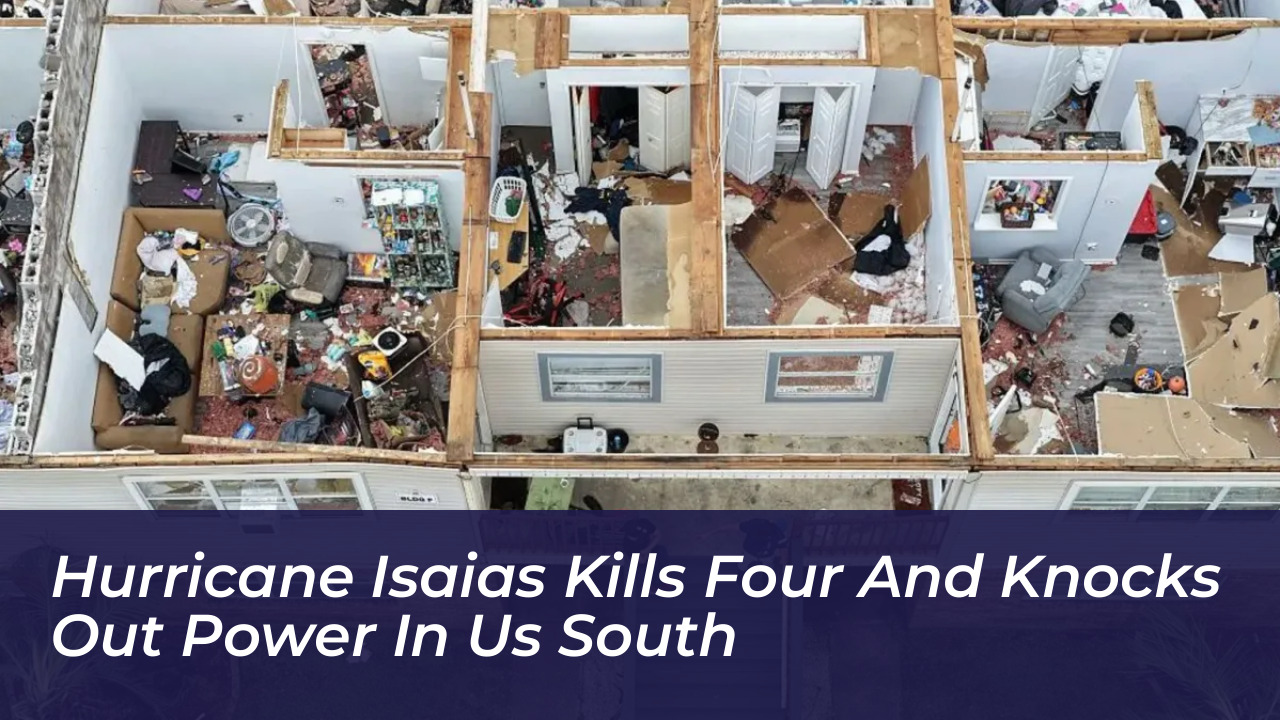

Hurricane Isaias has claimed the lives of at least four people and left hundreds of thousands of residents without electricity across the southeastern United States. The storm struck the Florida coast late Friday as a Category 2 hurricane-marking the first of the 2026 Atlantic season-before rapidly weakening into a post-tropical cyclone by Saturday evening.
According to local authorities and the utility tracking firm PowerOutage.us, the storm knocked out power for roughly 670,000 to 800,000 customers across Florida, Alabama, Georgia, and Mississippi. Downed trees, structural damage, and localized flooding severely impacted travel and infrastructure throughout the region.
Fatalities and Regional Impacts
Tragically, falling trees and hazardous conditions caused multiple fatalities. In Escambia County, Florida, local Sheriff Chip Simmons confirmed two storm-related deaths, including a woman killed when a tree crashed onto her home and a man who succumbed to carbon monoxide poisoning.
Emergency management agencies reported extensive travel hazards due to blocked roadways and downed power lines. In Alabama’s Houston County, officials placed the entire region under a flash flood warning and closed all local roads until further notice. Meanwhile, the coastal city of Pensacola faced drinking water shortages, and Pensacola Airport sustained damage, forcing a suspension of commercial flights.
Emergency Declarations and Power Restoration
Ahead of the landfall, governors in Florida, Alabama, and Georgia declared states of emergency. Homeland Security Secretary Markwayne Mullin confirmed that federal emergency declarations were approved to ensure immediate resource deployment. President Donald Trump told reporters outside the White House that federal hurricane preparations were firmly “under control.”
Florida Governor Ron DeSantis noted during a press briefing in Tallahassee that approximately 16,000 utility linemen had staged in the area prior to landfall to jump-start restoration efforts. While initial search-and-rescue requests remained low, officials cautioned that hazardous conditions, including storm surges, flash flooding, damaging winds, and a persistent tornado threat, would continue across the Florida Panhandle, Georgia, and the Carolinas.
Energy Sector and Gulf Operations
The energy sector also felt the impact of the storm. Major oil and gas producers, including Shell and Chevron, began assessing platform conditions and preparing to redeploy personnel to offshore assets in the Gulf of Mexico, such as the Mars, Olympus, Ursa, Vito, and Appomattox developments. However, a significant portion of regional crude oil and natural gas production remained shut down as crews verified safety protocols.
To mitigate potential supply disruptions, the U.S. Department of Energy authorized an emergency release of up to 4 million barrels of crude oil from the Strategic Petroleum Reserve. As response teams clear debris and repair damaged grids, authorities continue to urge residents to remain cautious of post-storm hazards.