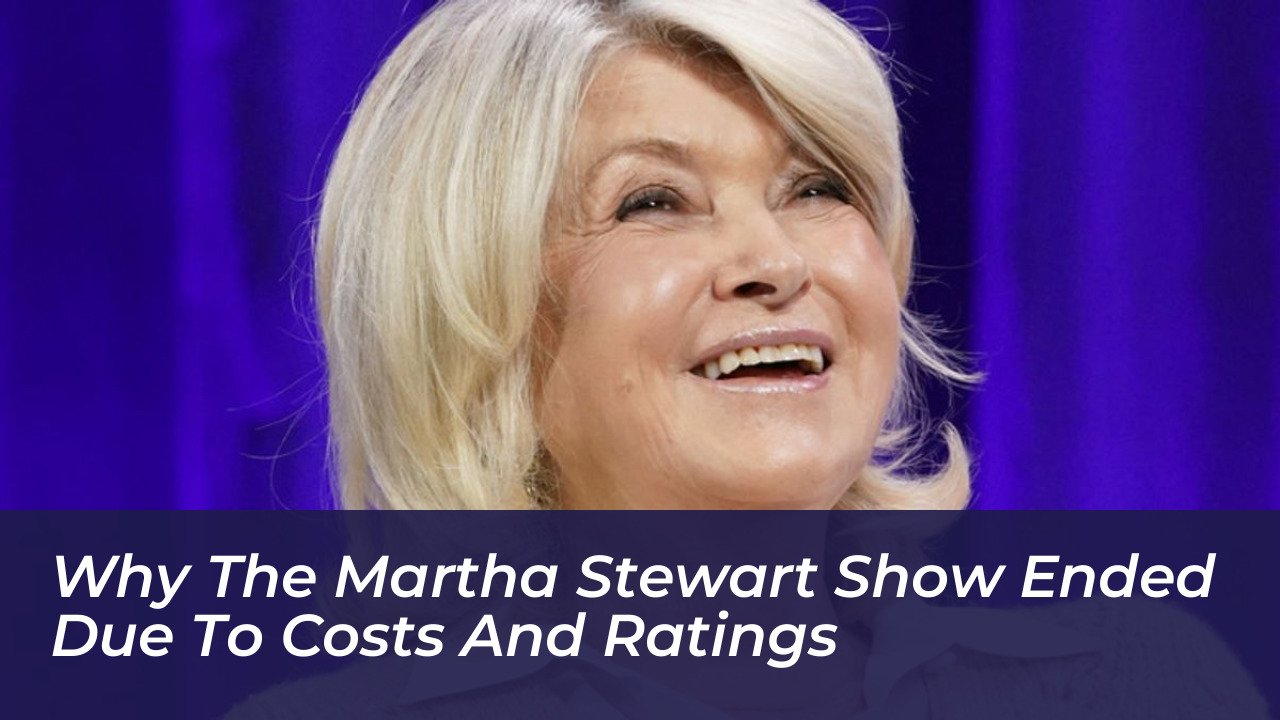

High production expenses and limited audience reach led the Hallmark Channel to cancel The Martha Stewart Show in January 2012, following a two-season run on the network. While the daytime lifestyle and talk program struggled to justify its steep operating costs despite improving figures, the cancellation marked a major turning point for Martha Stewart Living Omnimedia (MSLO) as it looked to rein in overhead expenses.

The Move to Hallmark and Early Programming Adjustments
The Martha Stewart Show transitioned from syndication to the Hallmark Channel in September 2010. Network president Bill Abbott framed the acquisition in a press release as a “match made in TV heaven,” with the network planning to build a comprehensive daytime programming block around the lifestyle personality.
However, the launch faced immediate headwinds. When the premiere episode drew approximately 199,000 viewers, Hallmark adjusted its strategy. It cut three hours from its planned eight-hour daily programming block and restored reruns of Little House on the Prairie.
Viewership Statistics and Commercial Limitations
Although average viewership climbed to approximately 225,000 per episode in 2011, the audience composition remained a core challenge for advertisers. Only about 41,000 viewers belonged to the network’s targeted demographic of women ages 25 to 54. This severely limited the program’s commercial appeal and advertising revenue potential.
Industry reports highlighted the heavy financial investment required to keep the production afloat. Promotional costs for the variety show reportedly approached $10 million, including an estimated $5 million to $8 million spent on “Make the Move With Martha,” which stood as the largest advertising campaign in Hallmark Channel history at the time. Maintaining a required live studio audience added further expenses, making the daily broadcast financially unsustainable for the network’s budget.
Corporate Restructuring and Studio Leases
The financial strain extended directly to Martha Stewart Living Omnimedia. Lisa Gersh, then-president and COO of MSLO, acknowledged the mounting pressures during a UBS investor conference in December 2011.
"Our expensive studio lease is expiring next year, and we will either bring television in-house or find lower cost space, which will significantly reduce our TV operating margins," Gersh stated.
Following discussions between the network and MSLO, it was announced that new episodes of the flagship talk show would cease airing in April 2012, with reruns filling the schedule through the summer. Alongside the television changes, retail partnerships also shifted, as Home Depot transitioned away from carrying standalone Martha Stewart Living-branded paints in favor of alternative color distribution deals.
Transition to New Television Ventures
Despite the end of her Hallmark daily program, Stewart quickly pivoted to new television opportunities. She launched Martha Stewart’s Cooking School on PBS in the fall of 2012, embracing a platform with wider accessibility. The cooking instructional series ran successfully for five seasons until 2017, alongside other popular programming like Martha Bakes, which solidified her enduring presence across American television.