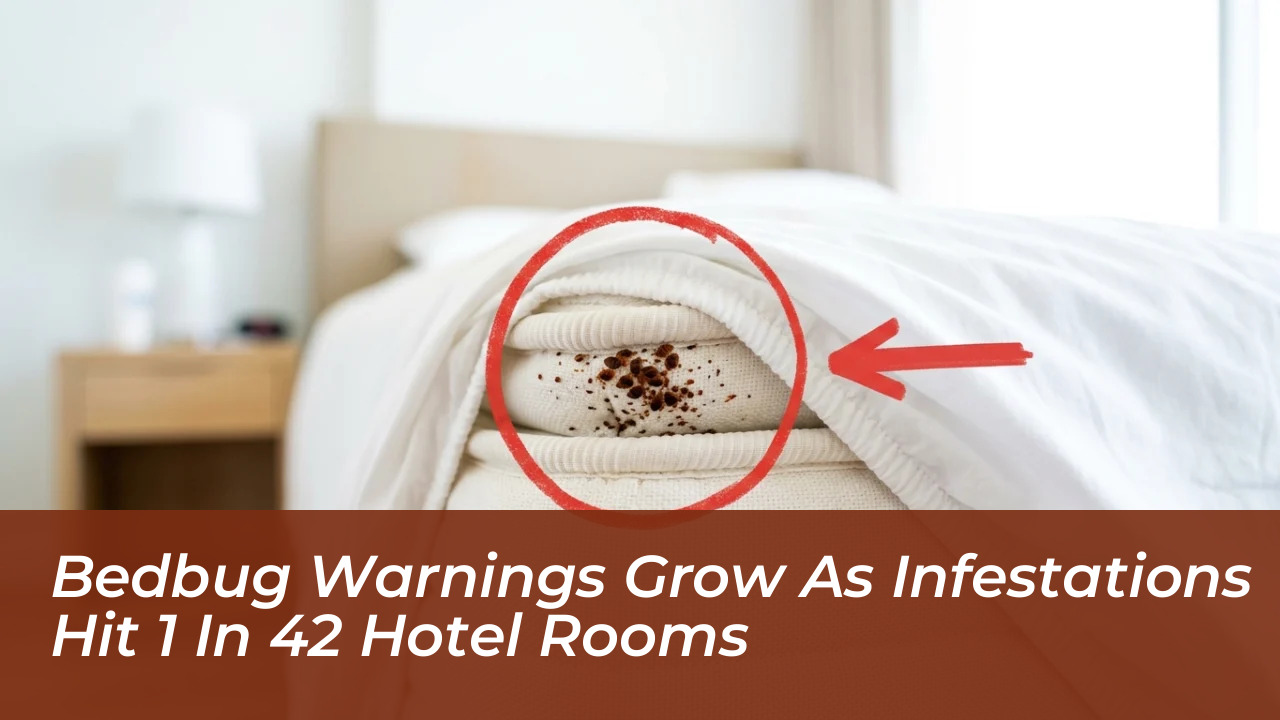

Recent monitoring data reveals that bedbugs appear in one out of every 42 hotel rooms. Annual infestations are surging by roughly 20 percent across major urban hubs. This rapid escalation has triggered operational disruptions across international transit networks, grounding commercial aircraft and sidelining commuter passenger trains. Travelers face heightened risks of transporting these wingless hitchhikers back home in suitcases and clothing.
From grounded long-haul passenger flights between Italy and Australia to out-of-service rail lines in the UK, the blood-feeding pests take advantage of high passenger turnover and expanding chemical resistance. Understanding the scale of the issue, identifying early warning signs, and applying strict room inspection protocols remain the most effective defenses for global travelers.
Surging Numbers and International Transit Disruptions
The scale of recent infestations has caused severe interruptions for major travel operators. A Qantas passenger flight bound for Australia from Italy was canceled when the aircraft had to be grounded for an emergency deep-cleaning cycle following a live outbreak onboard. Ground transit systems face identical pressures. Commuter rail services operating from the West Marina train depot near Hastings in East Suss*x were pulled from active passenger service after infestations were detected inside passenger cars.
Industry data collected by bedbug monitoring firm Valpas indicates that the parasites turn up in one out of every 42 hotel rooms surveyed. Pest management specialists track a roughly 20 percent annual rise in cases across major European and North American travel hubs. This compounding spike stems from relentless global tourism, frequent mobility, and increasing insecticide tolerance among insect populations.
Bedbugs present a challenge for all travelers, regardless of destination. They are not a symptom of uncleanliness or poor personal habits. Instead, they are the consequence of an insect’s biological success and adaptability.

Identifying the Pest and Debunking Common Myths
Widespread misconceptions suggest that parasites thrive only in neglected or unsanitary environments. In reality, biological cleanliness has no bearing on their presence. Five-star luxury suites carry the exact same statistical vulnerabilities as budget motels.
Physically, adult bedbugs are flat, oval-shaped, wingless insects displaying a dark yellow, reddish, or brown tint. They feed exclusively on the blood of warm-blooded hosts, primarily targeting exposed human skin during sleep cycles. Their bites frequently manifest in clustered, zig-zag lines across the arms, legs, and neck. While the resulting raised red marks cause intense itching, they rarely transmit secondary infectious diseases.
Bedbug Characteristic Field Guide
- Physical Appearance: Flat, oval, wingless, dark yellow to reddish-brown
- Bite Pattern: Raised red welts arranged in a zig-zag configuration
- Odor Indicator: Musty smell resembling expired raspberries or coriander
- Visual Evidence: Rust-colored stains, dark droppings, yellow eggs, shed skins
Room Inspection Protocols for Travelers
Detecting an infestation early prevents travelers from carrying pests home. The first defense begins before touching the mattress or unpacking bags.
- Isolate your luggage immediately: Roll all suitcases straight into the bathroom or onto a tiled entryway, keeping bags far from carpeting and bedding while inspecting.
- Perform a darkened flashlight check: Turn off all interior room lights and run your mobile phone torch along mattress seams, bed frames, and headboard crevices.
- Scan fabric folds and wall decor: Inspect cushions, throw pillows, and the rear edges of hanging wall pictures for tiny yellow eggs, shed exoskeletons, or dried black excrement specks.
- Check for distinct odors: Be alert for musty alarm pheromones, which produce an odor frequently compared to coriander or spoiled raspberries in heavily infested spaces.
Decontamination Steps If Infestations Appear
If you locate physical evidence of parasites, notify the front desk immediately to secure relocation away from neighboring rooms. Properties maintain protocols to dispatch licensed pest control operators. Keep personal items isolated from walls and floorboards throughout the remainder of your stay.
When returning home, seal all luggage in heavy plastic bags outdoors, unpack clothes strictly over bare hardwood floors rather than carpets, and instantly run every fabric item through a high-heat tumble dryer cycle to eliminate any surviving pests. Inspect your accommodations carefully before unpacking your bags on your next trip.
“Bedbugs are a problem for all travellers, regardless of destination. They are not a symptom of uncleanliness or bad habits otherwise, but rather the consequence of an insect’s success.”