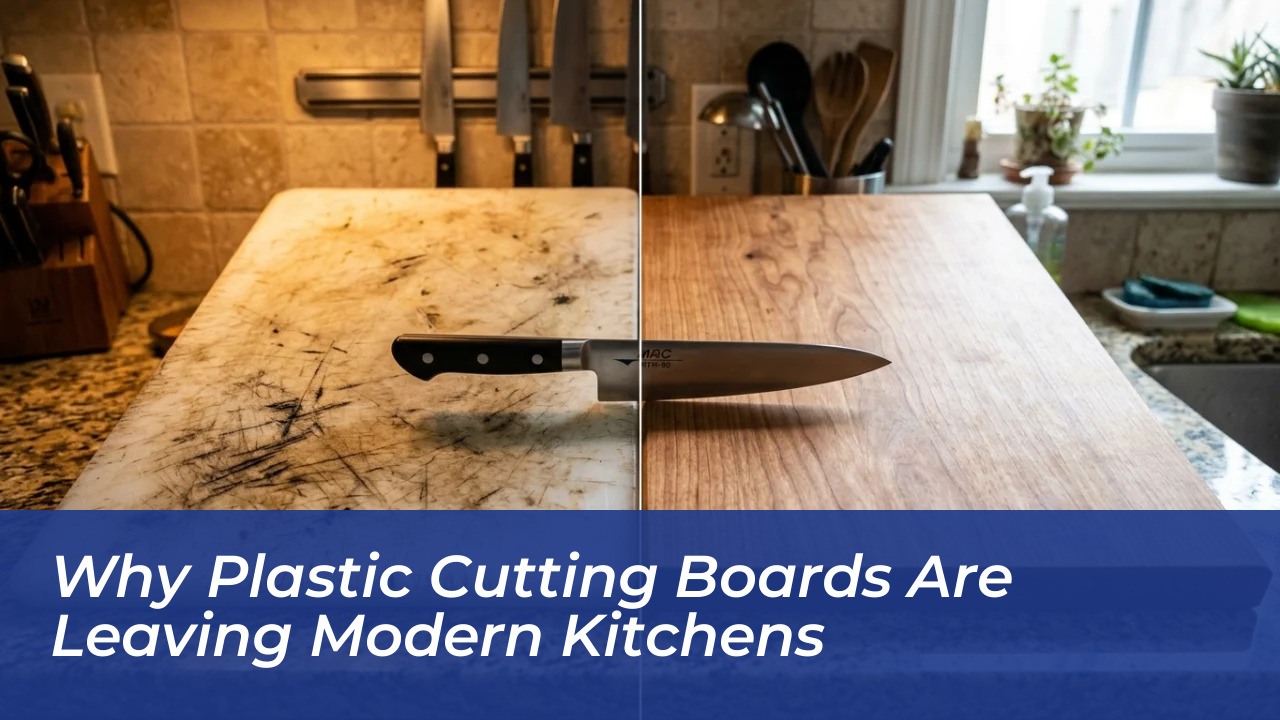

Plastic cutting boards have long been a fixture of home and restaurant kitchens, valued for their bright colors and easy storage. However, a growing body of research and a shift toward sustainable cooking are driving a mass exodus of these synthetic prep surfaces. Modern home cooks and professional chefs alike are trading their colorful plastic mats for solid wooden cutting boards, motivated by mounting concerns over hidden bacteria, knife maintenance, and the silent transfer of microplastics directly into family meals.
The Hidden Risks and Microplastic Shedding of Synthetic Mats
The primary hazard of aged plastic boards lies in how synthetic polymers react to sharp steel. Every stroke of a chef knife leaves tiny micro-grooves across soft synthetic surfaces. Rather than compressing and springing back, plastic slices open permanently, creating microscopic crevices that resist standard surface wiping. Over time, these scarred valleys collect persistent food grime, creating ideal conditions for microbial colonization and cross-contamination.
Worse still, repeated cutting acts like a rasp against worn polymers. Each heavy chop shears away tiny synthetic fragments that mix unnoticed into prepared dinners. Recent scientific findings have highlighted chopping boards as a potentially significant source of microplastics in human food, with polyethylene chopping boards shedding substantial quantities of synthetic particles per person annually. Transitioning to natural timber removes this material breakdown risk entirely at the source.
Why Natural Wood Performs Better on Every Metric
Timber boards offer an inherent structural advantage because wood is an organic material. When a blade strikes a dense wooden surface, the natural grain yields slightly under the edge instead of offering rigid resistance. This subtle give prevents knife blades from rolling or dulling prematurely, drastically cutting down how often you must sharpen your kitchen cutlery.
Beyond blade retention, wood possesses natural antimicrobial qualities that actively inhibit surface germs. According to historical and ongoing studies, including foundational research from the University of Wisconsin-Madison, solid hardwood boards hold up exceptionally well for long-term kitchen hygiene compared to plastic alternatives. Unlike synthetic panels that depend on harsh chemical sanitizers, timber manages moisture naturally, drawing moisture and bacteria beneath the surface where microbes fail to multiply and ultimately dry out.
Myth vs. Reality: The Hygiene Debate
A widespread assumption holds that plastic boards are cleaner simply because they can be washed inside an automatic dishwasher. In practice, intense dishwasher heat often warps plastic mats without fully scouring deep interior crevices. High-density wood naturally prevents pathogens from multiplying across its surface when cleaned correctly with warm water and mild soap, delivering superior real-world hygiene over years of daily food preparation.
Modern high-end boards now combine traditional timber with smart functional engineering. Premium walnut and hardwood models treated with food-safe oils often incorporate integrated stainless steel pull-out drawers directly underneath the block. This clever design allows cooks to sweep chopped onions, herbs, and meats straight into the tray without spilling juices across the counter, replacing flimsy plastic sheets with lifetime functionality.
The Essential Routine for Wood Care
A high-quality wooden board can survive for decades when maintained properly, provided you keep it away from automated dishwashing cycles. Intense mechanical heat and long soaking cycles force wood fibers to swell, warp, and split. Keeping your board pristine requires a straightforward daily routine:
- Clean the board by hand using warm water and mild liquid dish soap immediately after food prep.
- Dry the surface thoroughly with a clean towel instead of leaving standing pools of water.
- Stand the board upright on its side to let both faces air-dry completely.
- Avoid soaking the board in the sink or leaving wet items sitting on the timber.
- Rub the surface with food-grade mineral oil or board conditioner whenever the timber looks dry.
- Sand away deep cuts or minor stains with fine sandpaper to restore a silky smooth finish.
Frequently Asked Questions About Cutting Boards
Do wooden cutting boards harbor more bacteria than plastic?
No. While plastic boards can be put in a dishwasher, deep knife grooves trap bacteria that are difficult to clean. Research shows that solid wood possesses natural capillary action and antimicrobial properties that draw bacteria away from the surface where they fail to survive.
How do plastic cutting boards contribute to microplastics?
Every time a knife strikes a plastic cutting board, it shaves off microscopic synthetic particles. These tiny polymers mix directly into diced vegetables, meats, and other ingredients during routine meal preparation, leading to unintended ingestion.
Can I put my wooden cutting board in the dishwasher?
Never place a wooden cutting board in an automatic dishwasher. The intense heat, harsh detergents, and prolonged water exposure will cause the wood fibers to swell, warp, and crack, ruining the board.
How often should I oil a wooden cutting board?
You should apply a food-grade mineral oil or board conditioner whenever the wood begins to look dry or feel rough to the touch, typically once a month depending on how frequently you use and wash the board.
What types of wood are best for cutting boards?
Dense hardwoods with tight grain structures, such as maple, walnut, teak, sapele, and cherry, make exceptional cutting boards because they resist moisture absorption and tolerate knife impacts without excessive scarring.