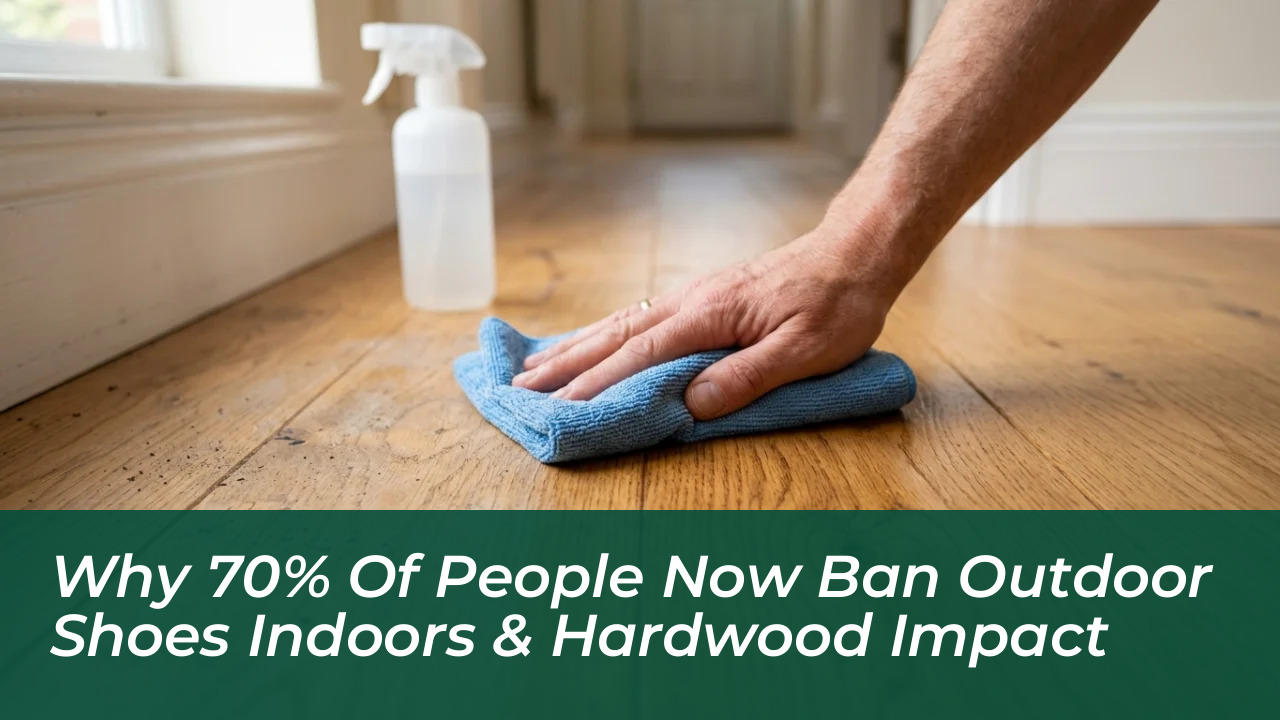

The habit of walking through living spaces in shoes worn outdoors faces intense scrutiny as modern consumer surveys and scientific studies highlight its hidden costs. According to data released by floor-care leader Bona, a staggering 70% of American adults now support maintaining a shoes-free household. Behind this shift lies a growing awareness of two major household perils: the invisible spread of dangerous street bacteria and the compounding physical damage inflicted on interior flooring.
While 81% of surveyed homeowners agree that ditching outdoor footwear keeps living environments substantially cleaner, 65% voice deep concerns over tracking pathogens across carpets and floorboards. Cleaning specialists at the Good Housekeeping Institute emphasize that removing footwear at the door extends well beyond simple social etiquette-it delivers concrete hygiene and practical structural preservation for residential properties.
The Unseen Biological Load Hiding on Your Soles
Every step across asphalt sidewalks, public transit floors, public restrooms, and treated lawns accumulates layers of biological residue. Scientific investigations underscore just how contaminated outdoor footwear can become. Research conducted by the University of Arizona examined 26 pairs of shoes worn outdoors and discovered between 3,600 and 8 million bacterial colonies on individual soles. Fecal bacteria, including E. coli, were detected on roughly 80% of those tested pairs.
Further studies from the University of Houston identified Clostridioides difficile-a bacterium notorious for causing severe diarrhea-on 40% of inspected footwear. Additionally, researchers have isolated drug-resistant superbugs like Staphylococcus aureus (including MRSA) alongside toxic agricultural pesticides, heavy metal dust like lead, and per- and polyfluoroalkyl substances (PFAS) commonly known as forever chemicals.
These microscopic hazards do not remain trapped on the soles. Controlled experiments confirm that when contaminated boots walk across indoor surfaces, bacteria transfer successfully in roughly half of all test cases. Households with crawling infants, toddlers, and domestic pets face heightened vulnerability, as these family members spend the most time in direct contact with floor dust.
The Real Physical Impact on Hardwood and Laminate Floors
While microbial contamination sparks immediate disgust, footwear poses an equally destructive mechanical threat to interior finishes, particularly natural hardwood and laminate boards. Home-care specialist Noah Pinsonnault warns that outdoor footwear causes irreversible surface degradation over time.
Deep treads in everyday sneakers and rugged outsoles collect abrasive grit, sharp sand particles, and micro-gravel during daily commutes. As occupants walk across a room, downward body weight turns these trapped minerals into high-pressure sandpaper. This abrasive action scours away protective polyurethane coatings, dulling the finish and ultimately exposing raw wood fibers beneath.
How Heels and Heavy Boots Amplify Damage
Different types of footwear carry varying degrees of destructive potential:
- High Heels: Cited by 38% of consumers as the primary culprit for floor damage, concentrated heel pressure points can crush wood cellular structures, creating deep dents that standard cleaning agents cannot lift.
- Work Boots and Heavy Footwear: Accounted for by 22% of respondents as a major risk, rugged soles trap heavy gravel and sharp stone fragments that accelerate deep scratching.
- General Footwear: Roughly 25% of homeowners believe all outdoor shoes share equal guilt in wearing down protective indoor finishes.
According to Bona’s findings, nearly half of all Americans (46%) have noticed visible scratches, scuffs, or premature wear directly linked to wearing shoes indoors. Repairing deep indentations and widespread scratching typically demands expensive structural sanding and complete room-by-room refinishing.
Comparative Floor Impact: Shoes vs. Bare Feet
Understanding the toll of footwear helps clarify why preventive thresholds matter so much for long-term home maintenance.
- Debris Infiltration: High with outdoor shoes; regularly carries road grime, fine grit, asphalt residues, and outside chemicals. Bare feet or socks introduce minimal particulate debris.
- Surface Wear: Severe under outdoor footwear; causes micro-abrasions, finish dulling, and pressure dents. Minimal to nonexistent with socks, slippers, or bare feet.
- Cleaning Load: Shoes demand frequent scrubbing, heavy wet mopping, and relentless vacuuming. Footwear-free policies drastically cut down daily cleaning requirements.
- Hygiene Control: Eliminates the distribution of sidewalk microbes, allergens, and animal waste particles across living rooms and sleeping quarters.
How to Enforce a No-Shoes Policy Without Awkwardness
Despite 70% of Americans preferring a shoes-off environment, only 44% regularly ask arriving visitors to remove their footwear. Making that verbal request can occasionally feel socially delicate. However, interior design and hospitality experts recommend relying on environmental cues rather than verbal policing to bridge the gap.
Establishing a clear entryway zone prepares guests before they step foot onto interior flooring:
- Position a sturdy shoe rack or dedicated storage bench directly inside the front entrance.
- Stock an accessible basket filled with fresh, washable house slippers in assorted sizes.
- Offer clean gripper socks for visitors who dislike walking barefoot or in stockinged feet.
Data indicates that nearly three in four Americans already wear slippers indoors, making the transition comfortable for most guests. For formal celebrations or milestone events where footwear is part of dress codes, hospitality professionals suggest letting guests stay shod and simply scheduling a deep surface sweep and mop for the following morning.
Frequently Asked Questions About Indoor Shoe Policies
Why do people ban outdoor shoes indoors?
Banning outdoor shoes prevents the tracking of harmful bacteria (like E. coli and C. difficile), toxic chemicals, heavy metals, and abrasive grit that dulls and scratches interior flooring.
Do shoes really damage hardwood floors?
Yes. Outdoor shoes trap sharp grit and gravel in their treads. As you walk, this debris acts like sandpaper, wearing down protective polyurethane finishes and causing micro-scratches or deep dents from heels.
What percentage of Americans take their shoes off at home?
According to comprehensive floor-care surveys by Bona and national polls by CBS News and YouGov, roughly 63% to 70% of Americans prefer a shoes-off household.
How can I ask guests to take off their shoes politely?
Set up an inviting entryway equipped with a shoe rack, a basket of clean slippers in various sizes, and a comfortable bench. This visual cue communicates your household rule naturally without awkward verbal demands.
What are the main health risks of wearing shoes inside?
Shoes track in urban dust, pollen, agricultural pesticides, lead particles, and fecal bacteria from public spaces, increasing exposure risks for crawling infants, young children, and pets who spend time close to the floor.