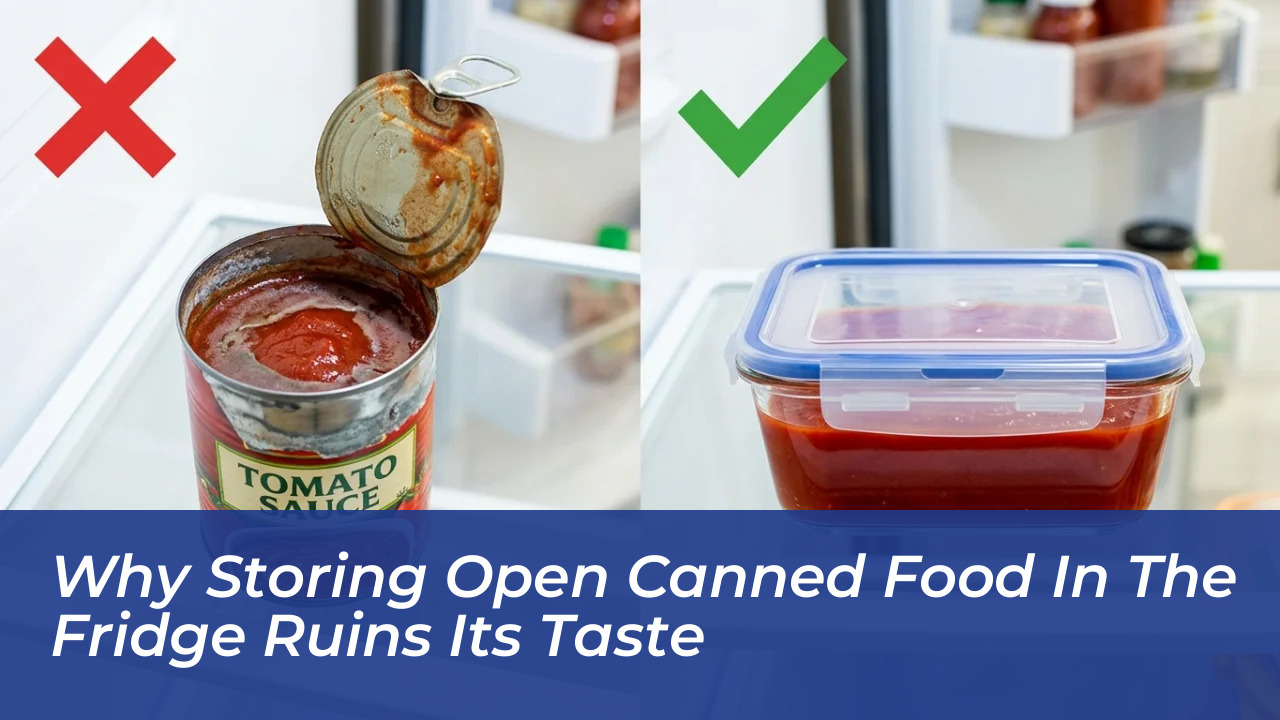

Leaving opened canned food directly inside the refrigerator triggers a swift electrochemical reaction. Exposed metal, ambient oxygen, and food contents visibly degrade quality and create a distinct metallic taste within just hours. Modern protective linings keep sealed foods shelf-stable for months or years. However, piercing the lid breaks that structural seal and exposes raw inner edges to the humid chill of a standard home refrigerator. Most home cooks slide a half-used can into the fridge as an innocent shortcut. Yet that simple habit quickly ruins meals and fuels unnecessary waste through subtle chemical degradation.
The Hidden Electrochemical Reaction Inside Cold Cans
The interior coating of a tin can protects preserved ingredients only as long as the seal remains completely intact. The moment a can opener punctures the lid, micro-fractures split the inner lacquer along the rim. Moisture inside the refrigerator combined with airborne oxygen creates an ideal environment for rapid oxidation at those compromised edges.
This process does not typically present an acute health hazard, but sensory decay happens swiftly. Trace amounts of metal leach into the outer layers of the food, muddying crisp flavors with a flat, tinny profile. Compounding the problem, an unsealed can exposes its contents to the shared atmosphere of the refrigerator. Food absorbs circulating odors, while residual moisture accelerates color breakdown and dries out top layers.
Which Foods Suffer the Fastest Degradation?
Not every ingredient deteriorates at the exact same speed. High- and sulfur-rich goods act as catalysts, stripping away broken protective barriers and reacting aggressively against exposed steel or tin.
- Tomatoes and tomato sauces: High natural acidity causes rapid rim corrosion and sour flavor alteration.
- Citrus fruits and pineapple: Potent organic acids attack exposed edges within hours.
- Legumes and beans: Sensitive starches absorb tin-like notes and develop dark discoloration near the rim.
- Canned fish: Delicate proteins and brines or oils break down fast, developing unappealing aromas.
- Fruit purees and compotes: Added sugars and acids mask oxidation until a gray film forms across the top.
Signs Your Leftovers Have Turned
When food sits in an opened tin, you will often notice a thin, dull film forming over the surface. The edges touching the rim frequently show a grayish cast or dark specks. The aroma becomes noticeably muted and sour, which usually leads straight to the trash can.
Myth vs. Reality: Refrigerator Storage Habits
Widespread kitchen folklore often misleads cooks into believing a quick fix will keep opened cans fresh. Understanding the underlying chemistry helps separate ineffective shortcuts from reliable storage methods.
- Kitchen Myth: Covering an open can with plastic wrap prevents spoilage.
Scientific Reality: Foil or wrap does not seal the punctured metal edge, allowing oxidation to continue underneath. - Kitchen Myth: Cold temperatures stop all chemical breakdown.
Scientific Reality: Chilling slows microbial activity but does not prevent electrochemical reactions and flavor loss. - Kitchen Myth: Older generations kept cans chilled without issue.
Scientific Reality: Modern can linings and strict culinary standards prove that rapid decanting preserves aroma best.
The Correct Way to Store Leftover Canned Food
Rescuing quality requires only about twenty seconds of effort right after opening the can. Transferring remaining portions out of the metal casing halts unwanted chemical reactions instantly.
- Decant immediately: Transfer leftovers into a clean glass dish or food-grade plastic container.
- Minimize air pockets: Choose a container that matches the portion size to keep surface oxygen minimal.
- Seal tightly: Use a container with an airtight lid to block circulating refrigerator odors.
- Maintain temperature: Store the container near the center of the fridge at roughly 40°F (4°C).
- Label the container: Mark the date clearly on the top to track freshness without guessing.
Properly transferred items remain fresh for 3 to 4 days, while sensitive seafood and heavily seasoned recipes show the best quality when eaten within 1 to 2 days. When handling larger batches you cannot finish in time, freezing smaller portions safely preserves texture and taste.
Frequently Asked Questions
Is it dangerous to eat food stored in an opened can?
It is rarely an acute food safety hazard, but the food will suffer from rapid flavor degradation, metallic leaching, and texturing changes within a matter of hours.
Does putting plastic wrap over an open can protect it?
No. Plastic wrap or aluminum foil laid across the top does not seal the jagged, punctured rim where oxidation and metal leaching occur.
How long do canned leftovers last after being transferred to a container?
Most canned leftovers stored in an airtight glass or plastic container will stay fresh in the refrigerator for 3 to 4 days, provided they are stored at proper refrigeration temperatures.
Which canned foods react the fastest in the fridge?
High- foods like tomato sauces, citrus fruits, and pineapple react the fastest, developing metallic flavors and degrading the can lining within hours.