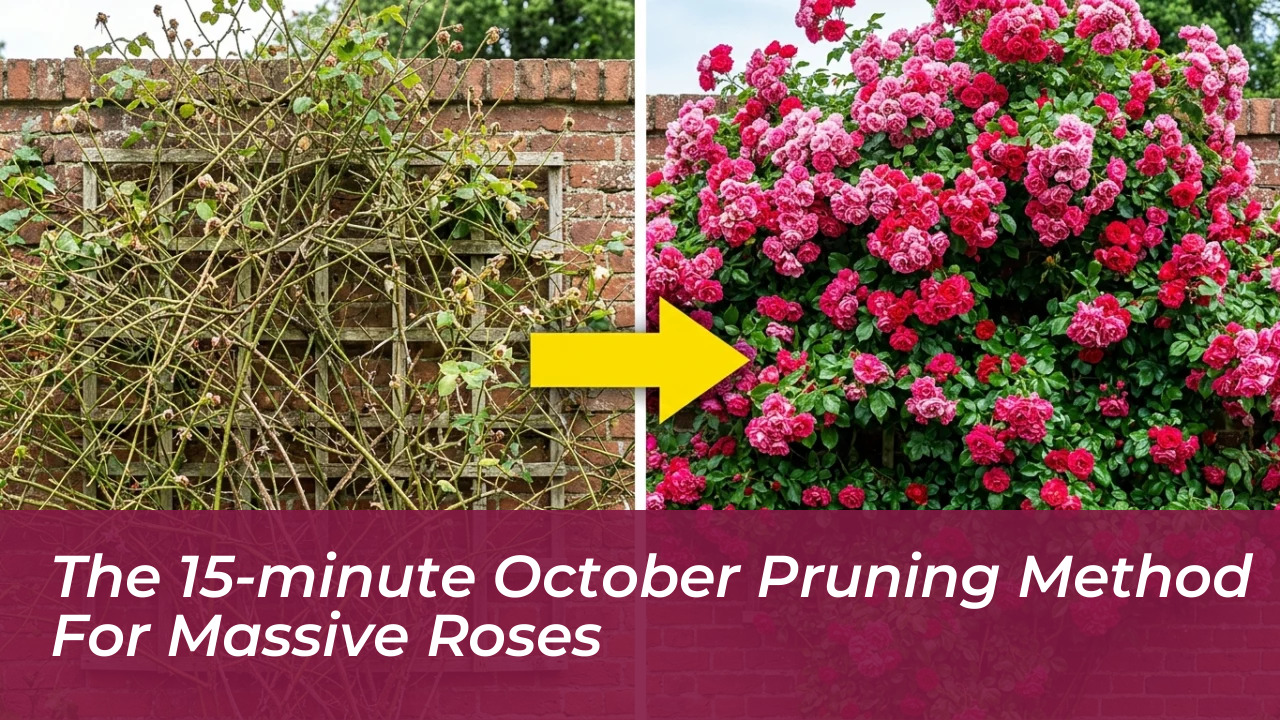

A single 15- to 30-minute gardening task in October can transform how climbing roses perform next spring. While many growers pack their shears away as temperatures fall, cutting back climbing roses before winter sets in conserves plant energy, deters pests, and lays the foundation for dramatically larger flower displays.
British gardening expert Monty Don, lead presenter of BBC’s Gardeners’ World, emphasizes that October provides the ultimate window to cut back these vigorous climbers. Because these plants form blossoms on new wood produced earlier in the year, leaving them untamed through the cold months invites disease and wind damage.
Timing remains everything when managing sprawling rose varieties. Understanding how a cultivar produces blooms determines whether pruners will trigger a floral explosion or strip away next year’s color entirely.
Climbers vs. Ramblers: The Crucial Growth Distinction
A widespread misconception among gardeners is that all climbing and sprawling roses require identical seasonal maintenance. Trimming the wrong variety during late autumn can accidentally eliminate next year’s entire floral canopy.
Climbing roses flower on shoots grown the same spring so they can be pruned hard now. Rambling roses on the other hand produce their flowers on shoots grown the previous summer so should only be pruned immediately after flowering. — Monty Don
Because climbing varieties generate flowers along shoots produced in the current growing season, they tolerate robust autumn reduction without losing blooming capacity. Ramblers set buds on old wood from the preceding summer and will not produce flowers if cut down in the fall.
Comparison of Rose Types and Pruning Schedules
- Climbing Roses: Prune in autumn (October) because they bloom on current-season growth.
- Rambling Roses: Prune immediately after summer flowering because they bloom on previous-year wood.
Why Late Autumn Maintenance Protects Plant Health
Allowing tangled vines to ride out harsh winter conditions creates severe physiological liabilities. Decaying wood and spent blooms drain vitality that should otherwise be funneled toward root resilience and early spring development.
Thinning the plant eliminates withering structures that harbor common fungal infections during wet, cold conditions. Removing crowded stems also keeps pests from overwintering inside dense, sheltered pockets across fences and trellises.
Unpruned climbers frequently develop heavy, tangled branch networks that catch high winter winds. When long canes whip around unchecked, they risk tearing delicate roots and ripping entire trellises away from exterior structures.
Step-by-Step Pruning and Training Strategy
Achieving maximum flower volume requires a methodical approach to shaping and securing main frameworks. Applying the proper technique takes under half an hour per mature specimen.
- Cut away dead or crossing stems: Begin by removing damaged, crossing, or spindly growth that cannot support heavy blossoms. Healthy internal wood shows green when cut; leave green wood intact.
- Fan out structural canes: Arrange primary framework stems as horizontally as possible across wires or trellis panels, maintaining equal spacing between them.
- Reduce side shoots: Cut all lateral shoots that carried this year’s flowers down to short stubs containing just a couple of leaves.
- Anchor against winter winds: Firmly tie all main canes securely to the support structure to guard against mechanical winter damage.
The main stems should be fanned out at an equidistance as horizontally as possible, tying them to wires or a trellis. Then all the side shoots growing from these main stems – which produced this year’s flowers – can be reduced to a short stub of a couple of leaves. The effect should be a tracery of largely horizontal growth with pruned side-shoots running along their length. — Monty Don
Sanitation: The Essential Final Step
Pruning alone only solves half the problem if garden beds are left unattended. Ground debris left resting beneath trellises creates an ideal microclimate for damp rot and insect infestation.
Gather and discard all fallen foliage, cut canes, and decayed leaves immediately after trimming. Clearing the base of the plant ensures improved air circulation, keeps sunlight hitting the crown, and prevents opportunistic diseases from re-infecting emerging spring shoots.
Frequently Asked Questions About Climbing Rose Pruning
Can I prune my climbing roses in November instead of October?
While October is the optimal window in most temperate regions, early November is generally acceptable before hard, deep freezes set in. However, completing the task earlier helps the plant seal its cuts and settle into dormancy.
What tools do I need for this 15-minute pruning method?
You will need a pair of sharp, sterilized bypass pruners for clean cuts, heavy-duty gardening gloves to protect against thorns, and soft twine or plant ties to secure canes to your trellis.
Will hard pruning stop my roses from blooming next spring?
Not if you have a true climbing rose. True climbers bloom on new wood grown during the current spring season, meaning pruning them hard in autumn actually encourages vigorous, flower-heavy growth.
Why should I train my rose canes horizontally?
Bending and training structural canes horizontally encourages the plant to release growth hormones all along the length of the stem rather than just at the tip, resulting in far more flowering shoots next season.
What should I do with the rose trimmings and fallen leaves?
Dispose of all diseased foliage, dead wood, and fallen leaves in the trash rather than your compost bin. This prevents fungal spores and overwintering pests from returning to your garden beds next spring.