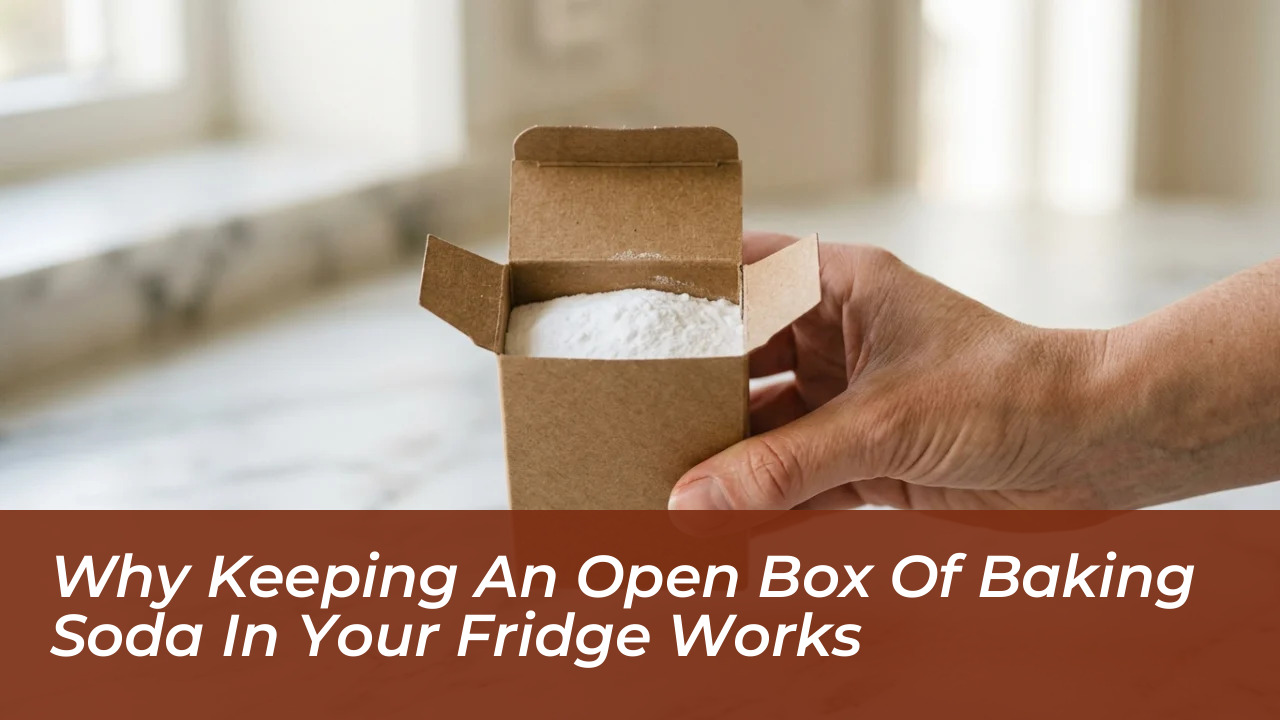

Keeping an open box of baking soda in your refrigerator is a long-standing household habit. The science behind it goes far beyond folklore. Academic experts at the University of Florida’s Institute of Food and Agricultural Sciences (UF/IFAS) recommend this technique to keep appliance air fresh without using artificial fragrances around unwrapped groceries. By understanding the chemical interaction at play, homeowners can use this low-toxicity, low-cost habit to eliminate unpleasant appliance odors naturally.
The Science of Odor Neutralization Inside Your Fridge
The secret behind this household remedy lies in basic chemistry. Baking soda, or sodium bicarbonate, is a mildly alkaline compound. It reacts with pungent, airborne compounds. Many offensive refrigerator smells come from volatile fatty acids that foods release as they spoil.
Because these molecules are acidic, they react immediately upon touching the alkaline bicarbonate powder. This reaction forms less volatile substances that no longer produce noticeable odors, transforming volatile molecules into stable, low-odor salts. The compound needs physical contact with moving air to neutralize odors effectively. Therefore, airflow inside the appliance directly impacts overall performance.
Proper Placement and Practical Implementation
Enclosed refrigerator compartments cause aromas from leftovers, fresh produce, and dairy to mingle and concentrate over time. Using an open box of baking soda requires no complex mixtures or direct scrubbing. However, maximizing odor absorption depends on proper positioning:
- Select a fresh box of pure sodium bicarbonate and fully open the top flaps to maximize air exposure.
- Place the container upright on a flat, stable interior shelf away from heavy traffic to prevent spills.
- Leave the container completely uncovered so surrounding air circulates freely across the powder surface.
- Pair the open box with sealed food storage containers to prevent powerful aromas from overwhelming the cabinet.
While an open box maintains clean air across standard shelves, its effectiveness depends on regular household maintenance and checks.
Myth vs. Reality: What Baking Soda Can and Cannot Do
A common misconception is that an open box of powder can instantly eliminate heavy decay or replace routine appliance cleaning. In reality, chemical absorption cannot erase dried liquid spills or decaying debris trapped beneath vegetable crisper bins.
If harsh smells linger, inspect every shelf for spoiled items. Cleaning underlying residue is necessary before airborne neutralizers can work effectively. Regular refrigerator maintenance combined with passive odor absorption creates a fresh food storage environment.
Summary of Odor Control Roles
- Open Baking Soda Box: Absorbs volatile fatty acids and neutralizes lingering airborne aromas.
- Routine Surface Cleaning: Removes dried food residue and bacteria that cause persistent odors.
- Airtight Container Storage: Prevents volatile food odors from spreading into refrigerator air.
Checking shelves periodically for spoiled goods ensures the powder does not become overwhelmed by concentrated decay. Share your experiences with us in managing lingering appliance smells by leaving your thoughts below on what natural kitchen remedies work best for your home.