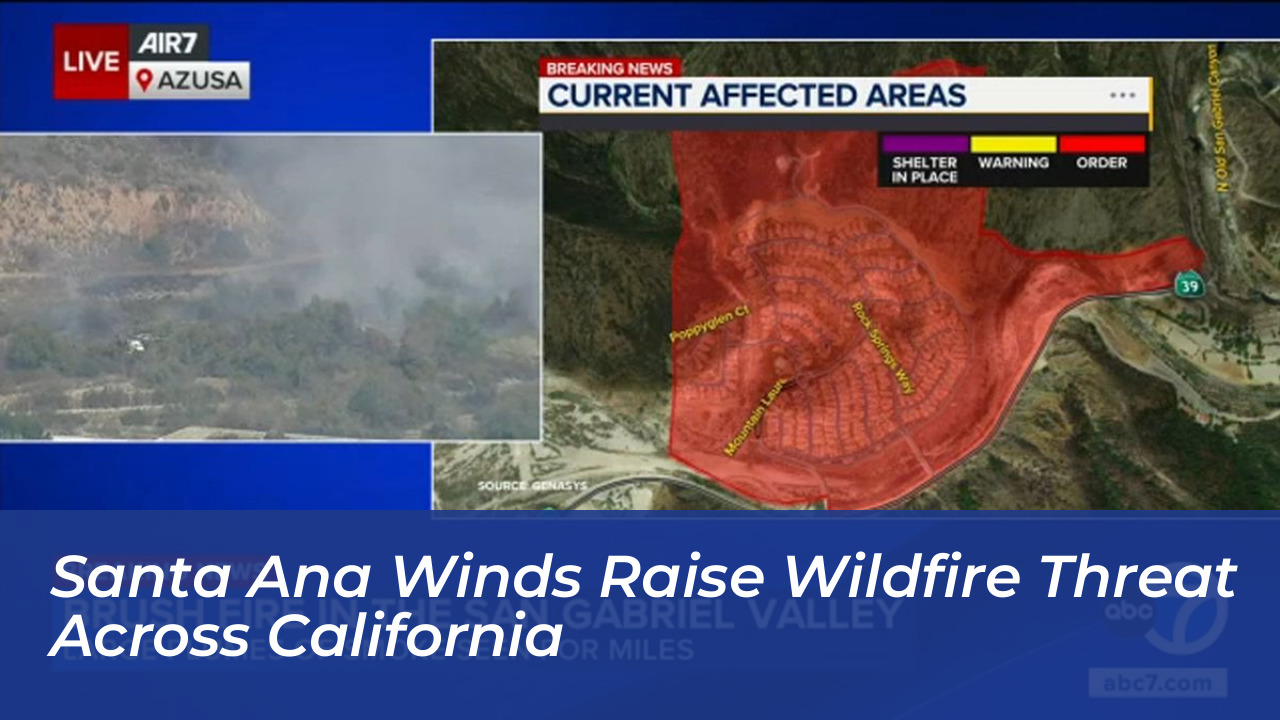

Strong Santa Ana winds, elevated temperatures, and low humidity heightened wildfire danger across California, prompting emergency warnings, precautionary power shutoffs, and increased firefighting readiness. Southern California faced particularly hazardous conditions through Saturday, while firefighters in Butte County reported stopping the spread of two vegetation fires near Oroville.
According to the National Weather Service, a Red Flag Warning remained in effect for portions of Los Angeles and Ventura counties, including the Santa Monica Mountains, San Gabriel Mountains, Interstate 5 corridor, and Antelope Valley foothills. The warning was scheduled to continue until 8 p.m. Saturday.
Severe Weather Conditions and Forecasts
Forecasters expected sustained winds of 25 to 45 mph in parts of the region, with mountain gusts potentially reaching 70 mph. Temperatures were forecast to climb into the 80s and 90s, with some locations running 15 to 20 degrees above normal, according to NBC Los Angeles and local meteorological updates. Low humidity levels ranging between 8% and 20% created an environment where any newly ignited brush fire could spread rapidly.
The National Weather Service’s Oxnard office emphasized that the combined heat, wind, and dry vegetation placed much of southwestern California under critical fire weather conditions. While not matching the unprecedented intensity of the January 2025 firestorm that heavily impacted the region, regional pockets-particularly west of the 405 Freeway and into Ventura County-experienced severe, high-end threat levels due to a lack of recent rainfall.
Emergency Pre-Deployments and Infrastructure Protections
State and local agencies responded with aggressive pre-deployment strategies. Los Angeles city and county fire departments increased staffing, added a fourth firefighter to every staffed engine, and strategically positioned heavy equipment, strike teams, water tenders, camp crews, and drone units in high-risk zones like Malibu, the San Fernando Valley, and the Santa Monica Mountains. The California Governor’s Office of Emergency Services also deployed additional firefighting personnel and aircraft across Southern California, including three strike teams totaling 15 trucks from Cal Fire.
Officials noted that these proactive measures reflect critical lessons learned from previous emergency reviews following the Palisades and Eaton fires. City officials reported that hillside water tanks were filled to capacity, open-air reservoirs remained operational for aerial firefighting support, and over 90% of recommendations from post-incident safety reviews had been implemented.
Utility Power Shutoffs and Community Restrictions
Major utility providers took preventative steps to prevent electrical infrastructure from sparking fires amid the high winds. Southern California Edison considered public safety power shutoffs impacting hundreds of thousands of customers across Los Angeles and Ventura counties. In Northern and Central California, Pacific Gas and Electric warned tens of thousands of customers across multiple counties regarding potential outages.
Local authorities also enacted strict public safety measures:
- Red Flag Parking Restrictions: Parking was strictly prohibited in designated Very High Fire Hazard Severity Zones starting Thursday morning to ensure narrow canyon roads and evacuation routes remained clear for emergency vehicles. Illegally parked vehicles were subject to immediate towing.
- Park Closures: State and national parks across the Santa Monica Mountains closed temporarily to eliminate human-induced fire risks.
- Restricted Mountain Access: Neighborhoods such as Topanga limited entry points strictly to residents, business owners, and essential caregivers presenting verified proof of residency or employment.
Local leaders urged all residents in impacted zones to review their evacuation plans, maintain packed “go-bags” containing essential medications and documents, and monitor local alerts through systems like Alert L.A. County as the wind event progressed.