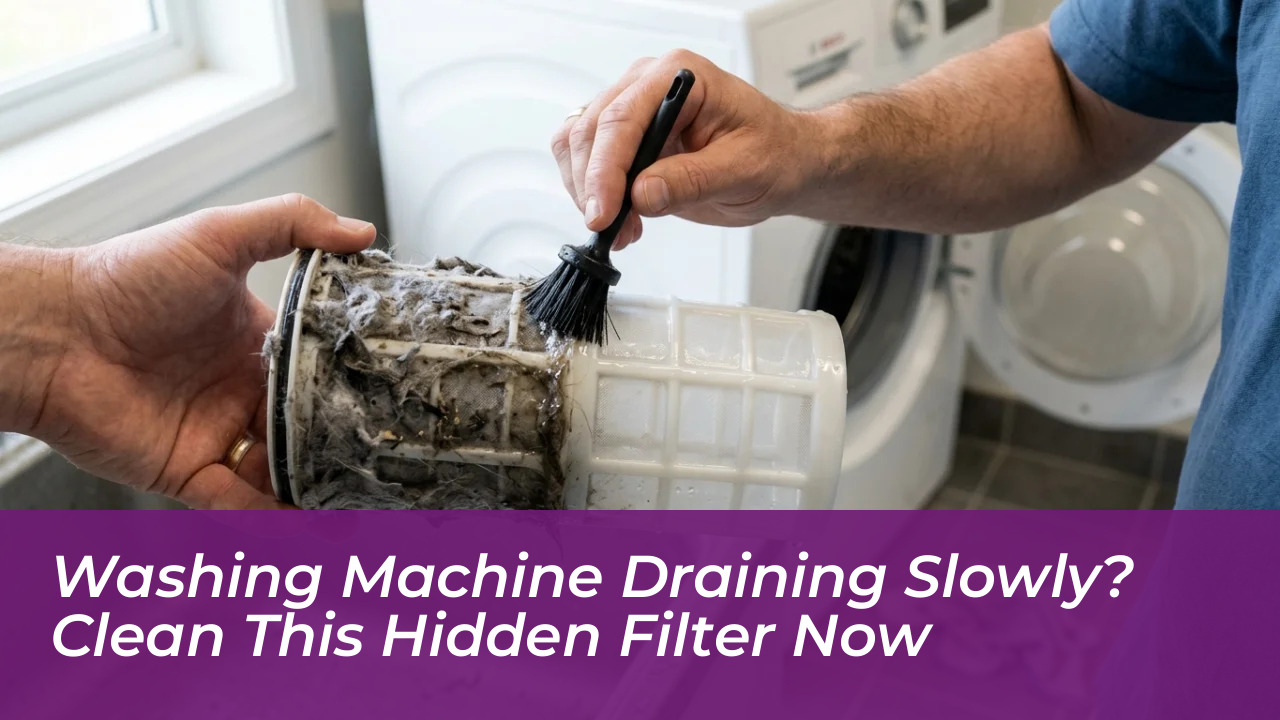

Your washing machine filter traps stray dog hair, lint, coins, and loose debris before they can choke the internal drain pump. This prevents sluggish drainage cycles and persistent laundry odors. Appliance manufacturer Maytag recommends servicing this hidden component once every month to maintain mechanical efficiency, yet thousands of homeowners never realize the part exists.
When debris accumulates unchecked, the drain system struggles. This leaves clothes coated in fuzz and can force the appliance to shut down mid-cycle due to dangerous overheating. Much like a dryer’s lint trap, this internal barrier keeps loose particles from recirculating through clean fabrics. Dirt, grass clippings, leaves, stickers, and dissolved pocket tissues are separated during rinse and spin cycles, but they collect in the housing rather than washing away. Overlooking this maintenance task creates a breeding ground for mildew. It also puts excessive strain on the internal motor, restricts water discharge, and causes sudden mid-cycle shutoffs.
The Hidden Signs of a Blocked Washer Trap
A neglected drain assembly produces obvious warning signs long before total mechanical failure occurs. Recognizing these indicators early can save you from costly appliance repairs:
- Water lingering inside the drum long after the final spin cycle finishes.
- Heavy lint deposits covering dark garments, signaling that trapped debris has nowhere to go and is redepositing across the load.
- Musty, stale odors that persist despite using fresh detergents, pointing directly to stagnant water and decaying organic material lodged in the housing.
- The drainage pump working against intense resistance, generating excess heat that triggers built-in safety shutoffs and halts the cycle completely.
Common Misconceptions About Modern Washers
Many homeowners assume that all wastewater, pet hair, and loose pocket debris simply flush harmlessly down household plumbing. In reality, the washing machine filter is intentionally designed as a physical barrier to block bulky solids from destroying the drain pump propeller. While some modern machines feature self-cleaning mechanisms or pumps with wider discharge ports, numerous units rely entirely on a physical screen that requires routine manual intervention.
Where to Locate Your Machine’s Trap
The precise location of the component depends on whether you operate a top-loading or front-loading model. Finding the access point takes just seconds once you know where to check:
- Front-Loading Models: Typically feature a small access door near the lower corner of the front panel, or utilize a fine mesh screen located near the drainage hose.
- Top-Loading Models: Often conceal the lint screen directly inside the central agitator or positioned quietly along the upper rim of the wash drum, occasionally tucked behind a removable plastic shield.
- Specialty Units: Certain machines integrate targeted traps designed to catch microplastics or loose metal hardware. Always review the official appliance manual if the housing is not immediately visible.
Required Supplies for Cleaning
Servicing the assembly does not require specialized technical tools or harsh chemical solvents. Assembling standard household cleaning gear beforehand ensures a smooth process without spilling trapped graywater onto your laundry room floor:
- Clean microfiber cloths
- Shallow container or an old bath towel
- Small soaking basin or bowl
- Soft-bristled brush
- Mild liquid dish soap or liquid laundry detergent
- Handheld flashlight
Step-by-Step Maintenance Protocol
Following a methodical cleaning sequence prevents accidental flooding and ensures the filter seals securely back into place without damaging plastic threads:
1. Disconnect power and prep the area: Unplug the machine from the electrical outlet. Position an old towel or shallow dish underneath the access point, then twist open the housing to catch any residual water before extracting the core screen.
2. Clear the housing chamber: Use a damp microfiber cloth to remove settled sediment, grit, and loose hair from inside the empty recess. Illuminate the interior using a flashlight to verify no foreign objects remain jammed inside.
3. Soak the screen: Place the dirty filter assembly into a bowl of warm water mixed with a small amount of liquid detergent or dish soap, allowing the buildup to soften for 10 minutes.
4. Scrub away residue: Take a soft-bristled scrub brush and gently clean away caked-on detergent film, lint, and organic debris from all mesh sections.
5. Reinstall the core: Rinse the component thoroughly with clean running water and lock it back into the washer housing securely.
6. Perform a leak check: Run a short, empty cycle or quick wash to confirm that water circulates freely and no moisture seeps past the newly tightened seal. For machines with fixed, non-removable assemblies, open the access compartment with a shallow towel ready, wipe down the interior walls manually, and scrub visible components thoroughly with a soft brush.
Frequently Asked Questions
How often should I clean my washing machine filter?
Appliance manufacturers generally recommend inspecting and cleaning your washing machine drain pump filter once every month to prevent severe clogs and maintain proper drainage.
What causes a washing machine to drain slowly?
Slow drainage is typically caused by a clogged pump filter, a kinked or blocked drain hose, buildup in the household standpipe, or excessive detergent usage that creates a sticky residue trap.
Do all washing machines have a filter?
Most front-loading washing machines feature an accessible filter behind a small hatch at the bottom front. However, some top-loading units either hide the lint filter inside the agitator or rely on self-cleaning pumps without user-accessible screens.
Can I use vinegar and baking soda to clear a washer clog?
Yes, pouring a cup of baking soda followed by white vinegar down the drain or hose can safely help dissolve soap scum and minor organic buildup without damaging internal plastic components.
What happens if I never clean my washing machine filter?
Neglecting this filter causes severe drainage failure, foul musty odors from stagnant water, heavy lint deposits on clean clothes, and potential motor burnout due to the pump working against excessive resistance.