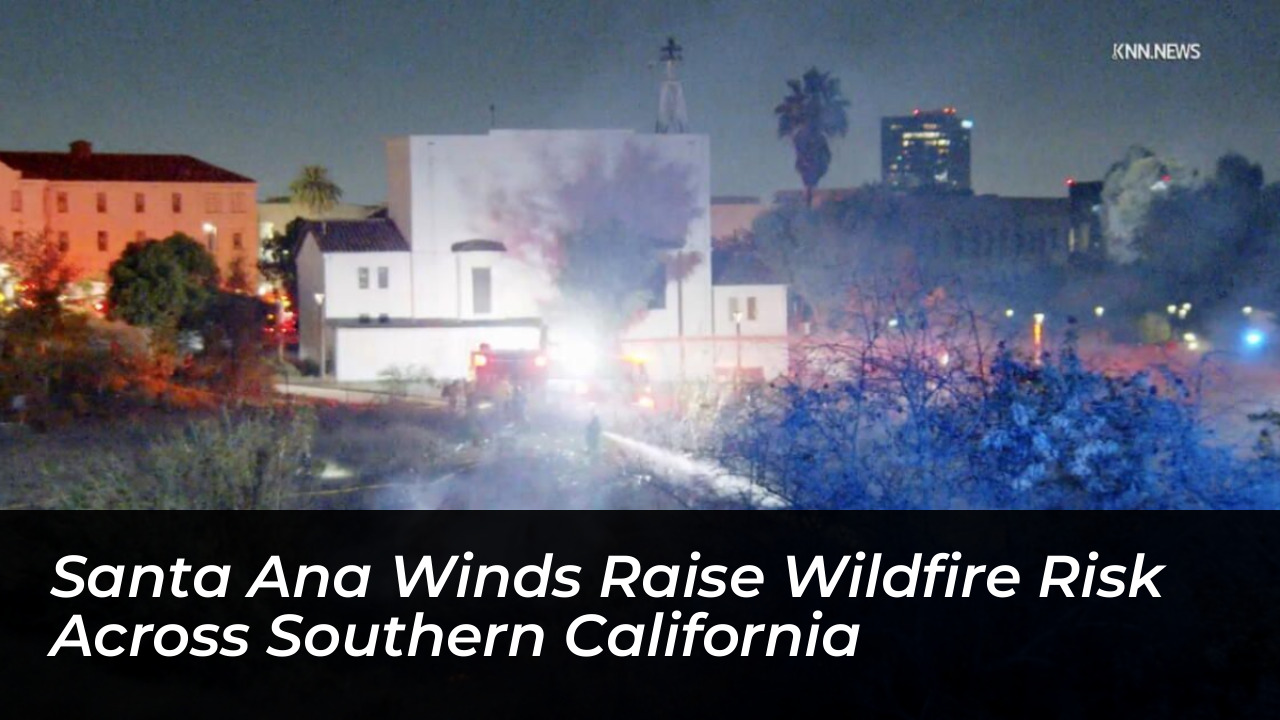

Strong seasonal Santa Ana winds and dry vegetation have heightened wildfire danger across Southern California, prompting evacuation orders, Red Flag Warnings, and emergency preparations in Los Angeles and neighboring counties. The arrival of the region’s first major wind event brings hot, low-humidity conditions capable of driving rapid fire spread through Friday, October 16, according to weather officials and CalFire.
Multiple blazes have already broken out across the region, straining local firefighting resources. Incidents include the Peak Fire in the hills north of Azusa in Los Angeles County, the Henderson Fire near Camp Pendleton in San Diego County, and the Bryson Fire near Malibu. Authorities have issued mandatory evacuation orders and warnings in vulnerable communities as ground crews and aerial units work to contain the flames and protect vital infrastructure.
Active Blazes and Evacuations Prompt High Alert
The Henderson Fire burned more than 1,000 acres, threatening nearby buildings and regional power lines, according to CalFire incident reports. Meanwhile, the Peak Fire triggered immediate evacuation orders and warnings for surrounding foothill communities, and the Bryson Fire prompted precautionary warnings for residents in Malibu.
The National Weather Service issued Red Flag Warnings covering mountainous and valley regions, including parts of Los Angeles and Ventura counties. Forecasters predict sustained winds of 20 to 40 mph with isolated gusts reaching up to 70 mph in higher elevations. While these speeds are not expected to match the extreme conditions seen during the January 2025 firestorms, officials warn that any new ignition source could still lead to rapid, aggressive fire behavior.
Emergency Preparedness and Lessons Learned
State and local agencies are applying lessons learned from previous disasters, such as the Palisades and Eaton fires, which exposed vulnerabilities in command structures, resource deployment, and public communication. In response, the California Governor’s Office of Emergency Services has pre-deployed additional firefighters, tactical aircraft, and emergency equipment throughout Southern California.
Local departments are also taking proactive measures. Los Angeles city and county fire departments have increased daily staffing levels, strategically positioning engines, strike teams, water tenders, camp crews, and reconnaissance drones in high-risk zones. Los Angeles officials confirmed that hillside water tanks are fully stocked, open-air reservoirs remain accessible, and over 90 percent of the recommendations originating from the fire department’s after-action reviews have been fully implemented.
Utility Shutoffs and Preventive Measures
To mitigate the risk of electrical infrastructure sparking new blazes during high winds, major utility providers have implemented or are considering Public Safety Power Shutoffs. Pacific Gas and Electric warned roughly 88,000 customers across 29 counties of impending outages, while Southern California Edison evaluated shutoffs affecting hundreds of thousands of customers in several counties.
Los Angeles Fire Chief Jaime Moore urged residents living in high-risk zones to keep neighborhood streets clear for emergency vehicles, finalize personal emergency evacuation plans, and stay tuned to local news alerts. Public safety agencies also recommend that residents avoid outdoor activities that could generate sparks, such as using barbecues, lighting campfires, or improperly discarding smoking materials.
Santa Ana Wind Dynamics
Santa Ana winds are strong, dry offshore winds that originate from high-pressure air masses over the Great Basin desert. As these air masses sweep downward toward the coast, they compress and warm significantly, stripping moisture from regional vegetation. Historically active between September and May, this combination of high heat, low humidity, and dry brush creates an elevated window for explosive wildfire growth across Southern California.
- Monitor local emergency channels and sign up for official county alerts.
- Prepare an emergency go-bag with essential documents, medications, and supplies.
- Clear dead brush, leaves, and flammable debris from around residential properties.
- Secure outdoor items, such as patio furniture and holiday decorations, against heavy gusts.