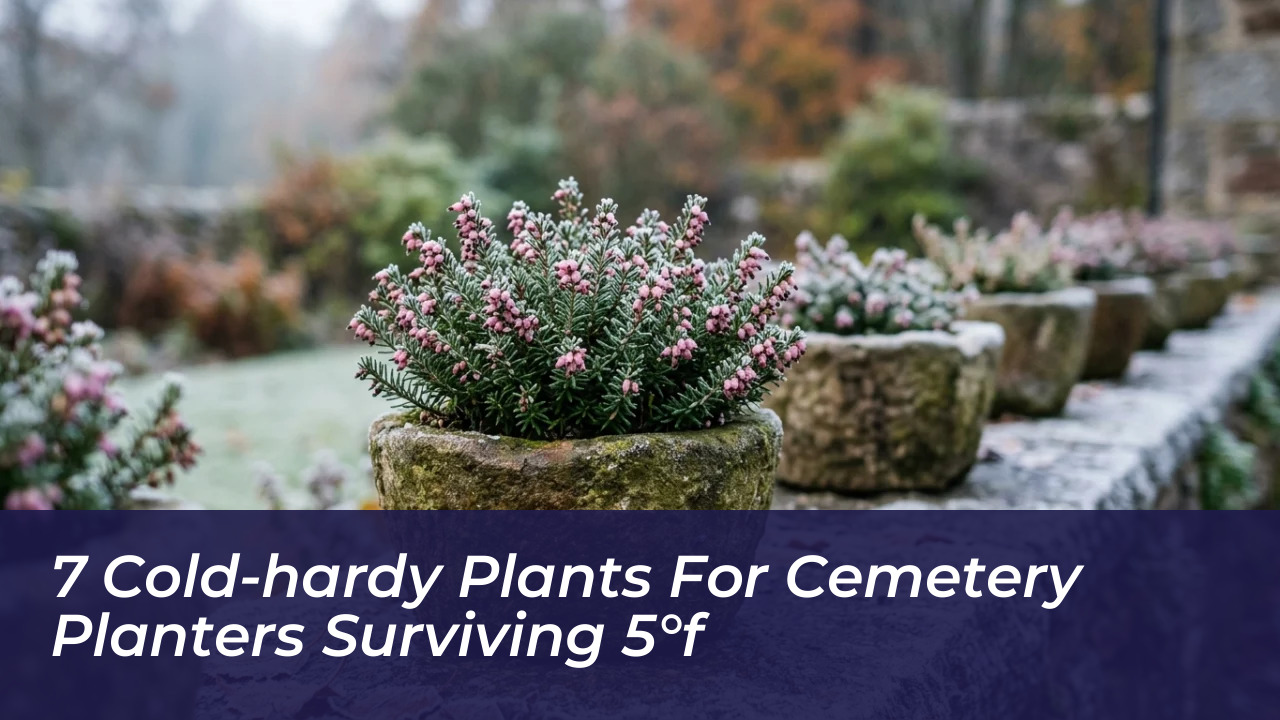

Maintaining a gravesite memorial through late autumn and harsh winter months requires choosing plant varieties uniquely adapted to container freezes and microclimates. While standard garden chrysanthemums begin showing frost damage below 23°F, pairing or replacing them with resilient evergreens, hardy berries, and foliage can keep memorial planters vibrant even through sub-zero temperature drops down to 5°F (-15°C).
Potted plants face far harsher conditions than landscape beds. The limited soil volume inside a small container is completely exposed to cold air, allowing root balls to freeze solid long before in-ground plantings feel the shock. Achieving long-lasting displays comes down to selecting structural species whose ornamental value relies on durable foliage, persistent berries, or tight buds rather than fragile petals.
1. Garden Chrysanthemums: Focus on Buds Rather Than Full Blooms
Chrysanthemums remain an autumn staple for gravesites, but choosing the right container specimen makes all the difference. When purchasing plants, look for compact specimens covered in dense, unopened buds rather than plants already in full bloom. A budded mum unfurls gradually and extends its display significantly longer than an open specimen.
Standard garden varieties bloom reliably from September into November, but exposed open flowers will turn brown when severe frost hits. Position containers as close to headstones as possible to shield them from biting winds, and keep the potting mix evenly moist without letting it become waterlogged.
2. Winter Heath (Erica carnea): Extreme Cold Resistance
For outstanding durability against harsh winter weather, winter heath (Erica carnea) is a top candidate. This low-growing evergreen subshrub withstands steep temperature plunges while retaining rich green foliage and colorful winter buds. Unlike common Scotch heather, winter heath does not require purely acidic soil and easily adapts to neutral or slightly alkaline potting mixes.
This versatility makes it ideal for mixed urns, stone basins, and seasonal container blends placed at cemetery plots.
3. Flowering Kale and Ornamental Cabbage: Cold Intensifies Pigments
While plunging temperatures destroy delicate flowers, ornamental cabbage and kale actually intensify in color as the mercury drops. Their decorative value comes from ruffled, concentric leaf rosettes that turn vivid shades of magenta, pink, and crisp white.
Well-hardened plants can endure cold snaps down to 5°F. However, isolated roots in small containers will freeze much faster than those planted in open soil, requiring sheltered positioning during unseasonably severe freezes.
4. Japanese Skimmia (Skimmia japonica): Glossy Foliage and Dense Buds
Japanese skimmia offers clean, glossy, dark evergreen leaves paired with clusters of compact autumn buds or vivid berries. Because its visual appeal does not rely on short-lived petals, it maintains a tailored, formal appearance well into the cold months.
Skimmia prefers partial to full shade and can handle temperature drops ranging from 14°F to 5°F (-10°C to -15°C). It requires a steady moisture balance, reacting poorly to completely desiccated or water-saturated soil.
5. American Wintergreen (Gaultheria procumbens): Bright Scarlet Berries
American wintergreen, also known as checkerberry, is a low-growing evergreen ground cover that produces striking red berries in the fall. Its spreading habit makes it an ideal accent in smaller urns and low-profile memorial planters.
Wintergreen delivers excellent frost tolerance, but it demands specific soil conditions. It requires an acidic to neutral potting substrate with reliable drainage, failing quickly in generic heavy soils or water-retaining clay.
6. English Ivy (Hedera helix): Trailing Evergreen Structure
English ivy functions as a dependable trailing foundation for cemetery arrangements. Its cascading vines soften rigid stone borders and deliver continuous color that ignores freezing conditions entirely.
Ivy tolerates everything from full sun to heavy shade. When combining it in shared planters, choose compact varieties to prevent vigorous growth from crowding out companion root balls.
7. Coral Bells (Heuchera): Foliage Tones Replacing Traditional Flowers
Coral bells deliver deep color through perennial leaves in burgundy, amber, bronze, purple, and bright lime. Many cultivars retain their foliage throughout cold snaps, providing steady visual warmth.
These hardy perennials perform best in light shade or dappled sun. Combining them with trailing vines and flowering accents creates layered visual interest without the need for delicate greenhouse blooms.
The Critical Pitfall: Root Zone Freezing in Containers
A widespread misconception is that an officially frost-hardy plant will survive any winter container setup untouched. While its crown and foliage might tolerate sub-zero temperatures, the root system behaves differently when elevated above ground.
Thin plastic nursery pots set directly onto cold granite or concrete stone allow cold air to circle the root zone, freezing water inside the soil mix and killing root fibers. Ensuring survival requires frost-resistant pottery, clear drainage holes, and sheltered placement against stone structures.
Plant Variety Cold Tolerance Reference
- Garden Chrysanthemums: Hardy to 23°F (-5°C); best purchased with unopened buds.
- Winter Heath: Survives sub-freezing nights; tolerates neutral to basic soils.
- Ornamental Cabbage: Endures drops to 5°F (-15°C); color intensifies in cold.
- Japanese Skimmia: Tolerates 14°F to 5°F (-10°C to -15°C); glossy evergreen leaves.
- American Wintergreen: Cold-hardy with red berries; needs acidic to neutral soil.
- English Ivy: Fully winter-hardy evergreen trailing vines; shade tolerant.
- Coral Bells: Cold-hardy perennial foliage in bronze, purple, and green.
Essential Rules for Late-Season Cemetery Planters
- Select persistent foliage over soft blossoms: Relying on evergreen leaves, berries, and textured frills ensures color remains even if petals succumb to freeze.
- Prevent total soil desiccation: Low temperatures do not eliminate a plant’s need for hydration. Water when soil is thawed, but verify containers drain rapidly to prevent ice stagnation.
- Tuck containers behind headstones: Placing pots against the leeward face of headstones shields roots and shoots from drying winter winds.
- Anticipate petal loss during heavy freezes: Remember that surviving an extreme frost does not mean late blossoms stay pristine; hardy greenery carries the arrangement when blooms fade.
Frequently Asked Questions About Cemetery Winter Plants
Can I leave plastic nursery pots directly on a gravesite stone?
It is not recommended. Thin plastic pots allow cold air to circulate around the root ball, causing the soil to freeze completely and destroying root fibers. Place plants inside frost-resistant outer containers or ceramic urns with proper drainage.
How do I keep cemetery plants from drying out in winter?
Plants still lose moisture through their foliage during cold, windy winter days. Water the container thoroughly during milder thaws when the soil is not frozen solid, ensuring the pot has adequate drainage holes to prevent standing ice.
What is the absolute lowest temperature these plants can survive?
The selected varieties in this guide, such as ornamental cabbage, winter heath, and specific evergreens, can tolerate container temperature drops down to approximately 5°F (-15°C) when properly sheltered against headstones and insulated.
Do I need to fertilize cemetery planters in the winter?
No. Plants are dormant or semi-dormant during late autumn and winter. Adding fertilizer can trigger soft new growth that is highly vulnerable to freezing temperatures and frost damage.
How can I protect chrysanthemums from freezing too quickly?
Buy plants with tight, unopened buds rather than fully open flowers, and place the container directly against the leeward side of the headstone to block harsh, drying winter winds.