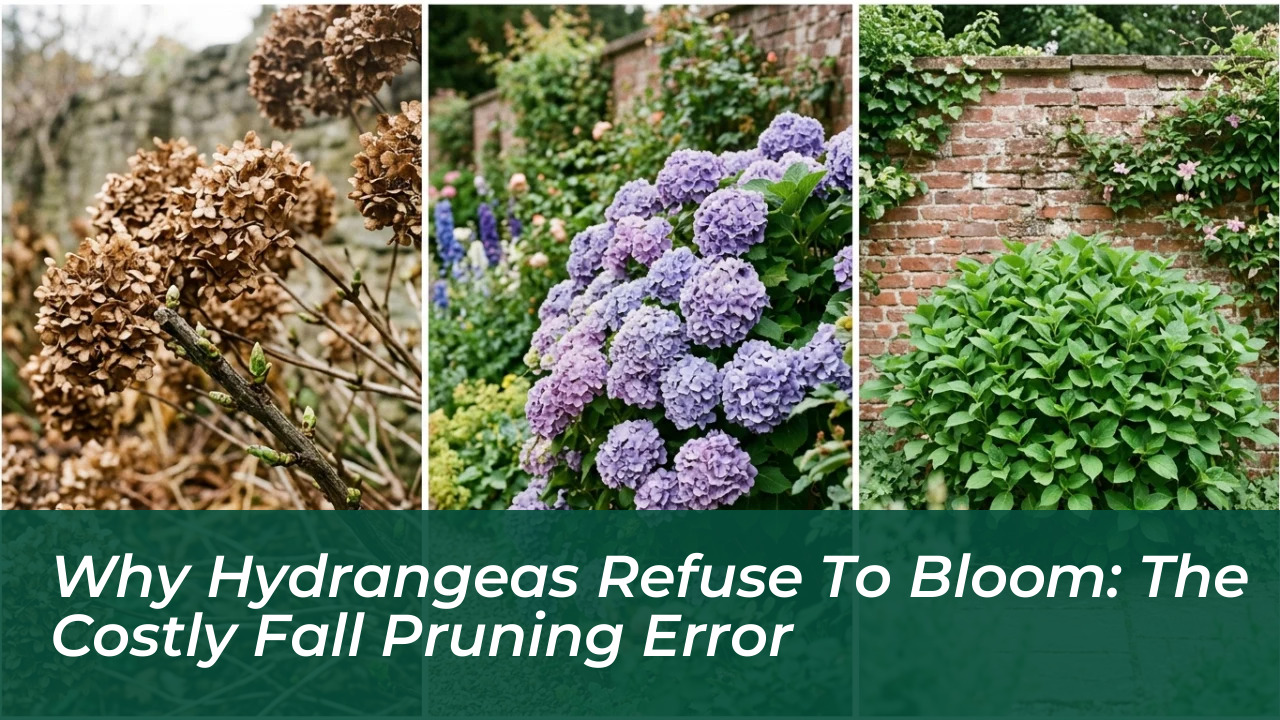

Cutting back bigleaf hydrangeas in the fall strips away next summer’s entire floral display before it ever opens. While reaching for pruning shears during end-of-season yard cleanups feels productive, doing so removes the dormant flower buds formed months in advance. This leaves behind lush green foliage that never produces a single bloom.
Homeowners often discover this mistake only when summer arrives. The shrub springs to life with vibrant, healthy leaves, yet the dense heads of colorful blossoms never appear. The culprit is not poor soil, improper watering, or inadequate sunlight. It is an issue of biological timing that begins the moment autumn yard chores start.
The Old Wood Cycle: Why Fall Pruning Erases Summer Color
The vast majority of mophead and lacecap varieties found in home gardens belong to Hydrangea macrophylla. Unlike shrubs that produce blossoms on new growth emerging in spring, bigleaf hydrangeas bloom exclusively on “old wood”-the mature stems established during the previous growing season. These plants begin developing next year’s embryonic flower buds in late summer and throughout the autumn months.
Once set, those tender buds remain tucked quietly along the stems all winter long, waiting for rising spring temperatures to break dormancy. When gardeners cut back browned, faded flowerheads and shorten healthy stems in October or November, every cut removes those pre-formed buds. Pruning in autumn or winter removes the exact buds that would have produced flowers the following summer, leaving a shrub that is healthy but completely barren.
The shrub survives the aggressive cutback without issue, funneling its stored energy into generating fresh branches and emerald foliage. However, because those stems are brand new, they lack the maturity required to form blooms during that cycle. The plant must complete another full year of development before setting buds again, effectively locking you out of a flowering season.
Old Wood vs. New Wood Varieties
This pruning sensitivity does not apply equally across every variety in the garden. Panicle hydrangeas (Hydrangea paniculata), known for their cone-shaped blooms, flower on “new wood” created in spring and easily withstand late pruning without sacrificing color. Knowing your specific variety before grabbing your pruners makes the difference between a bare garden bed and a bountiful summer display.
Here is how different varieties compare regarding pruning and bud formation:
- Bigleaf (H. macrophylla): Blooms on old wood; requires light cleanup in March after frost passes.
- Panicle (H. paniculata): Blooms on new spring growth; tolerates cutting back in late winter or early spring.
- Smooth (H. arborescens): Blooms on new wood; handles aggressive late-winter pruning exceptionally well.
- Oakleaf (H. quercifolia): Blooms on old wood; requires minimal corrective pruning only after flowering.
How Dried Flowerheads Act as a Winter Armor
Leaving brittle, brown flower clusters on your shrubs throughout the damp winter months may feel visually unkempt, but those dried heads serve an indispensable ecological function. In regions that endure sharp winter drops and unpredictable late freezes, those dried florets act as an umbrella and insulation blanket for the vulnerable buds resting directly underneath.
Removing dried flowerheads in autumn strips away this natural buffer, exposing cold-sensitive embryonic cells to freezing winds and frost damage. For gardeners in particularly cold climates or those tending young, shallow-rooted transplants, adding an extra layer of organic mulch around the root zone or draping shrubs with protective winter fleece provides crucial thermal insurance.
When and How to Prune Without Sacrificing Blooms
The definitive rule for pruning hydrangeas of the bigleaf variety is to hold off completely until March, safely after the severe threat of freezing ground temperatures has cleared. Delaying your cleanup makes it remarkably simple to identify dead stems from those harboring healthy, emerging growth.
- Wait for bud swell: Hold off on pruning until you observe plump, slightly green buds swelling visibly along the woody stalks.
- Cut just above live nodes: Snip off the old dried blooms just above the uppermost set of viable, swollen buds near the top of the cane.
- Clear out damaged growth: Trace dry, hollow, or visibly broken branches directly down to the soil line and remove them completely.
- Keep cuts minimal: Practice gentle rejuvenation rather than wholesale hedging, avoiding any drastic reduction in the shrub’s overall height.
- Sterilize equipment: Clean your bypass pruners between individual bushes using a disinfectant spray or alcohol wipe to halt the spread of fungal pathogens.
By shifting your gardening calendar and resisting the urge to tidy every stalk in the autumn, you protect the buds already hard at work beneath the surface, ensuring a lush, vibrant canopy across your beds all summer long.
Frequently Asked Questions
Can I prune bigleaf hydrangeas in the spring instead of fall?
Yes. Waiting until early spring-specifically March or April when you see buds swelling-allows you to easily differentiate between dead wood and live stems carrying next summer’s flower buds.
What should I do if I accidentally pruned my hydrangeas in the fall?
If you already pruned them in autumn, stop cutting immediately. Do not fertilize with high-nitrogen products, maintain steady moisture, and let the plant focus on growing healthy foliage. It will set new buds next summer for the following year’s blooms.
Do panicle hydrangeas suffer from fall pruning?
No. Panicle hydrangeas flower on new wood grown during the current season. You can safely prune them in late winter or early spring without risking your summer flower display.
Why do my hydrangeas have plenty of leaves but zero flowers?
This is almost always caused by improper pruning time by removing old wood buds, late spring frost damage to the buds, or an excess of nitrogen fertilizer that forces leafy growth instead of flower production.