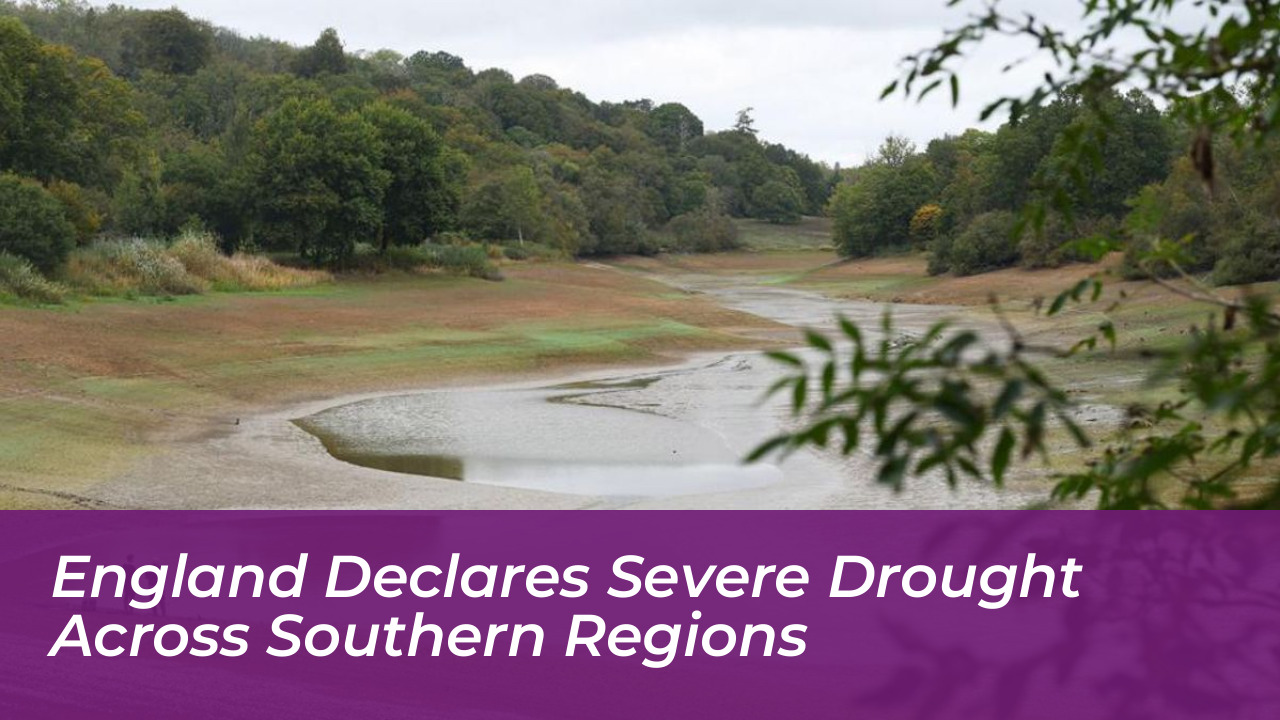

Months of below-average rainfall and record-breaking summer heat have pushed parts of southern England into severe drought. This prompted the Environment Agency to intensify water monitoring and urge households to reduce consumption. The declaration, announced on Thursday, October 15, affects parts of Cornwall, Devon, Dorset, Somerset, East Suss*x, and West Suss*x. Approximately 50 million people are affected by drought conditions across England.
Water and flooding minister Emma Hardy told MPs on October 16 that the prolonged dry spell created conditions not experienced for decades. Government officials emphasized that customer supplies are not expected to be immediately interrupted. However, they stressed that early intervention is vital to protect dwindling reserves before winter.
Impact on Reservoirs and Water Resources
The shift to a severe drought status was triggered by critical concerns surrounding specific major water storage facilities. These include the Ardingly Reservoir in West Suss*x and the Wimbleball Reservoir in Somerset. Recent figures indicate that Wimbleball Reservoir on Exmoor dropped to 14.9% capacity, while Ardingly stands at roughly 19.4% full. Other major regional bodies, including Roadford in Devon at 36.8% and Colliford in Cornwall at 35%, are also experiencing exceptionally low levels.
The Environment Agency noted that south-east and south-west England experienced their driest April to September period in more than a century. Normally, reservoir storage across England hovers around 75% at this time of year. However, ongoing dry weather has caused storage levels to continue falling sharply.
Government and Agency Response
In response to the escalating crisis, the government instructed water companies to execute daily monitoring of reservoir and river levels. They must also implement tougher water quality checks. The Environment Agency increased compliance checks on commercial entities that withdraw water from natural sources to ensure they only take permitted quantities.
Environment Secretary Dame Angela Eagle stated that the current level of drought is something the nation has not experienced for decades. This prompted the government to ramp up operational support and planning. Water companies such as South East Water and South West Water were granted drought orders. These orders allow them to reduce water volumes sent from reservoirs to rivers to preserve supplies.
Agricultural and Environmental Consequences
The prolonged dry conditions created severe challenges for farmers, who faced a difficult harvesting season and mounting concerns over water availability for livestock and future crops. Low river flows and plummeting oxygen levels in stagnant ponds triggered numerous fish rescues and heightened wildfire risks across vulnerable dry landscapes.
Authorities continue to appeal to the public to practice water-saving habits. These include turning off taps while brushing teeth, fixing leaks promptly, and adhering to existing temporary use bans to ensure essential reserves remain sufficient until sustained rainfall arrives.