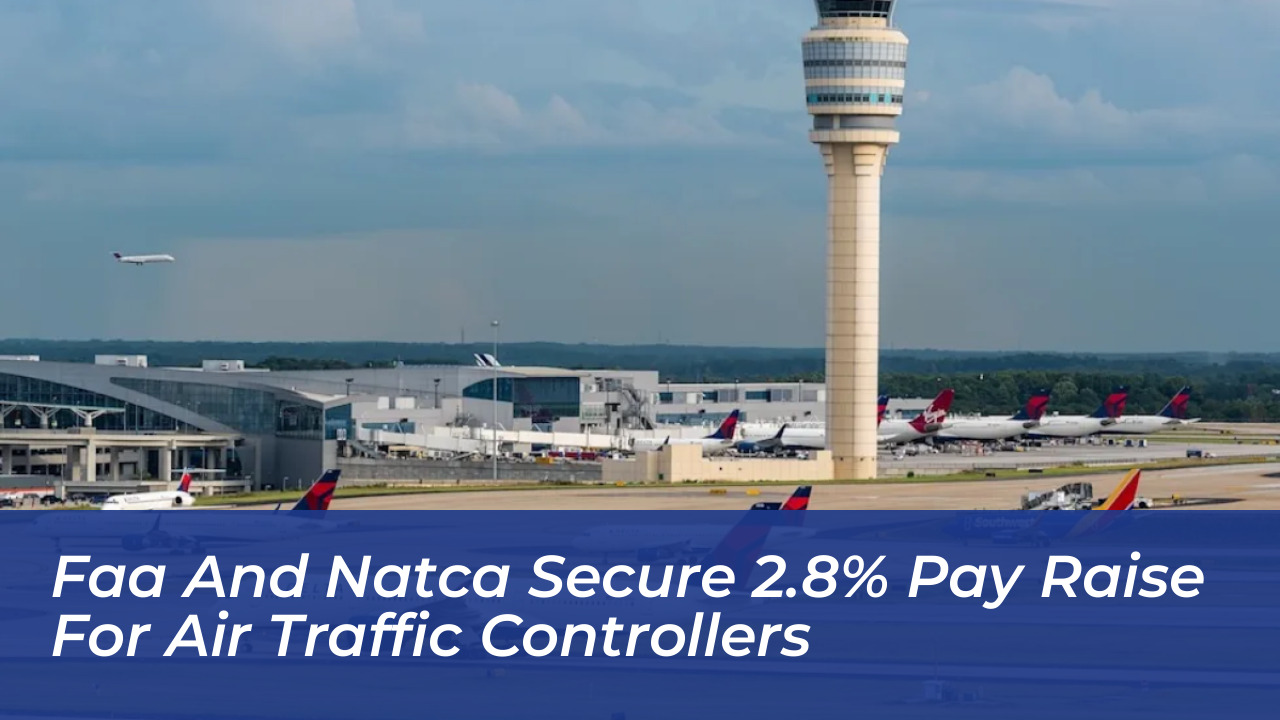

The Federal Aviation Administration (FAA) and the National Air Traffic Controllers Association (NATCA) finalized an agreement to grant a 2.8 percent pay raise to eligible air traffic controllers. Announced on Friday, October 16, 2026, the compensation increase is tied directly to workplace reforms aimed at improving scheduling efficiency, operational coverage, and facility staffing across the United States air traffic control system.
According to the U.S. Department of Transportation, the pay adjustment took effect on October 18, 2026, and is retroactive to the beginning of the year. The agreement stems from provisions enacted by Congress in the Homeland Security and Further Additional Continuing Appropriations Act, which authorized $140 million for controller compensation adjustments contingent upon measurable improvements in workplace productivity.
Key Workforce Reforms Linked to the Pay Increase
The financial adjustment provides relief to aviation professionals managing high volumes of traffic. Additionally, the agreement introduces mandatory operational changes designed to resolve persistent staffing shortages and modernize oversight across regional air traffic facilities:
- Timecard Tracking: Air traffic facilities will implement a standard “badge in” and “badge out” system similar to procedures used across other federal agencies. This gives local managers accurate data to monitor training and safety compliance.
- Demand-Based Shift Planning: Local facility managers and NATCA representatives will jointly create shift guidelines based on anticipated workloads and operational demand, maximizing staffing coverage during peak travel hours.
- Targeted Personnel Reassignments: Controller transfers will be redirected toward facilities experiencing the most severe staffing deficits, reversing previous trends that often shifted personnel to locations with minimal shortages.
Collaboration and Leadership Statements
U.S. Transportation Secretary Sean P. Duffy emphasized the administration’s commitment to modernizing national airspace operations while supporting front-line aviation personnel.
President Trump has made clear that we must modernize our skies and deliver results for the flying public. That means taking a hard look at how we operate, fixing outdated staffing practices, and growing our air traffic control workforce. – U.S. Transportation Secretary Sean P. Duffy
FAA Administrator Bryan Bedford noted that the collaborative agreement equips facility leaders with the practical tools necessary to respond effectively to daily operational demands. Meanwhile, NATCA President Nick Daniels highlighted that the agreement represents the culmination of sustained advocacy by the union to secure fair compensation and improved working conditions for safety-critical personnel.
Addressing National Airspace Challenges
The aviation sector has faced scrutiny regarding controller fatigue, mandatory overtime, and six-day work weeks as the agency struggles to close persistent staffing gaps. The FAA’s workforce plans previously highlighted significant disparities between active certified professional controllers and target facility staffing numbers, particularly in high-density regions like New York and Chicago.
By implementing structured attendance tracking, data-driven shift schedules, and strategic transfers, aviation officials intend to optimize the existing workforce, improve overall quality of life for controllers, and maintain the safety and efficiency of the National Airspace System.