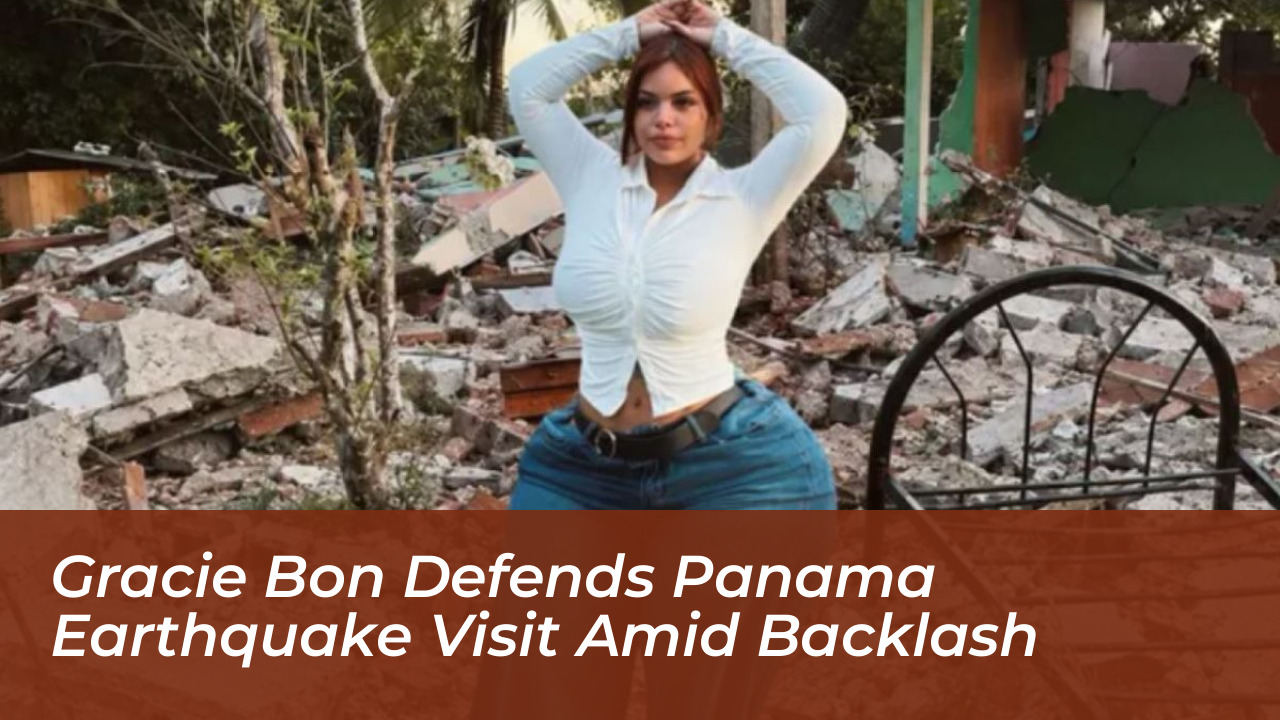

Panamanian model and influencer Gracie Bon has strongly defended her recent visit to earthquake-stricken areas in Panama following severe online backlash. Social media users accused her of using a natural disaster as a backdrop for a personal photoshoot after she shared images of herself standing near rubble and damaged structures. Bon pushed back against the criticism, explaining that her primary intention was to document the true scale of the devastation, deliver supplies, and encourage her 11.9 million followers to support affected families.
The controversy began on Sunday, October 11, just two days after powerful earthquakes struck Panama. According to reports from the Associated Press and Reuters, a magnitude 7.7 earthquake followed by a magnitude 6.6 tremor and more than 200 aftershocks hit the country on Friday, October 9. Official figures from Panama’s government and President José Raúl Mulino indicated that nearly 900 to over 2,000 families suffered home damage or total destruction, with at least 27 people injured. Authorities swiftly declared a state of emergency to accelerate response and relief funds.
Why Gracie Bon’s Earthquake Photos Sparked Backlash
Bon’s Instagram post featured six photographs showing her wearing white clothing amid broken bricks, cracked walls, and debris. While the post quickly garnered roughly 150,000 likes within 24 hours, it also attracted a wave of sharp criticism. Commenters questioned the appropriateness of posing prominently in disaster zones, arguing that the imagery detracted from the genuine suffering of displaced residents and turned a humanitarian crisis into content creation.
Further controversy arose when a social media user claimed that one of the damaged houses featured in the photographs belonged to their grandmother and alleged that the family had not authorized the pictures. Although this claim remained unverified, it intensified discussions regarding privacy, consent, and the ethics of influencers documenting disaster relief.
Bon’s Response: Raising Awareness Versus Posing
Addressing the backlash through an Instagram video and stories translated from Spanish, Bon rejected allegations that she had staged a photoshoot or sought to profit from the tragedy. She maintained that she funded the distribution of supplies out of her own pocket and traveled to rural regions to help families rebuild.
Explaining her decision to appear in the photographs, Bon argued that posts featuring her personal presence consistently reached a broader audience than pictures of damaged buildings alone. She stated that her goal was to maximize visibility for neglected rural communities that she felt were receiving insufficient media coverage.
“I’m not doing a photoshoot or posing. I’m telling you: look, what does Panama really look like? If I hadn’t appeared in the photos, would they be more acceptable to you?” Bon said in her response.
Her original caption emphasized the value of human life over material possessions, urging her followers to appreciate what they have and assist those who lost everything. As recovery efforts continue across Panama under the national state of emergency, Bon’s actions have reignited global debates regarding how public figures document charity and navigate emergency response on social media.