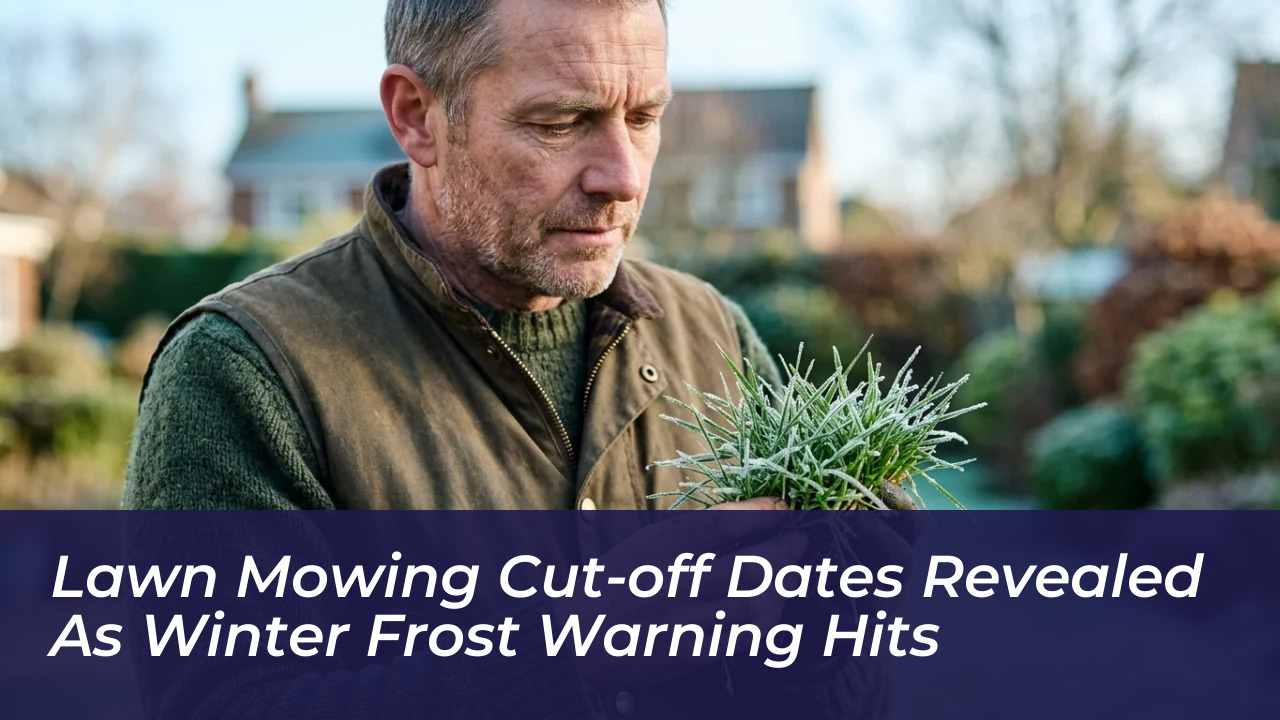

British gardeners face a strict seasonal deadline to complete their final lawn mowing of the year. Experts warn that cutting grass after early December risks serious frost damage. AccuWeather forecasts indicate the final cut-off dates fall on December 4 for Scotland and December 8 for England, Wales, and Northern Ireland. These dates mark the exact window when cold conditions bring turf development to a halt.
As overnight temperatures drop toward freezing, garden blades cut too late struggle to recover. Once local temperatures consistently fall below 7°C, grass slows its growth rate significantly. This leaves open blade wounds exposed to winter moisture and destructive ground frosts. Understanding this thermal threshold is essential for keeping turf healthy until spring returns.
The 7°C Rule: When Grass Enters Winter Dormancy
Analysis from gardening specialists at Gardeners Dream reveals that the secret to winter turf care revolves around a single thermal barrier. Grass growth decelerates substantially once ambient daytime temperatures fail to exceed 7°C. Mowing below this threshold forces grass plants to expend scarce energy on cellular repair rather than root preservation.
Once the thermometer drops to around 7°C, grass naturally reduces its growth speed. While meteorological winter officially commences on December 1, and astronomical winter arrives on December 21 according to the Met Office, recent mild autumns have allowed garden maintenance to stretch later than usual. However, waiting too long leaves the grass plant exposed when the inevitable freeze hits.
Regional Cut-Off Dates Across the UK
Because daylight hours and weather systems vary dramatically across the British Isles, the final date to operate lawn mowers differs between regions. Scotland sits further north, receiving less intense sunlight and shorter daylight periods earlier in the season. This causes regional temperatures to plummet far faster than elsewhere in the UK.
- Scotland: Friday, December 4
- England: Tuesday, December 8
- Wales: Tuesday, December 8
- Northern Ireland: Tuesday, December 8
Craig Wilson, co-founder and gardening specialist at Gardeners Dream, recommends erring on the side of caution rather than stretching the season to the absolute limit. Freezing temperatures can arrive unexpectedly, turning late cuts into lasting garden issues.
To be on the safe side, I would always cut my lawn just before the end of November, even if it’s been a mild autumn. Just in case the weather decides to change and temperatures drop quicker than previously predicted. – Craig Wilson, Gardening Specialist
Winter Lawn Preparation: Essential Post-Mow Checklist
Finishing the mowing season is only one part of protecting turf from prolonged cold weather. Moisture retention, moss formation, and soil compaction pose equal threats to root structures during damp British winters.
- Aerate compacted turf: Use an ordinary garden fork to spike deep holes across the lawn surface. This process relieves compaction and enhances drainage, preventing severe waterlogging.
- Clear decaying surface litter: Clear away autumn leaf cover immediately to stop fungal build-up and preserve aeration.
- Cease high-nitrogen feeding: Avoid encouraging lush top growth that frost will easily destroy during sub-zero nights.
The Hidden Risk of Autumn Leaf Accumulation
A widespread misconception among homeowners is that leaving a blanket of fallen autumn leaves provides a natural, insulating cover for grass roots during severe weather. Horticultural experts caution that the reality is the exact opposite.
Leaves left to accumulate on your lawn can smother the grass beneath, depriving it of vital sunlight and oxygen. This leads to a weakened, patchy lawn come spring. According to Jade Ivory from Green Thumb, uncollected leaf layers seal in excessive moisture while blocking necessary air circulation. This creates an environment primed for fungal decay and dead patches by early spring.
Monitor local frost forecasts closely over the coming weeks before deciding on a final cut. Check lawn drainage now by looking for surface pooling after heavy seasonal downpours.
Frequently Asked Questions About Winter Lawn Care
When is the absolute last day to mow my lawn in the UK?
The recommended cut-off date is December 4 for Scotland and December 8 for England, Wales, and Northern Ireland. However, local weather and temperature drops below 7°C should always take priority over calendar dates.
What is the 7°C rule for grass?
The 7°C rule indicates the temperature threshold where active grass growth slows down drastically. Mowing after temperatures drop below this point causes stress because the plant focuses on wound repair instead of root health.
Should I cut my grass shorter before winter?
No. Scalping your lawn before winter leaves it vulnerable to frost and disease. Maintain a standard, healthy height and follow the one-third rule so the grass blades can still capture sunlight.
Can I leave fallen leaves on my grass over winter?
No. Leaving a thick blanket of wet leaves smothers the grass, blocks oxygen, and promotes fungal diseases and moss growth.
How can I improve lawn drainage before winter frosts arrive?
Use a garden fork to aerate compacted areas across the turf. This relieves soil compaction and allows heavy seasonal rainwater to drain properly, protecting the root systems.