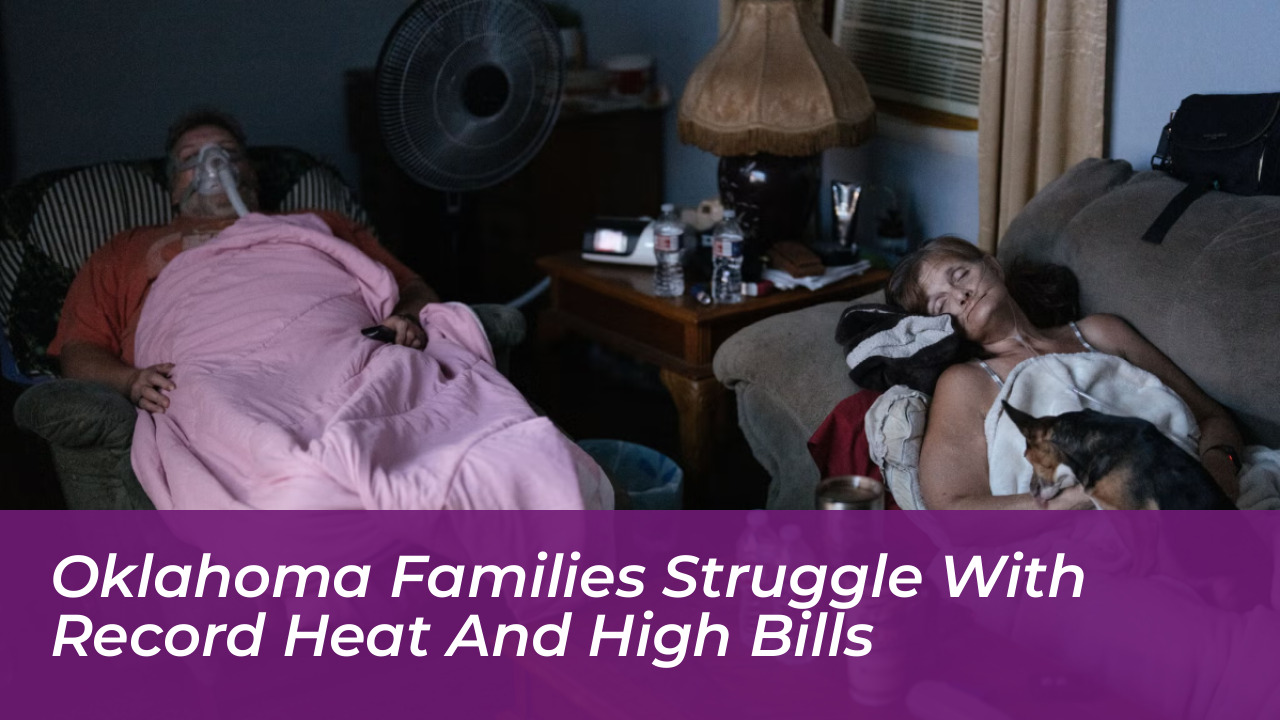

After a hot summer pushed electricity costs to record highs across the United States, families in Oklahoma are facing severe financial hardship. Residents like Genia Weitz and her husband, Daryl Mason, have faced the threat of losing power while relying heavily on air conditioning and vital medical equipment to cope with dangerous temperatures.
Weitz, 58, received a disconnection notice demanding payment of an outstanding electricity balance of $1,340.96 within nine days. This amount far exceeded her monthly income. Across the state, soaring power expenses and strict utility regulations have turned routine summer cooling into a critical crisis for thousands of households.
Oklahoma Leads the Nation in Power Shutoffs
A recent federal report by the U.S. Department of Energy shows that Oklahoma leads the nation in power shutoffs relative to its size. Public Service Company of Oklahoma (PSO), the state’s main power provider, cuts off electricity to customers at more than five times the national average rate.
The financial strain has overwhelmed local community resources. In Tulsa alone, hundreds of residents contact assistance hotlines every month to seek help with electric service payments. Nonprofits like the Helping Hand Ministry spend up to $14,000 a week assisting cash-strapped customers who line up with past-due notices to prevent disconnections.
State Regulations and Cutoff Thresholds
Oklahoma regulations prevent utility companies from disconnecting electricity when the heat index exceeds 101 degrees. However, when temperatures drop just slightly below that threshold-such as a heat index of 99-vulnerable residents immediately become susceptible to losing their power.
Consumer advocates have repeatedly lobbied the Oklahoma Corporation Commission, which regulates state utilities, to lower the heat index protection threshold. These efforts have been unsuccessful so far, leaving families exposed to shutoffs during prolonged stretches of high temperatures.
Available Assistance Programs for Oklahoma Residents
Families struggling to cover their energy bills can turn to several state and local emergency relief programs designed to prevent service disconnections:
- Low-Income Home Energy Assistance Program (LIHEAP): Administered via the Oklahoma Department of Human Services, LIHEAP provides separate winter-heating and summer-cooling financial assistance during designated enrollment windows.
- Energy Crisis Assistance Program (ECAP): ECAP helps eligible households facing immediate disconnection. It offers up to $750 in support toward energy costs per fiscal year to resolve critical shortages.
- 211 Eastern Oklahoma: Dialing 211 connects residents directly to free, confidential referral services to locate emergency funds, food banks, or designated cooling stations.
- Operation Cool Down: Run by organizations like Oklahoma Veterans United, this initiative provides free air conditioning units to low-income residents who meet medical, mobility, or age-related requirements.
Life-Threatening Situations and Expedited Help
State guidelines mandate expedited processing for households facing life-threatening emergencies. Oklahoma accepts life-threatening ECAP referrals year-round. This applies when an impending energy shutoff threatens prescribed life-saving medical equipment without a backup battery, or when extreme heat endangers an individual with a verified pre-existing medical condition.
Requests designated as life-threatening must legally be reviewed and approved or denied within 18 hours after the household submits the necessary verification details.
Long-Term Solutions and Energy Efficiency
Beyond emergency crisis funds, homeowners and renters can pursue long-term savings through the Oklahoma Department of Commerce Weatherization Program. This program assists lower-income households with insulation and draft-sealing upgrades.
Additionally, utility providers like PSO offer rebate programs for energy-efficient appliance installations. They also provide peak-demand reduction programs, such as Power Hours, which make minor adjustments to home thermostats to lower cumulative monthly energy consumption.