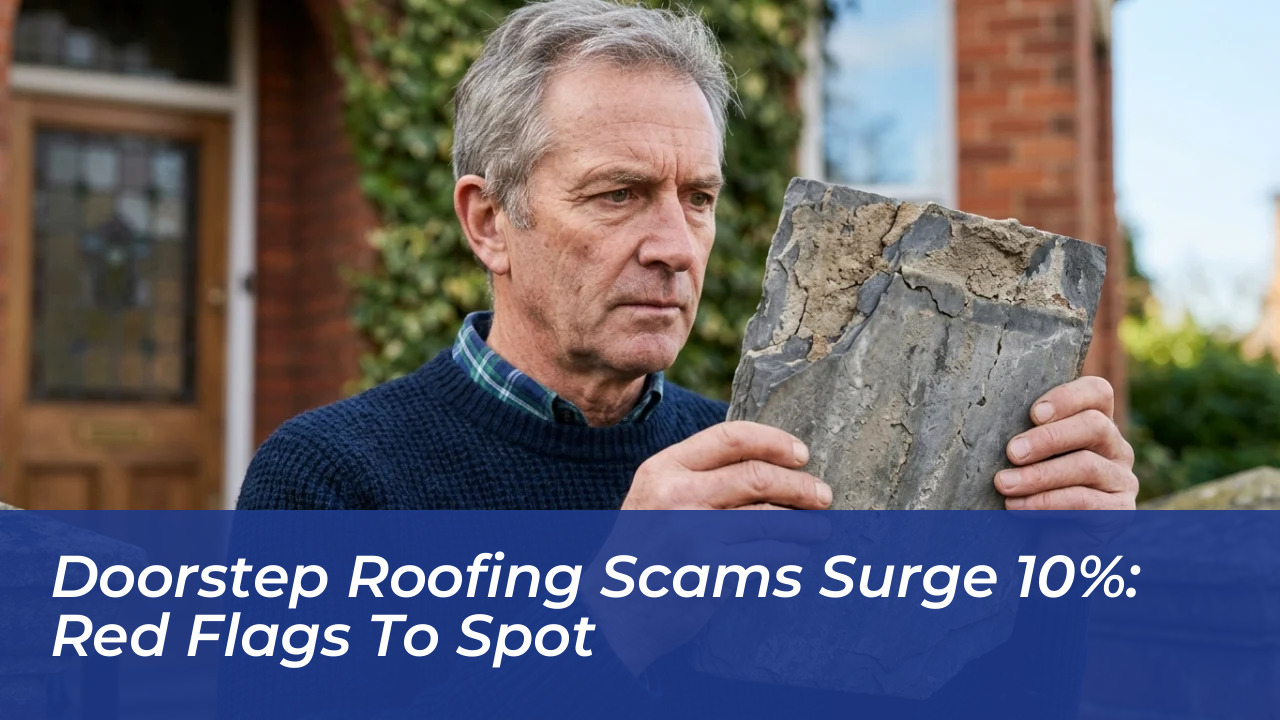

Suspected roofing scams have surged by 10% across England and Wales. This makes dishonest home maintenance the single most frequent consumer fraud reported to Citizens Advice. With more than 2,200 complaints logged in the single year leading up to August, authorities warn British homeowners to stay vigilant. Aggressive doorstep fraudsters exploit out-of-sight roof damage to extract thousands of pounds.
Fraudsters frequently pose as qualified tradespeople working locally. They prey on the fact that homeowners cannot easily inspect their own roofs from the ground. By manufacturing emergencies and using high-pressure sales techniques, these rogue operators target vulnerable residents, particularly older individuals living alone. They pressure victims into immediate, untraceable bank transfers for shoddy or non-existent work.
The Anatomy of High-Pressure Doorstep Deception
More than three-quarters of all fraudulent roofing incidents recorded by Citizens Advice begin with an unsolicited knock at the front door. Con artists rely on industry jargon and manufactured panic to wear down a homeowner’s natural skepticism. Common tactics include claiming that severe structural decay, rotting timbers, or missing flashing will cause a ceiling collapse if left unaddressed.
In one documented case by Citizens Advice, a 65-year-old woman named Charlotte in northeastern England sought help online for a minor gutter leak, initially quoted £250. Upon arrival, two men escalated the diagnosis, displaying a bucket of loose cement to claim her mortar was disintegrating. Taking advantage of the darkness and her isolation, they demanded an immediate £3,500 bank transfer. They stood guard until the transaction cleared. The victim discovered the next day that no repairs had been completed, and the perpetrators cut off all communication.
Dame Clare Moriarty, chief executive of Citizens Advice, emphasized the underlying vulnerability exploited by these criminals: “Scammers exploit the fact that roofs are out of sight and reach, knowing most people can’t easily inspect the work themselves.”
Common Misconceptions vs. The Reality of Roofing Fraud
Many property owners mistakenly believe that rogue traders exclusively target derelict properties or demand physical paper cash. In modern scams, fraudsters routinely request direct bank transfers under the guise of modern business practices. This creates a false sense of security that the transaction can easily be traced or reversed.
National Trading Standards and consumer protection agencies highlight several distinct contrasts between professional contractors and rogue doorstep operators:
- Unsolicited cold calls: Reputable tradespeople rarely solicit work door-to-door. They rely instead on established local reputations and word-of-mouth recommendations.
- Payment demands: Legitimate builders supply written invoices, structured payment schedules, and traceable methods. Fraudsters demand immediate cash or on-site bank transfers.
- Surprise structural escalation: While legitimate issues can be discovered during repairs, major structural defects should always be supported by independent second opinions and clear photographic evidence.
- Paperwork: Accredited contractors readily provide detailed written quotes, company addresses, and verified trade body registrations.
How to Verify a Roofer Before Agreeing to Anything
The UK roofing sector does not require a mandatory legal license, unlike gas engineers who must be on the Gas Safe Register. Therefore, the burden of verification falls entirely on the homeowner. To protect your property and finances, establish strict verification boundaries before allowing anyone onto your ladder or roof:
- Never accept unsolicited doorstep trade offers: Refuse spontaneous roof inspections from cold callers, regardless of how minor or urgent the alleged fault appears.
- Demand written quotations: Insist on a formal, written breakdown detailing all proposed materials, labor costs, and a projected timeline before work begins.
- Check official registers: Verify accreditations through government-endorsed schemes such as TrustMark, the National Federation of Roofing Contractors (NFRC), or your local council’s verified trade register.
- Perform background checks: Search company names on Companies House to verify how long the business has been operational and who the active directors are.
What to Do If You Have Fallen Victim to a Roofing Scam
If you suspect you have been targeted by rogue traders or coerced into paying for unnecessary work, immediate action can help mitigate financial loss and assist law enforcement in tracking the perpetrators.
Lord Bichard, chair of National Trading Standards, described roofing fraud as “particularly cruel,” noting that victims can lose life savings in a matter of hours and be left with severely damaged homes.
“Victims can lose life savings in a matter of hours and be left with damaged homes, financial hardship and a profound sense of vulnerability long after the criminals have gone,” said Lord Bichard.
Homeowners facing suspected fraud should follow these crucial steps:
- Report to Citizens Advice: Contact the Citizens Advice consumer service helpline to log the complaint. They pass it on to local Trading Standards teams.
- Contact Action Fraud: If money was taken for work never completed, or if the trader misrepresented their identity, report the crime immediately to Action Fraud.
- Notify your bank or card provider: If you paid via credit card for services costing between £100 and £30,000, you may be protected under Section 75 of the Consumer Credit Act 1974. Debit card payments may be recoverable via chargeback.
- Preserve evidence: Keep all text messages, written quotes, bank records, photographs, and business cards. Ask an independent, reputable local roofer to document their findings in writing.