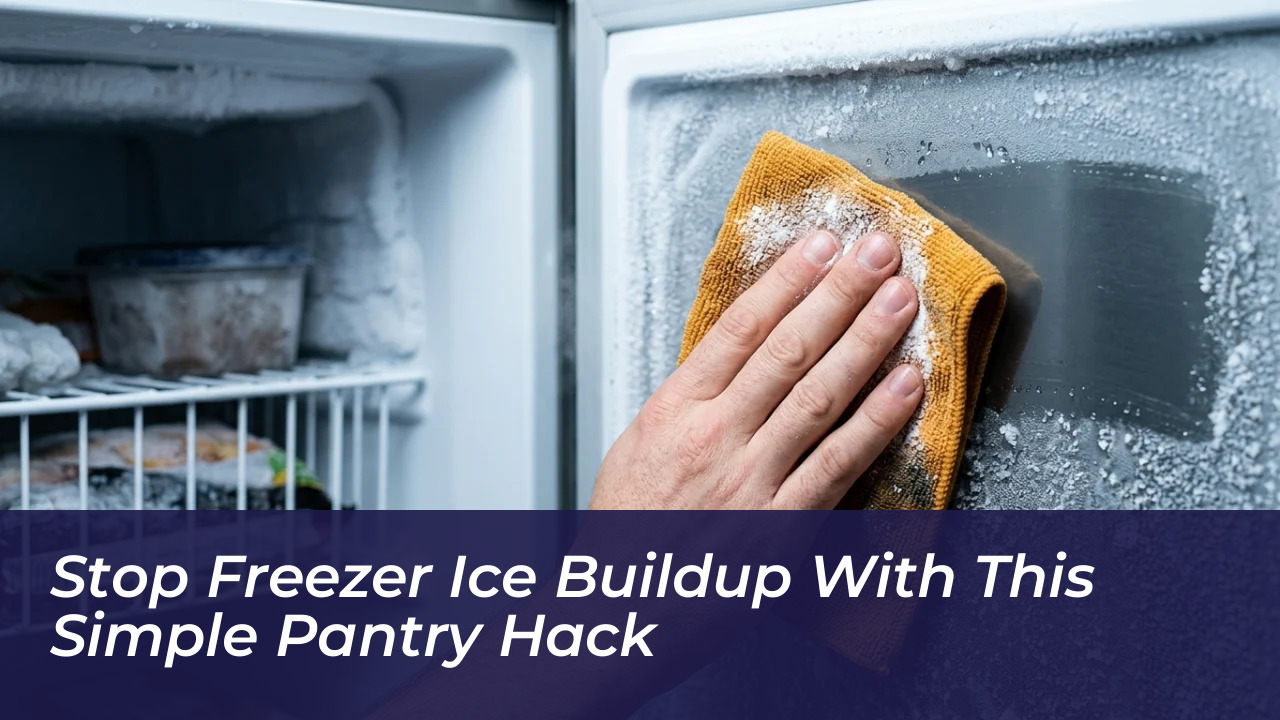

Applying one to two tablespoons of baking soda directly to interior freezer walls after defrosting creates an invisible barrier that significantly delays ice buildup. This household method stops airborne moisture from gripping surfaces, cutting down the thick frost layers that force refrigeration units to consume excess energy as they fight to cool through dense ice barriers. Whenever you open an appliance door, warm ambient air enters carrying microscopic water droplets. When that moisture meets sub-zero temperatures, it freezes into rigid frost that shrinks usable storage space and burdens internal compressors. Over time, that frost crust acts as unwanted insulation, directly increasing household electricity consumption. Baking soda prevents moisture from settling quickly inside the freezer compartment.
How Baking Soda Protects Freezer Walls
Common sodium bicarbonate functions as an efficient surface-coating agent in cold environments. It creates a micro-layer that prevents lingering moisture from forming an immediate mechanical bond with plastic and metal interior panels. Applying a thin protective barrier to defrost surfaces ensures moisture cannot easily crystallize directly onto the appliance interior. This simple application provides three distinct operational advantages for everyday freezers:
- Ice delay: Moisture cannot bond quickly, substantially slowing down the formation of thick frost slabs.
- Effortless future defrosting: Any residual ice that does accumulate detaches with far less scraping during your next maintenance cycle.
- Natural odor absorption: The compound actively neutralizes stagnant, unpleasant food smells that get trapped in cold storage compartments.
Step-by-Step Application Guide
Defrost your freezer completely according to manufacturer guidelines before attempting this pantry treatment. Measure out one to two tablespoons of pure baking soda onto a damp microfiber cloth. Wipe the solution thoroughly across the interior walls, ceiling, and base of the compartment. Carefully avoid all rubber door seals, as alkaline baking soda can degrade flexible rubber gaskets over time. Once the compartment dries, the microscopic residue remains in place. But what should you do if your kitchen cupboard is completely out of baking soda?
Alternative Remedies: Cooking Oil and Glycerin
When baking soda is unavailable, standard cooking oil or pure glycerin serve as effective hydrophobic substitutes. Because water and oil naturally repel each other, creating an oily film stops condensation from settling and freezing directly onto appliance panels. To use either liquid, place a few drops onto a wet rag and wipe down the interior walls after clearing away existing ice. Keep the layer ultra-thin so food packaging does not become greasy upon contact.
Pantry Treatment Options Compared
Different household substances offer unique protective benefits when applied to clean freezer interiors:
- Baking Soda: Delays frost bonding and absorbs trapped food odors.
- Cooking Oil: Repels condensation via a simple hydrophobic barrier.
- Glycerin: Prevents rigid ice adhesion on clean plastic walls.
Eliminating Everyday Sources of Frost
While surface treatments prevent rapid sticking, structural positioning and daily habits determine how much warm moisture gets inside in the first place. Many households mistakenly assume that frequent ice buildup indicates a failing compressor or an ancient appliance. In reality, everyday placement errors and routine kitchen habits often drive excess humidity straight into the freezing chamber.
- Reposition near heating hazards: Avoid installing freezers right next to heat-generating appliances like ovens, hobs, or dishwashers. Ambient external warmth forces the cooling unit to overwork and restricts thermal dissipation, promoting rapid interior frost.
- Provide perimeter clearance: Never push appliances flush against the back wall. Proper rear spacing allows dissipated heat to escape freely into the room.
- Check door gaskets: Examine door seals regularly for cracks or loosening. A breached rubber seal lets warm ambient room air steadily leak inside.
- Cool warm leftovers first: Never load hot or steaming dishes into cold drawers. Evaporating steam turns into immediate condensation, transforming straight into solid ice sheets.
- Minimize door openings: Plan meal prep in advance to open doors briefly and shut them promptly, sealing out airborne moisture.
Check your door seal today to ensure room temperature moisture is not quietly driving up your home energy bills. Try this pantry wipe-down hack after your next regular defrost to keep future frost layers minimal.