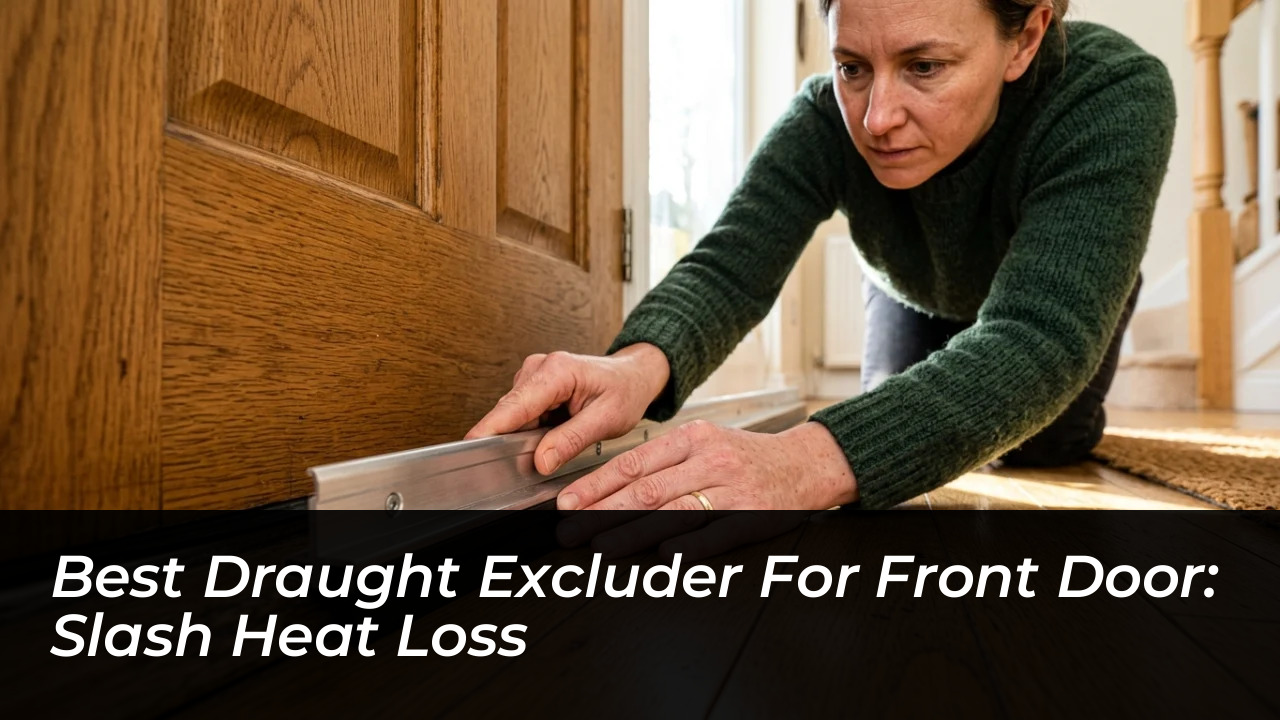

Fitting the best draught excluder to the base of your entrance instantly seals gaps of up to 25 millimetres. This blocks freezing air currents and retains vital household warmth. Unsealed external entryways function like open vents during cold snaps. They allow chilly draughts to undermine central heating systems and rapidly drive up domestic utility bills. Selecting the correct barrier delivers an immediate improvement in indoor temperature stability without requiring costly renovations.
External doorways present distinct challenges compared to interior thresholds. Exposure to wind-driven rain, uneven flagstones, and heavy daily footfall means lightweight fabric sausages fail to provide a lasting barrier. To secure real comfort and energy efficiency, homeowners must target purpose-built mechanical seals and durable sweeps that maintain continuous contact across uneven flooring.
The Superiority of Fixed Sweeps Over Floor Cushions
Traditional fabric draught snakes are common in UK homes, but they represent a flawed solution for external entrances. Every time the door swings open, a loose cushion gets kicked aside or caught beneath the frame. This requires manual repositioning upon every entry and exit. Over several weeks, dragging fabric over damp doorsteps soils the material, turning an aesthetic accessory into an unhygienic moisture trap.
Mechanical bottom-of-door draught seals mount directly to the timber or composite slab, moving seamlessly with the swing. These systems guarantee that the physical seal resets into the exact protective position the moment the latch clicks shut. This prevents cold airflow whether residents are home or away. A common mistake in practice is fitting an inflexible seal too tightly against an uneven threshold, which damages the door mechanism and causes premature wear on the sweep.
Brush Strips Versus Rubber Wiper Blades
The two dominant fixed options are nylon brush strips and flexible rubber or neoprene wiper sweeps. Choosing between them depends on your flooring texture and doorstep alignment.
- Nylon Brush Strips: Best suited for uneven surfaces, external stone sills, and textured tiled hallways. The individual densely packed bristles flex independently over irregularities without catching or scuffing delicate flooring.
- Flexible Rubber Blades: Ideal for smooth wooden floorboards, laminate, or flat metal threshold bars. Neoprene forms an airtight, water-resistant compression seal that blocks driving rain as effectively as cold wind.
Comparing Modern Door-Base Barriers
Finding the right barrier involves balancing installation effort against long-term physical durability. The comparison below outlines how primary seal designs perform against real-world external entrance requirements.
- Heavy-Duty Brush Strip: Aluminium carrier with flexible nylon filaments. It glides over rough exterior thresholds and provides zero dragging resistance.
- Screw-Fix Rubber Wiper: Rigid metal strip housing a thick rubber flange. It creates a tight weather seal against driven moisture on level surfaces.
- Twin Foam Slide-Under: Double-sided foam tubes joined by a fabric sleeve. It slips under the leaf with zero drilling and is suitable primarily for rented properties.
- Automatic Drop-Down Seal: Concealed mortised or surface-mounted mechanical plunger. It drops firmly to the floor only when the door closes fully.
How to Measure and Fit a Fixed Base Seal
Accurate fitting ensures the barrier remains effective across years of harsh weather. Proper installation takes under twenty minutes using standard household tools.
- Measure the door leaf: Close the door securely and measure the full width across the interior bottom edge using a steel tape measure. Avoid measuring the outer frame rebate.
- Trim the metal carrier: Mark the exact width onto the aluminium extrusion of your seal. Slide the rubber blade or brush out slightly, cut the metal strip using a junior hacksaw, trim the seal filament with sharp pliers, and feed the seal back into place.
- Position and pre-drill: Hold the unit against the bottom of the door so the bristles or rubber lip touch the threshold firmly without buckling. Mark the screw slots with a pencil and drill shallow pilot holes.
- Fasten and calibrate: Insert the fixing screws loosely, close the door to verify clearance across the entire swing arc, and adjust the vertical height before tightening screws firmly.
Solving Friction on Thick Hallway Carpets
A widespread misconception is that exterior draught proofing requires a heavy strip scraping along the floor. In homes where front doors open directly onto plush pile rugs or thick carpet, a conventional low-hanging wiper strip will rub forcefully. This wears out flooring and places heavy strain on door hinges.
The permanent fix for this scenario is an automatic drop-down seal. These units feature an internal flat spring activated by a small brass plunger on the hinge edge. As the door swings freely, the seal stays lifted above the carpet fibres. Only during the final two centimetres of closing does the pin depress against the frame, driving the internal gasket straight down to form a draught-proof compression barrier against the threshold.
Check your threshold clearance before purchasing any rigid metal strip to avoid scraping high floor finishes. Test your current seal on a windy evening by moving a lighted candle or the palm of your hand across the floor edge to locate hidden air leaks. Upgrade your mounting hardware with exterior-grade stainless steel screws if your front entrance is exposed to coastal salt air or heavy rainfall.
Leave your thoughts in the comments below and tell us which draught-proofing setup worked best for your home.