
Millions of households toss carved squash straight into the rubbish every autumn, but leftover pumpkin waste can easily be diverted into hearty meals, rich garden compost, or local renewable energy. Instead of sending tonnes of organic matter to decompose in standard landfill sites, simple preparation steps allow families to cut disposal costs and reduce seasonal food waste before carving even begins.
Every October, municipal collection crews see pavements inundated with whole and rotting jack-o’-lanterns. Tackling this seasonal surge requires rethinking how we process the fruit at home, starting with what goes into your kitchen pans and what heads out to the compost heap.

Eat Before You Carve: Reclaiming Seasonal Nutrition
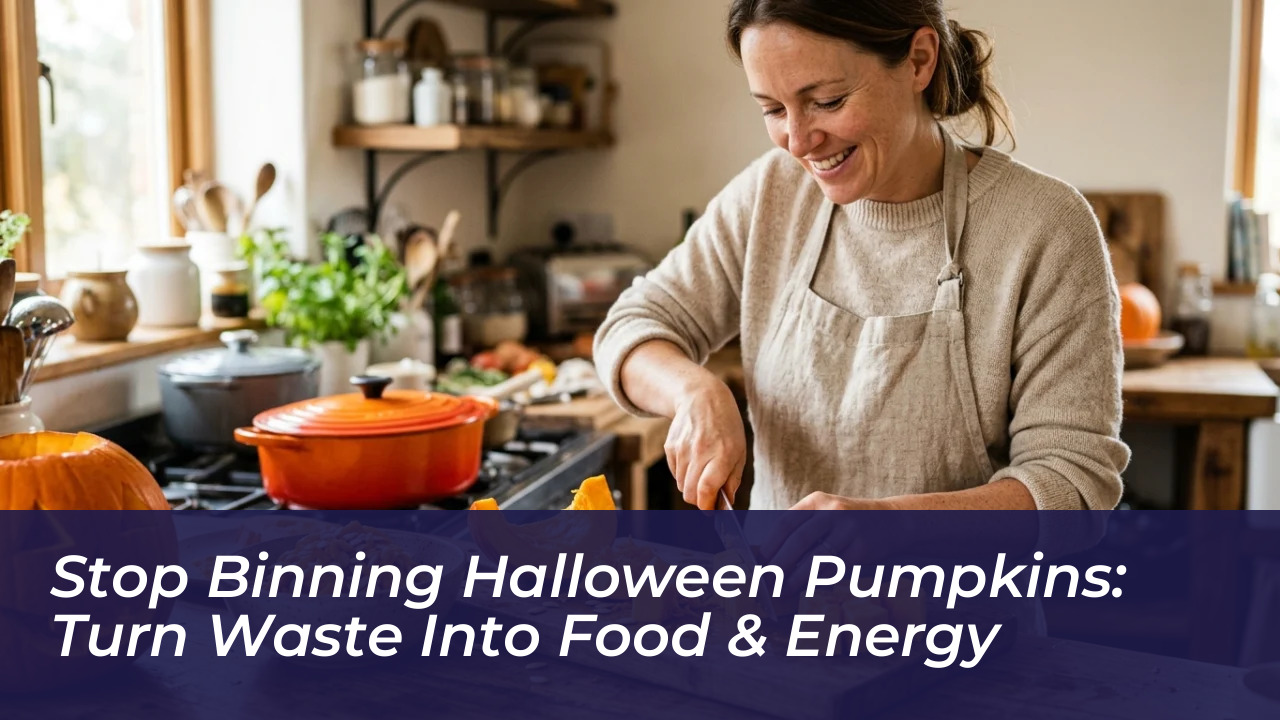
The easiest way to minimise waste happens long before a candle touches the interior of your squash. When preparing a jack-o’-lantern, scooping out the internal flesh and seeds immediately yields raw culinary ingredients instead of rubbish. Rather than treating the scooped pulp as scrap, you can repurpose it into warming autumnal soups, traditional s**ced pies, or simple puree bases.
The seeds represent an equally valuable, edible byproduct. Cleaning the slimy pulp away from the seeds and roasting them in an oven with light seasoning provides a crunchy, nutrient-dense snack. Cooking the interior material ensures that only the outer decorative shell remains as post-holiday organic waste.
“Hallowe’en is a fantastic time for families, but it doesn’t have to result in extra waste. By making a few small adjustments, we can all enjoy the celebration while doing our bit for the environment.”
This culinary approach radically slashes the volume of organic waste needing collection once celebrations conclude.
Composting and Council Collections: The Green Disposal Route
Once carving displays finish, the hollowed rind still holds substantial organic value. Gardeners can break the shell down directly into backyard compost bins, provided the fibrous material is thoroughly balanced with drier carbon inputs like dry leaves or cardboard. For homes without personal compost heaps, local authority food waste systems offer a direct processing pipeline. Local councils frequently schedule dedicated collections in early November to process leftover gourds, turning them directly into soil fertiliser or capturing the gases for renewable power.
Step-by-Step Jack-o’-Lantern Preparation for Collection
- Extinguish and extract: Carefully remove all tealights, battery-operated LED candles, glowsticks, and lingering decorative accessories from inside the hollowed cavity.
- Scrape clean: Shave away any pooled or melted candle wax adhering to the internal base or carved edges.
- Size down: Chop the remaining squash walls into manageable chunks to fit inside your standard food waste container, or leave it intact alongside the bin if permitted by local guidelines.
Contaminating the organic stream with non-biodegradable wax or synthetic decorations prevents processing facilities from converting the pulp into usable agricultural resources.
Busting the Landfill Myth
A widespread misconception suggests that leaving whole pumpkins inside general rubbish bins causes no environmental harm because organic matter naturally rots. In reality, tightly packed landfill conditions starve decomposing matter of oxygen, preventing natural breakdown and driving up avoidable greenhouse emissions.
Directing organic material into anaerobic digestion systems or local compost facilities instead captures those nutrients, generating clean energy and fertile topsoil for British agriculture.
“We can all cut down on unnecessary rubbish and save money by getting creative, reusing what we can, and keeping Hallowe’en as fun as ever.”
Taking a few moments to hollow out, clean, and sort your autumn squash transforms an annual disposal headache into a practical household resource. Small habits at home create significant shifts in seasonal municipal waste streams. Check your local authority kerbside calendar to confirm specific organic collection arrangements for your street.
Frequently Asked Questions
Can you eat standard carving pumpkins?
Yes, the flesh of standard jack-o’-lantern pumpkins is entirely edible, though it tends to be more watery and less sweet than specialized pie pumpkins. They work wonderfully in savory soups, purees, stews, and roasted side dishes.
How do I prepare pumpkin seeds for a snack?
Rinse the harvested seeds thoroughly to remove any clinging stringy pulp. Pat them dry with a clean towel, toss them lightly with oil and salt-or s**ces like paprika and cinnamon-and roast them in a single layer at 300°F until golden and crisp.
What should I do if my carved pumpkin starts to rot?
If your pumpkin develops mold or softens prematurely from exposure to the elements, it is no longer safe to consume. However, it can still be chopped up and added to a backyard compost bin or dropped off at a municipal organic waste site.
Can I put carved pumpkins into general landfill bins?
While organic matter naturally breaks down, putting whole pumpkins into standard rubbish bins causes them to sit in oxygen-starved landfill conditions. This prevents proper decomposition and produces harmful methane gas, making composting or food waste recycling far better alternatives.
How do local councils process leftover Halloween pumpkins?
Many local authorities organize special post-Halloween organic collections. These gourds are typically sent to anaerobic digestion plants to capture renewable energy or processed into high-grade agricultural fertilizers and soil conditioners.