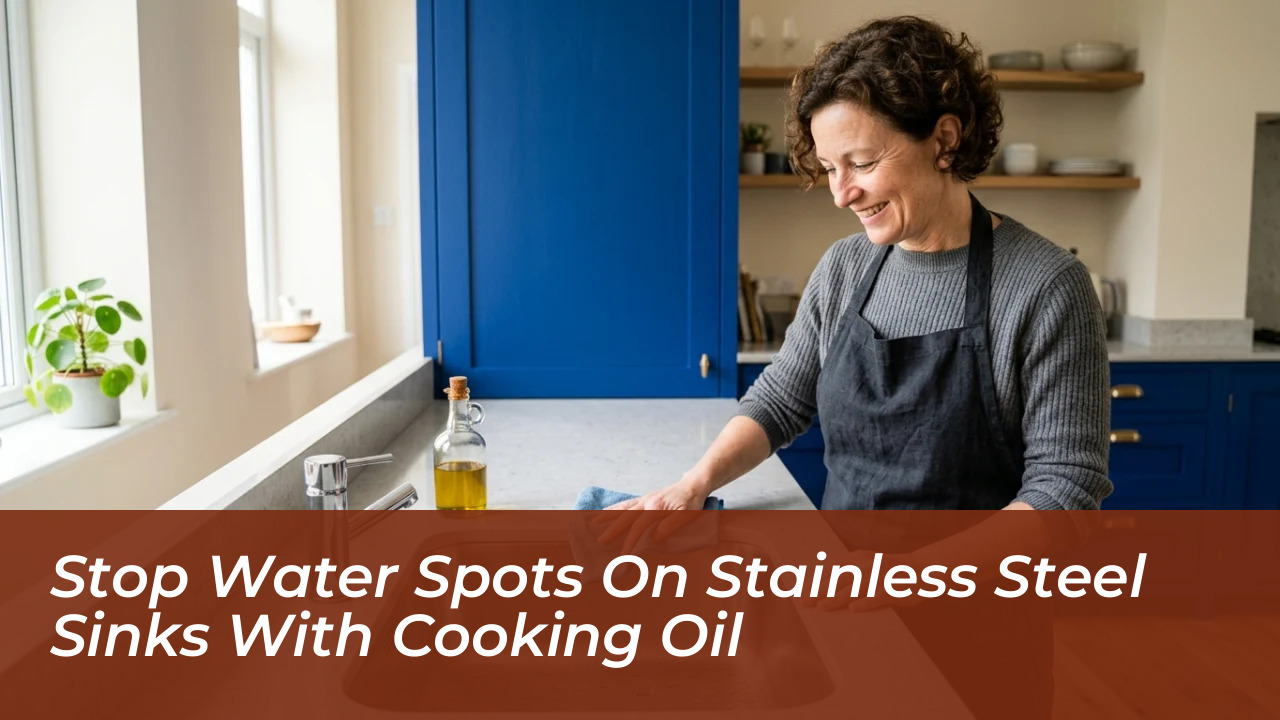

Homeowners across the UK and beyond routinely face the frustration of cleaning a kitchen sink only to find it covered in cloudy marks hours later. In hard water areas, evaporating tap water deposits minerals like calcium and magnesium onto the metal, creating stubborn white blemishes. Fortunately, understanding how to clean and seal the metal correctly eliminates the need for expensive polishers or harsh chemicals. Applying just one or two drops of ordinary cooking oil to a freshly cleaned stainless steel sink creates an invisible, water-repellent barrier. This simple step stops mineral spots and limescale from clinging to the metal, restoring its factory shine within minutes.
Why Hard Water Dulls Stainless Steel
Even when a basin is thoroughly washed, ordinary tap water contains dissolved minerals that do not rinse away cleanly. As droplets sit and evaporate on the surface, these minerals dry out, leaving cloudy residues and visible water marks across the steel basin.
Standard scouring powders and abrasive steel wool might seem like quick fixes, but they cause permanent damage. Scrubbing with rough tools creates micro-scratches that strip the smooth surface and collect grime even faster over time. A common mistake in everyday kitchen maintenance is using abrasive powders or coarse scouring pads, which scratch the grain of the steel and attract more mineral buildup over time.
Step-by-Step: The Natural Deep Clean
Before creating a protective finish, the metal must be stripped of existing grease, food residues, and limescale deposits. Starting with a perfectly bare surface ensures that the protective barrier adheres directly to the steel.
- Dampen and Apply: Dampen the sink basin thoroughly with clean water and sprinkle a light layer of bicarbonate of soda over the entire area.
- Scrub with Grain: Scrub the surface gently using a soft sponge, moving strictly in the direction of the metal’s grain to prevent hairline scratches.
- Tackle Limescale: Tackle stubborn limescale patches around taps and drains using half a fresh lemon or warm water mixed with a small amount of white vinegar.
- Rinse: Rinse the basin thoroughly with clean water until every trace of cleaning agent has washed down the plughole.
- Dry Completely: Dry the entire surface thoroughly with a clean microfibre cloth, paying extra attention to the corners, tap base, and rim where moisture lingers.
Drying the sink entirely is essential before proceeding to the oil application. If droplets remain trapped beneath the oil layer, they will leave fresh mineral marks underneath the barrier.
Applying the Protective Oil Coating
Once the basin is completely dry, a single drop of everyday kitchen oil creates a thin hydrophobic shield that forces running water to bead up and roll away before it can dry into spots.
The Polishing Technique
- Place one or two drops of rapeseed oil or sunflower oil onto a dry, clean cloth.
- Rub the oil over the metal in a very thin, even layer, covering the basin walls, tap surround, and drain lip.
- Buff the metal using a second dry cloth until the greasy feel disappears and the surface displays an even, clean shine.
Applying too much oil is counterproductive, because excess liquid makes the surface sticky and attracts dust or crumbs. Hot water and washing-up liquid gradually strip away the thin oil film during everyday dishwashing, meaning the coating requires occasional maintenance. Reapplying the oil every week or two during a standard kitchen clean keeps water spots away permanently.
A simple evening routine also prevents marks: wiping the sink dry with a tea towel after finishing the dinner dishes stops droplets from settling overnight.
Comparison of Stainless Steel Maintenance Methods
| Method | Primary Ingredient | Best Used For | Frequency |
|---|---|---|---|
| Deep Clean | Bicarbonate of Soda | Grease and general grime removal | Monthly |
| Limescale Removal | Lemon or White Vinegar | Hard water crust around taps | As needed |
| Protective Sealing | Rapeseed or Sunflower Oil | Repelling water spots and restoring shine | Weekly |
| Daily Maintenance | Microfibre Cloth | Removing overnight moisture | Daily after use |
Frequently Asked Questions
Why does my stainless steel sink get water spots immediately after cleaning?
Water spots are caused by dissolved minerals like calcium and magnesium left behind when tap water evaporates. If the sink is not dried completely after rinsing, these minerals crystallize and form a cloudy film.
Can I use olive oil instead of rapeseed or sunflower oil?
Yes, a tiny amount of olive oil can work in a pinch, but neutral cooking oils like rapeseed, sunflower, or food-grade mineral oil are preferred because they do not leave heavy sticky residues or distinct odors.
Will putting oil on my sink make it slippery or dangerous?
Not when applied correctly. The technique requires only one to two drops buffed thoroughly with a dry cloth until the surface feels completely clean and smooth rather than greasy.
How often do I need to reapply the oil barrier?
Hot water and dish soap gradually break down the thin hydrophobic coating. Reapplying the oil once every week or two during your regular kitchen cleaning routine maintains optimal water-repellent protection.
Is vinegar safe to use on stainless steel?
White vinegar helps dissolve hard water deposits, but it should never be left on stainless steel for more than 10 to 15 minutes because its acidity can eventually etch the metal surface. Always rinse thoroughly.