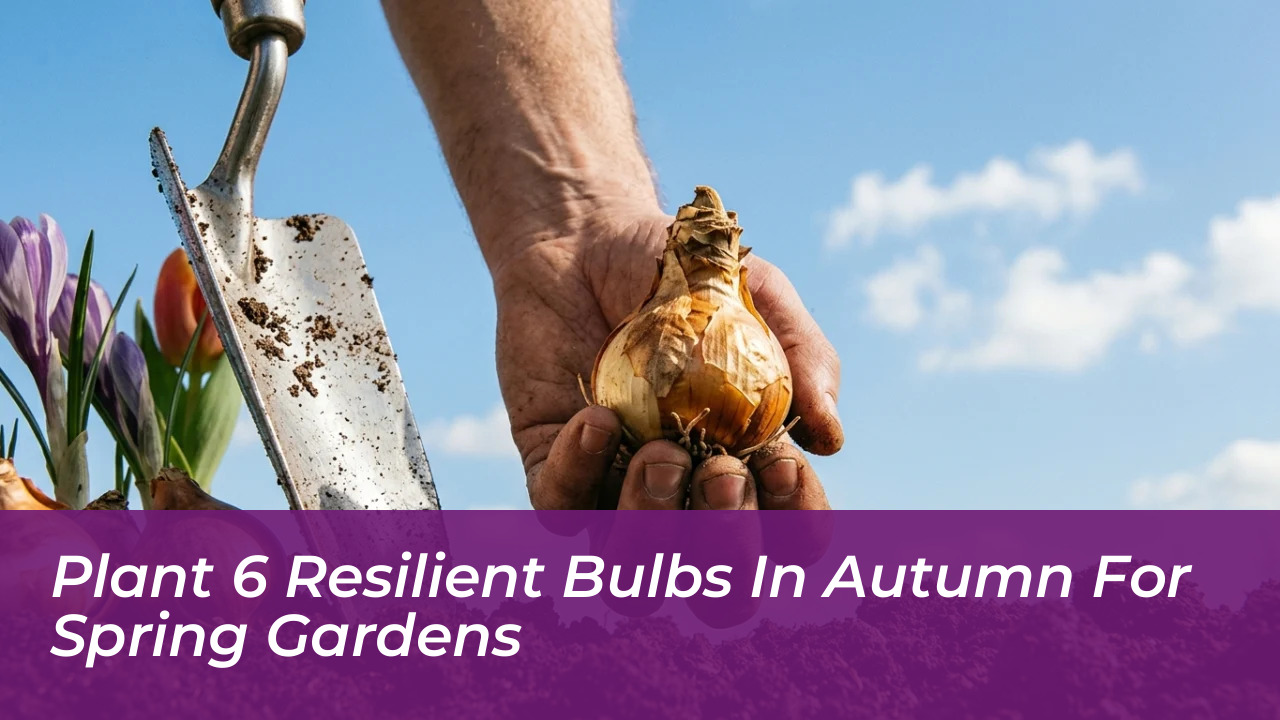

Planting spring-flowering bulbs during the cooler autumn weeks secures a vibrant display before winter frost sets in. Getting dormant bulbs into the soil several weeks ahead of freezing temperatures allows root systems to establish while activating vernalisation-the biochemical chilling process that triggers spring flower bud formation. As tree leaves turn and borders fade, many assume the gardening calendar is drawing to a close. In reality, autumn marks prime time for planting. Soil remains workable and retains residual warmth, creating ideal conditions for subterranean root development.
“October is the perfect time to plant… spring-flowering bulbs need a period of cooler weather (also known as vernalization), as it initiates the biochemical reaction that forms the flower bud,” explains garden expert and lawn care specialist Angelika Zaber. “Planting them in October allows time for the roots to establish before the temperatures drop and this process starts.” A common misconception is that spring bulbs demand delicate, ongoing maintenance throughout the winter. Once buried in well-drained ground, the right varieties survive on ambient rainfall and natural temperature drops, requiring virtually no intervention until growth surges in early spring.
Essential Guide to the 6 Most Dependable Spring-Flowering Bulbs
Choosing hardy species ensures beds and containers emerge reliably year after year. Horticultural specialists highlight six standout varieties that deliver maximum visual impact with minimal effort.
1. Daffodils
Celebrated as a universal herald of warmer days, daffodils represent a reliable addition to any garden border. Their bright yellow petals symbolise renewal and offer consistent perennial performance. “Daffodils are about as foolproof as it gets,” notes Tammy Sons, founder and CEO of TN Nursery. “They come back stronger each year.”
Position bulbs in full sun to partial shade within fertile, free-draining soil. Give the surrounding ground a thorough watering directly after planting to eliminate subterranean air pockets. Beyond that initial soaking, natural precipitation is sufficient unless an unseasonable drought occurs. Applying a general fertiliser each subsequent spring provides essential nutrients for repeated flowering.
2. Crocuses
Crocuses provide intense swathes of early colour, piercing through turf or bare soil while the rest of the garden remains dormant. Their foliage and flowers recede naturally, eliminating the need for tidy-up pruning in borders or lawn naturalisation projects.
Outdoor crocus plantings require no extra watering because typical seasonal rains supply adequate moisture. Feed the bulbs once flowers have faded while the green foliage remains fully active. Waiting until leaves turn yellow prevents the plant from absorbing nutrients, leaving the bulb depleted for the following year.
3. Tulips
Tulips are classic focal points for spring borders and containers. For denser displays, chilling bulbs in a cool spot for a couple of weeks prior to setting them in the ground simulates deeper winter dormancy and promotes stronger flower heads.
Select an area with unrestricted sunlight and light, compost-enriched soil. Group bulbs in clusters of five or more rather than single rows to achieve a rich drift. Keep the soil slightly moist during early root establishment, tapering off moisture after flowering, and finish with a thin layer of mulch to regulate winter temperatures.
4. Alliums
Part of the ornamental onion family, alliums produce dramatic spherical flowerheads in purple, pink, blue, and white tones. Their distinctive structural form bridges the gap between early spring bulbs and early summer perennials.
Ward Dilmore, landscape designer at Petrus Luxury Estate Landscaping Company, points out that alliums benefit substantially from compost-rich soil. Because squirrels and rodents may target autumn plantings, incorporating protective bulb cages into the planting trench keeps the bulbs secure through cold snaps.
5. Snowdrops
Snowdrops provide welcome blooms before almost any other garden plant, often opening while frost still covers the soil. Setting bulbs into the earth between late September and early November guarantees that roots develop before hard freezes occur.
According to Lawn Love head Steve Corcoran, planting is ideal when nighttime temperatures hover consistently around 4°C to 10°C (40°F to 50°F). Unlike sun-seeking varieties, snowdrops thrive best in partially shaded or fully sheltered spaces, demanding rich, humus-dense soil that stays evenly moist during active growth.
6. Wild Hyacinth (Camassia)
An underused member of the asparagus family, wild hyacinth produces tall, elegant spikes of star-like blossoms in shades of blue, pale pink, and crisp white. They present an exceptional alternative for gardeners seeking reliable early-season interest.
Camassia adapts well to areas where other bulbs might struggle. While most varieties demand sharply drained sites to prevent rotting, wild hyacinths tolerate damp soils during spring, provided there is no standing water. Planting them in sunny to partially shaded pockets ensures strong floral spikes year after year.
Planting Profiles: Sunlight, Soil, and Water Needs
Matching each bulb variety to the appropriate soil conditions and aspect prevents moisture damage and ensures vigorous growth when spring arrives.
- Daffodils: Full sun to partial shade; well-drained soil; water only after planting and during dry spells.
- Crocuses: Full sun to partial sun; sandy or loamy soil; requires only natural rainfall.
- Tulips: Full sun; loose soil with compost; keep slightly moist during growth, then reduce water.
- Alliums: Full sun; rich, well-draining soil; avoid soggy spots to prevent bulb rot.
- Snowdrops: Partial to full shade; humus-rich, moist soil; keep evenly damp during active development.
- Wild Hyacinth: Full sun to partial shade; nutrient-dense soil; tolerates seasonal dampness.
How to Plant Spring Bulbs Step by Step
Achieving healthy, uniform blooms requires straightforward preparation before the ground freezes:
- Select the right location: Check sunlight requirements for each bulb type, matching sun lovers like tulips and alliums with open spaces, and reserving shaded clearings for snowdrops.
- Prepare the soil: Loosen compacted earth and integrate organic material or well-rotted compost to promote reliable drainage.
- Place the bulbs: Plant each bulb pointed-end up, grouping them in clusters of five or more for a cohesive aesthetic.
- Settle the root zone: Water newly planted bulbs once to eliminate air pockets around the base.
- Add mulch: Apply a light top-dressing of mulch across the site to moderate soil temperatures and protect dormant roots through winter.
Autumn bulb planting takes minimal effort yet delivers months of effortless colour right as the new growing season begins. Preparing soil with organic matter and settling air pockets now guarantees stronger roots before cold temperatures arrive. Leave your thoughts in the comments below and share which spring-flowering bulbs you are setting into your garden borders this season.
Frequently Asked Questions
When is the best time to plant autumn bulbs?
The ideal time to plant is roughly six weeks before your first hard freeze, when nightly temperatures range from 4°C to 10°C (40°F to 50°F). This typically falls between September and November depending on your USDA hardiness zone.
How deep should spring bulbs be planted?
A reliable rule of thumb is to plant bulbs at a depth equal to three times their individual height. Always position the bulbs with the pointed tip facing upward and the flat basal plate pointing downward.
Do spring bulbs need to be fertilized in autumn?
No fertilization is necessary immediately after autumn planting, as the bulbs contain stored nutrients for initial growth. You can mix slow-release phosphorus or bone meal into the soil for root development, but save major feeding for early spring when green shoots emerge.
Can I grow autumn-planted bulbs in containers?
Yes, all six featured varieties thrive in pots and containers. Ensure your pots feature adequate drainage holes and use a gritty, free-draining compost mix. You can also layer different bulbs inside a single container for continuous blooms.
What should I do with bulb foliage after flowering?
Never cut back green leaves immediately after flowering. The foliage must remain intact to photosynthesise and feed the bulb for next year’s display. Wait until the leaves yellow and wither naturally before removing them.