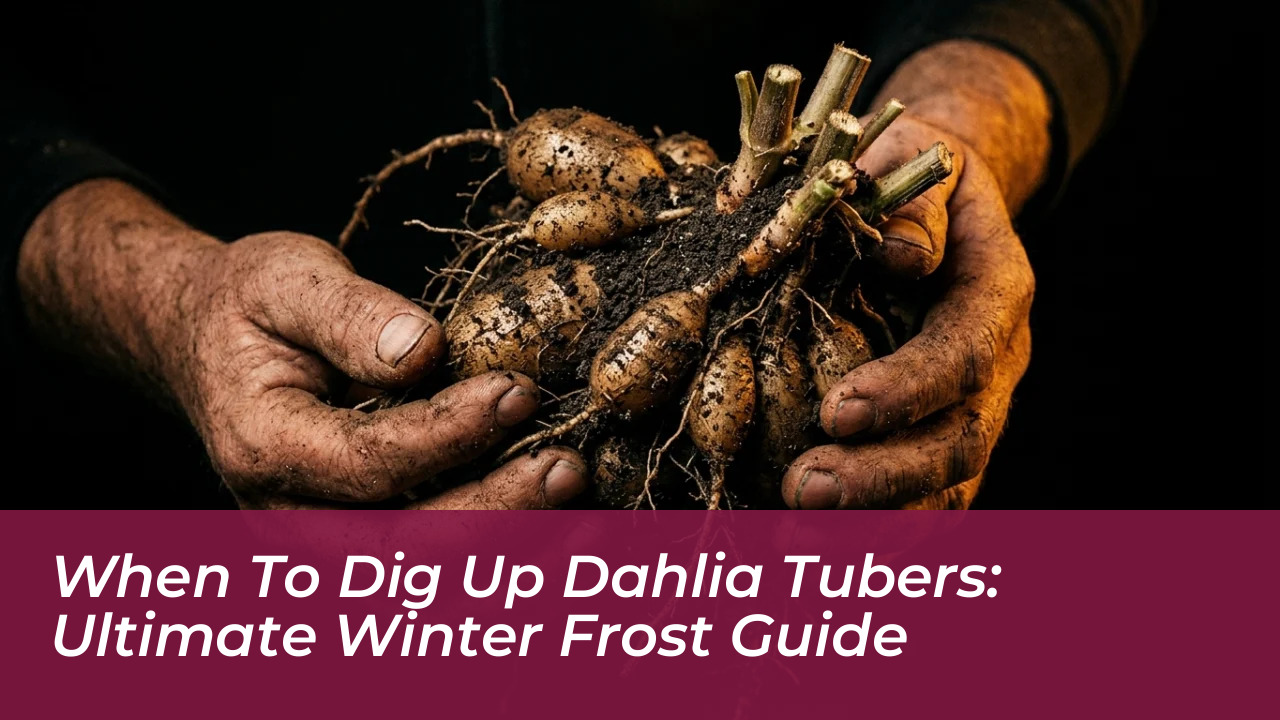

Gardeners facing freezing winter temperatures must lift their dahlia tubers before the ground freezes solid. This must happen specifically after the first light frost when foliage blackens, which prevents fatal rot and tissue splitting. Tubers native to Mexico and Central America lack hardiness against frozen ground. Therefore, indoor overwintering between 4°C and 13°C (40°F to 55°F) is critical for plant survival. Leaving root clumps exposed to sub-zero soil conditions ruptures cell walls, transforming firm stock into mush before spring arrives. While mild coastal spots or warmer regions with sharp drainage may get away with deep mulching, unprotected specimens in colder zones face certain loss without proactive lifting.
Do Your Dahlias Need to Be Lifted?
The decisive factor in overwintering comes down to your local climate and soil structure. In regions equivalent to USDA Plant Hardiness Zone 7 and below, where freezing depths reach underground roots, tubers must be lifted and brought indoors. Soil that stays waterlogged through cold spells guarantees tuber rot even during moderate freezes. In warmer microclimates, frequently found in Zones 8 through 11, gardeners often leave stock in borders beneath a protective duvet of thick mulch. However, even in areas with mild winters, lifting and dividing crowded clumps every few years prevents congestion and revitalises flowering performance.
When soil temperatures drop too low, tubers can split from freezing or rot in overly wet conditions. A common misconception is that autumn foliage should be cut away while still lush and green. Doing so prematurely starves the plant, cutting off the crucial downward translocation of sugars that fortify root stock for dormancy.
When to Lift Dahlia Tubers
Timing hinges entirely on natural temperature drops rather than a fixed calendar date. Wait until the first one or two light frosts turn the foliage yellow or black, signalling the plant to enter complete dormancy. This natural dieback allows valuable nutrients to retreat from leaves into the root crown. Once blackened, prune the main stems down to approximately 10 to 15 cm (4 to 6 inches) above the soil level, discarding damaged material while clearing border debris.
If you live in an area with very late frosts or no frost at all, you can generally dig up your dahlias once the plants begin to look tired and yellow, or roughly 120 to 150 days after they were first planted. However, for the majority of gardeners in colder zones, the first frost remains the absolute golden rule for timing.
Step-by-Step Lifting Technique
Extracting delicate clumps demands careful handling to avoid severing storage necks from central crowns. Position a spade or garden fork roughly 30 cm (1 foot) away from the main stems. Loosen surrounding earth gradually in a circular pattern around the root zone. Lever the root system gently upwards using the remaining stem base as a steadying handle.
- Clear away loose soil by hand or use a soft brush to remove remaining dirt without piercing outer skins.
- Avoid yanking on the stems, as the tuber neck is fragile and easily snapped.
- Work your way completely around the root ball before applying upward leverage.
Curing and Long-Term Winter Storage
Freshly lifted root crowns require curing in a warm, ventilated environment for several days up to a full week. Curing hardens the skin and seals minor harvest scrapes, creating a defensive barrier against fungal spread during dark storage. Never dry tubers across direct concrete or under blistering sun, as rapid dehydration causes permanent shrivelling.
Once cured, pack specimens into ventilated cardboard boxes, wooden crates, or paper bags cushioned with slightly damp peat moss, vermiculite, or dry wood shavings.
Storage Conditions Overview
- Temperature Range: 4°C to 13°C (40°F to 55°F)
- Packing Medium: Damp peat moss, vermiculite, or wood shavings
- Light Conditions: Dark, frost-free location
Winter Inspection and Maintenance
Inspect stored roots periodically throughout the colder months to catch moisture issues early. Lightly mist the packing medium if tubers show signs of shrinking, and immediately discard any decaying tubers to prevent rot from migrating through the box. Check your stored root systems every few weeks to keep moisture levels balanced before spring planting. Inspect crown divisions carefully to confirm each retained piece carries a viable growing eye.
Frequently Asked Questions About Overwintering Dahlias
Can I dig up my dahlias before the first frost if I am going on vacation?
Yes, you can dig them a week or two before the frost if necessary. However, the tubers may be smaller and the skin will be thinner. To help them mature without a frost, manually cut the stems back and leave the tubers in the ground for about 10 days before digging to mimic natural dormancy signals.
What should I do if my tubers look shriveled in February?
Shriveling indicates that the storage environment is too dry. Lightly mist the packing material with a spray bottle, and consider moving the containers to a slightly cooler location to reduce moisture loss. Avoid soaking them, as excessive water triggers rot.
Do I have to wash the dirt off the tubers?
Washing is not strictly mandatory, but it is highly recommended because soil can harbor fungi and bacteria. If you choose not to wash them, ensure the soil is completely dry and brush off as much as possible.
What happens if I forget to dig them up and the ground freezes?
If the ground freezes solid, the water inside the tubers expands and bursts the cell walls, turning the tuber into a soft, mushy mess. Once a tuber freezes and thaws completely, it is no longer viable.
Should I divide my tubers in the fall or spring?
While experienced gardeners sometimes divide in the fall to save storage space, beginners are generally advised to wait until spring. By spring, the “eyes” swell and turn slightly pink or green, making it much easier to see where to make clean cuts.