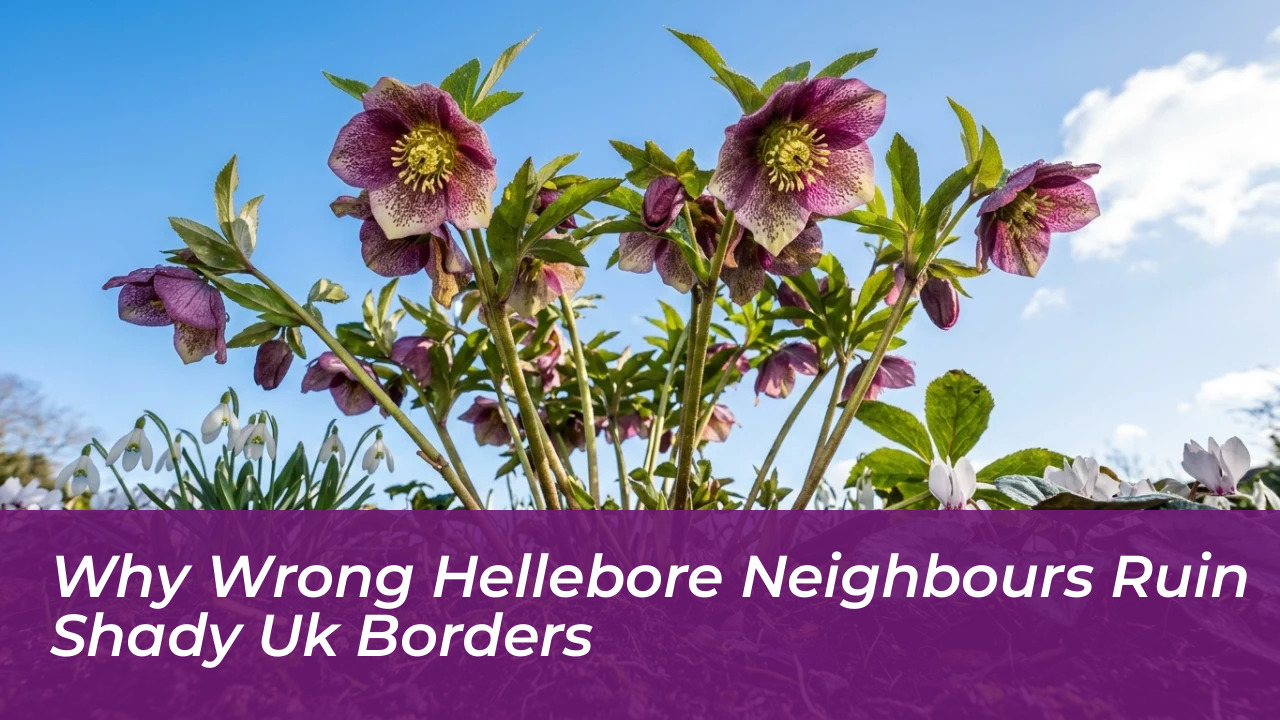

Pairing winter-blooming hellebores with barren, exposed earth is the fastest way to invite persistent weeds and root rot into damp British borders. Establishing the best companion plants for hellebores UK gardeners cultivate-specifically strategic pairings of early snowdrops, mottled cyclamen, and moisture-loving ferns-instantly shields exposed soil while ensuring continuous seasonal interest from midwinter frosts through late summer canopy cover.
Hellebores, prized for their nodding heads and resilient winter flowers, demand specific microclimates to thrive. In typical UK woodland conditions, heavy winter rain frequently compacts surface soil around exposed stems, leaving roots vulnerable to standing moisture while summer canopies cast dense shade that starves unassisted specimens. The solution lies in creating a living woodland floor. By selecting perennial partners that share a preference for neutral-to-alkaline, moisture-retentive, yet free-draining soil, borders remain vibrant and balanced right across the calendar.
Early Season Allies: Bulbs That Shield and Elevate Winter Stems
The earliest months of the year present the greatest visual challenge in British gardens. Deciduous trees remain bare, herbaceous perennials have retreated underground, and hellebore crowns stand fully exposed to harsh weather. Interplanting with cold-tolerant dwarf bulbs creates an insulating, non-competitive carpet that keeps soil friable around shallow feeder roots.
- Galanthus (Snowdrops): Naturalising drifts of Galanthus nivalis emerge right alongside the first blooms of Helleborus orientalis, offering a crisp white contrast against deep slate, purple, or speckled petals.
- Cyclamen coum: Boasting silver-marbled foliage and vivid magenta or pink shuttlec**k blooms, this hardy tuber thrives in the dry-shade microclimate found beneath deciduous tree canopies alongside hellebores.
- Eranthis hyemalis (Winter Aconite): These golden, buttercup-like flowers provide a rich carpet of bright yellow, breaking through frozen ground simultaneously with early hellebore varieties.
These compact companions pull off an essential horticultural trick. Because their foliar lifecycle winds down just as hellebores expand their robust summer leaves, root competition remains virtually nonexistent.
Foliage Contrasts: Designing Texture for Dense Summer Shade
Once hellebore blooms fade and seed heads form in mid-spring, old flower stalks require tidy removal to make room for new foliage. At this stage, surrounding borders risk descending into a monotone mass of dark green without deliberate textural variation. To avoid a flat border, British gardeners introduce companions whose leaf architecture deliberately opposes the coarse, palmate structure of the hellebore.
Essential Architectural Partners
Brunnera macrophylla, particularly cultivars featuring heart-shaped, frosted-silver leaves, illuminates dark corners beneath trees while producing clouds of forget-me-not blue flowers in mid-spring. Ferns provide the indispensable structural balance that hellebores cannot achieve alone. Deciduous species such as the lady fern (Athyrium filix-femina) unfurl delicate, lacy fronds just as hellebores transition into full summer foliage, creating an immediate textural contrast.
For gardeners managing heavy clay soils common across central and southern England, Pulmonaria (Lungwort) acts as an exceptional -suppressing groundcover. Its silver-spotted leaves remain ornamental for months, preceded by early nectar-rich flowers that sustain emerging pollinators.
Groundcovers That Manage Moisture and Regulate Soil Heat
British summers can bring dry spells that stress woodland plantings, followed by sudden torrential downpours. Leaving bare dirt between hellebore clumps accelerates soil dehydration and crusting. Low-growing, non-invasive groundcovers act as living mulch. They maintain cool root runs, preserve ambient humidity, and protect soil structure during turbulent seasonal transitions.
- Epimedium (Barrenwort): Possesses exceptional resilience in dry shade, producing delicate, spider-like spring blooms followed by heart-shaped leaves that turn bronze in autumn.
- Heuchera (Coral Bells): Compact mounds of plum, lime, or amber foliage fill physical gaps around hellebore bases, offering continuous colour that persists throughout mild winters.
- Tiarella cordifolia (Foam Flower): Thrives in damp shade, sending up frothy spires of pale flowers while carpeting soil with lobed, autumn-tinted leaves.
Deploying these layers mirrors natural woodland systems, virtually eliminating the need for synthetic surface mulching while building biological resilience against pests. Selecting the right plant pairings turns an isolated winter border into a self-sustaining, year-round habitat. Focus on combining root depths carefully: plant small bulbs shallowly between established hellebore clumps to prevent disrupting mature crowns. Watch how winter light moves through your beds before planting to ensure early companions catch maximum low sun.
Frequently Asked Questions About Hellebore Companion Planting
Why does bare soil around hellebores cause problems in UK gardens?
Exposed earth leaves the shallow surface roots of hellebores vulnerable to heavy winter rains, compaction, and splash-back fungal spores like black spot. It also invites stubborn seeds to germinate easily in damp conditions.
When is the best time to plant companion species around established hellebores?
Autumn and early spring are ideal. Planting in autumn allows root systems to establish while the soil remains warm, whereas early spring allows you to interplant bulbs and groundcovers just as you perform annual hellebore foliage cleanups.
Can I plant aggressive groundcovers like periwinkle with hellebores?
No, aggressive runners will quickly outcompete hellebore roots for moisture and nutrients. Opt for clumping or slow-spreading woodland perennials like Epimediums, Brunnera, or hardy ferns instead.
Do hellebores and their companions require acidic or alkaline soil?
Most traditional hellebores prefer neutral-to-alkaline, humus-rich soils. Always verify that your chosen companion plants share this preference for lime-tolerant or neutral woodland conditions.
How do I prevent root competition between spring bulbs and hellebores?
Plant dwarf bulbs such as snowdrops or winter aconites at a shallow depth around the perimeter of the hellebore crown, ensuring you do not pierce the main root ball or thick rhizomes of the established hellebore.