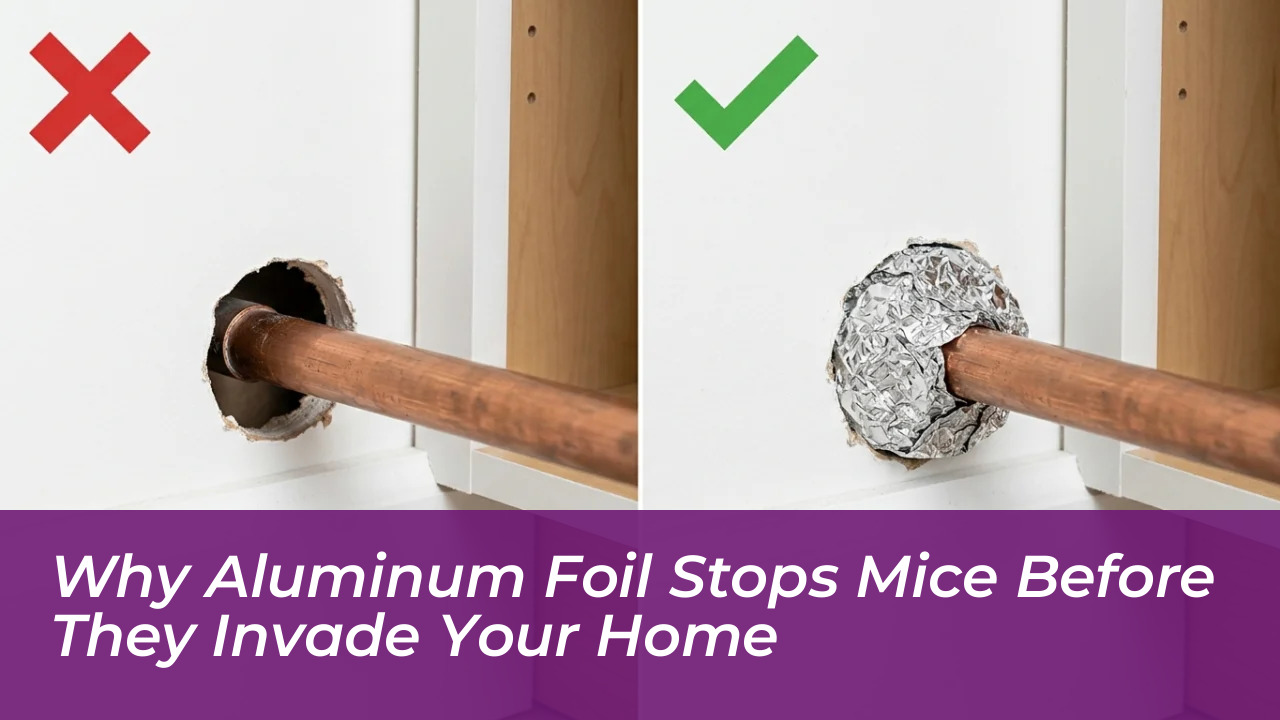

As autumn temperatures drop and daylight hours shorten, rodents aggressively seek indoor shelters offering warmth, dryness, and reliable food sources. Mice require remarkably tiny access points, often slipping through gaps around exterior plumbing, weatherstripping tears, or forgotten openings behind kitchen cabinetry. Once an infestation establishes nests deep within interior walls, eradicating the colony becomes exponentially harder, making early perimeter defense essential. Standard household aluminum foil serves as an immediate, chemical-free barrier that deters mice from entering homes through narrow cracks and pipe openings before seasonal pests can move indoors.
Rodents rely heavily on stealth and surefooted navigation. The noisy crinkle, slick texture, and shifting footing of foil feel unnatural and intimidating to their survival instincts. By compressing sheets into vulnerable foundation voids, homeowners can establish an effective physical perimeter without relying on toxic chemical baits or hazardous snap traps.
The Sensory Science Behind Why Foil Deterrence Works
Rodents navigate unfamiliar environments using acute tactile sensitivity and defensive caution. The smooth, unstable surface of kitchen foil undermines their ability to maintain claw traction. Without a solid grip, climbing or moving across the material triggers hesitation, steering them away from entry paths.
Auditory disturbance amplifies this physical discomfort. Mice instinctively operate in silence to evade natural predators. The sharp crackle generated by the slightest contact with loose foil produces an alarming auditory signal. Rodents consistently abandon exploration routes that compromise their position through unexpected noise. The greatest advantage of aluminum foil does not lie in exterminating mice, but in making their immediate surroundings uncomfortable enough that they abandon the territory entirely.
Evaluating Rodent Exclusion Materials
While compressed aluminum foil provides an instant, temporary seal against exploratory scratching, lasting rodent management often requires layering materials for comprehensive durability. Understanding the functional benefits of different exclusion products ensures a more secure home envelope.
- Household Aluminum Foil: Rapid, malleable setup providing tactile and acoustic deterrence against initial entry and cold drafts.
- Steel Wool or Wire Mesh: Long-term physical barrier that withstands continuous rodent gnawing over time.
- 100% Silicone Caulk: Perfect for sealing narrow hairline cracks along baseboards and door frames.
How to Strategically Deploy Foil Around the House
A systematic property audit forms the backbone of successful rodent exclusion. Pinpoint every potential opening around ground-level walls, utility entrances, and crawl spaces where structural gaps meet warm air drafts.
Key Areas to Inspect
- Gaps along baseboards and floor transitions.
- Openings surrounding under-sink drainpipes and plumbing lines.
- Gaps beneath exterior doors and thresholds.
- Hidden spaces behind heavy kitchen appliances and pantries.
Form dense foil plugs by tightly compressing sheets of foil to fit snugly into each detected crevice, leaving no loose edges that rodents can bypass. Cover high-traffic pathways by laying strips or crinkled pieces along secluded pathways behind storage corners to discourage mice from feeling secure in quiet indoor zones.
Myth vs. Reality: Foil as a Permanent Exclusion Fix
A persistent misconception suggests that soft foil alone offers an impenetrable permanent barrier. Persistent rodents possess strong teeth that can eventually chew through light aluminum if an enticing food odor lingers directly on the other side. Relying solely on loose sheets without addressing underlying food sources will ultimately weaken home defense lines.
For enduring protection, pairing foil with tougher materials like coarse steel wool or durable hardware cloth creates a dual-layer defense. The foil blocks cold drafts and provides startling sensory feedback, while steel wire halts dedicated chewers permanently. Acting before cold weather forces rodents indoors spares households the expense, hassle, and health hazards of traps or chemical extermination methods. Check foundation pipes and pantry baseboards today before cooler weather triggers seasonal rodent movement toward interior warmth, and combine malleable foil with wire mesh to tackle both initial acoustic deterrence and long-tough gnawing resistance.