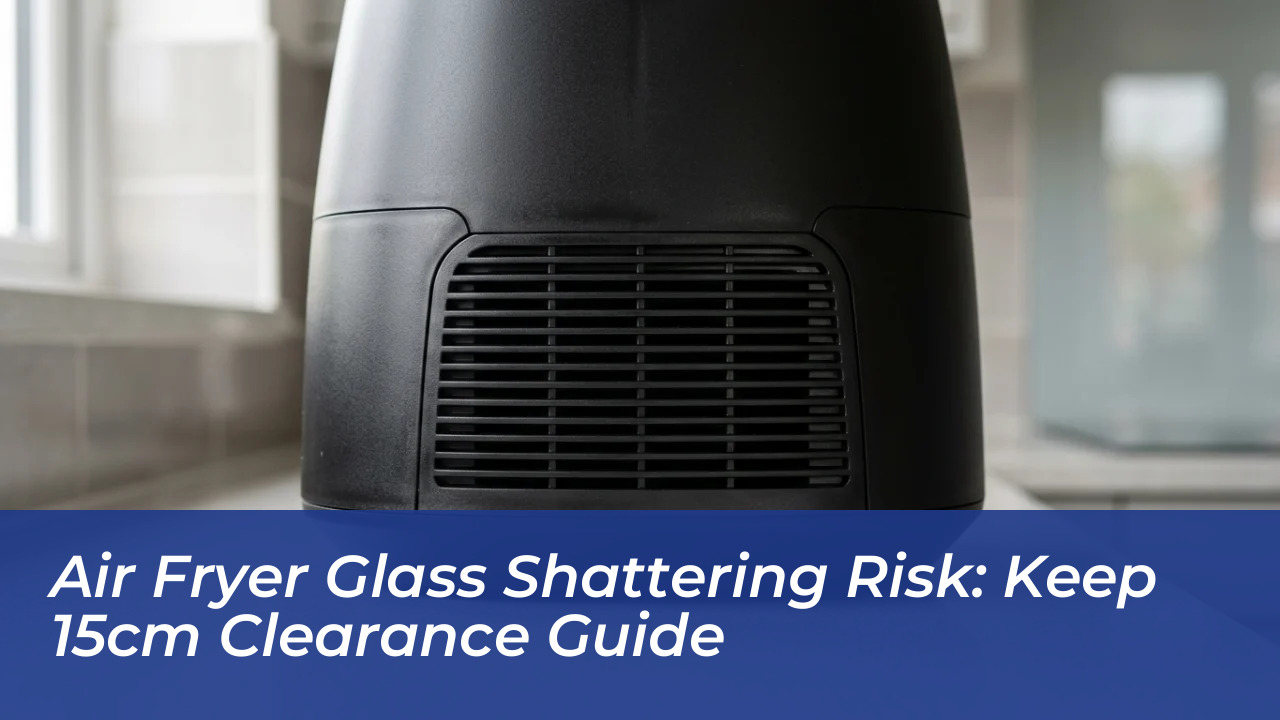

Pushing your air fryer 10 to 15 centimetres away from walls, glass splashbacks, and windows can prevent sudden shattering caused by intense exhaust heat. A rapid blast of concentrated air can cause structural cracking across fragile kitchen surfaces in under 20 minutes. This turns an ordinary weekday dinner into an expensive household repair job.
Home cook Wilma Rinkinen discovered this hazard firsthand while roasting a simple batch of potatoes and carrots. A sudden, violent cracking sound echoed across her kitchen as the glass splashback panel behind her cooker fractured under the thermal load. This incident sparked widespread discussion online regarding kitchen appliance safety and counter clearance.
Why Concentrated Exhaust Creates Sudden Thermal Shock
The mechanical culprit behind broken panels is a phenomenon known as thermal shock failure. Air fryers operate by circulating high-velocity hot air within an insulated chamber. This air then vents outward through dedicated exhaust ports located at the back or base of the unit.
When this scorching exhaust stream strikes a single, localized section of glass, that specific area expands rapidly while the surrounding glass stays cool. The dramatic temperature difference generates massive internal tension. Eventually, this causes the entire sheet to snap or splinter without warning.
Standard household recipes like diced vegetables or chicken fillets require roughly 20 minutes of cooking time. Insurance records reveal that this brief window provides more than enough sustained heat exposure to fracture vulnerable glass surfaces. This debunks the persistent myth that only marathon cooking sessions cause structural damage.
Essential Clearance Requirements for Your Kitchen Workspace
Proper air fryer placement demands continuous airflow around all sides of the casing. While individual instruction manuals outline exact specifications, leading safety guidelines stress maintaining an open, well-ventilated worktop zone to prevent hot air pockets from forming.
- Rear Clearance: Maintain 10 to 15 cm of open space directly behind exhaust vents.
- Surrounding Surfaces: Keep units away from glass panels, kitchen windows, and flammable items.
- Base Support: Never place your appliance on induction hobs or uneven cooking surfaces.
- Power Routine: Always unplug the device from the wall socket immediately after use.
Hob Surfaces, Electrical Hazards, and Fire Prevention
A widespread mistake in compact kitchens is using cold induction hobs as makeshift worktop space. Placing your air fryer on a glass or ceramic hob creates an extreme fire risk if a burner is accidentally switched on underneath the plastic housing.
Unattended operation presents another serious hazard. Claims data demonstrates instances where units left running while residents fell asleep led to dangerous household fires. Although modern units feature automatic shut-off timers, safety bodies strongly recommend pulling the plug from the mains socket the moment cooking concludes.
Financial consequences also extend into property insurance payouts. While accidental property damage often falls below the £500 mark for glass replacement, insurers frequently reduce claim settlements if the owner neglected explicit clearance instructions printed in the product manual.
Maintenance Practices to Prevent Internal Ignition
Keeping appliances clean serves as a crucial line of defense against house fires. Internal grease deposits and blocked ventilation slots drastically increase the chance of internal ignition during regular operation.
- Inspect the exhaust grille before every cook to ensure airflow remains completely unobstructed.
- Wipe away grease reservoirs and residual oil pools after the appliance cools down thoroughly.
- Check the casing regularly for abnormal heat buildup, unusual plastic odours, or unexpected rattling sounds.
If your unit begins taking noticeably longer to cook meals, emits harsh electrical smells, or shows signs of melting plastic, stop using it immediately. Unplug the device and have it checked by a qualified technician before attempting your next meal.
Frequently Asked Questions
How far away should an air fryer be from kitchen glass?
You should keep your air fryer at least 10 to 15 centimetres away from kitchen glass panels, splashbacks, and windows to dissipate concentrated exhaust heat and prevent thermal shock shattering.
Can air fryer exhaust crack a glass splashback?
Yes. A rapid blast of hot exhaust air can cause rapid local expansion on glass surfaces, generating immense internal tension that fractures the glass panel in under 20 minutes.
Is it safe to place an air fryer on an induction hob?
No. Placing an air fryer on top of a glass or ceramic hob is a major fire hazard. If a burner is accidentally activated underneath the plastic appliance base, it can cause severe damage or ignite a fire.
How do I know if my kitchen counter setup has enough clearance?
Ensure you have at least a hand-width or 10 to 15 cm of free space behind and around the unit, with completely open air above the exhaust path so hot air never gets trapped.
What should I do if my air fryer smells like melting plastic?
Stop using the appliance immediately, unplug it from the wall socket, and allow it to cool. Inspect the unit for grease buildup or mechanical faults, and consult a professional if the odour persists.