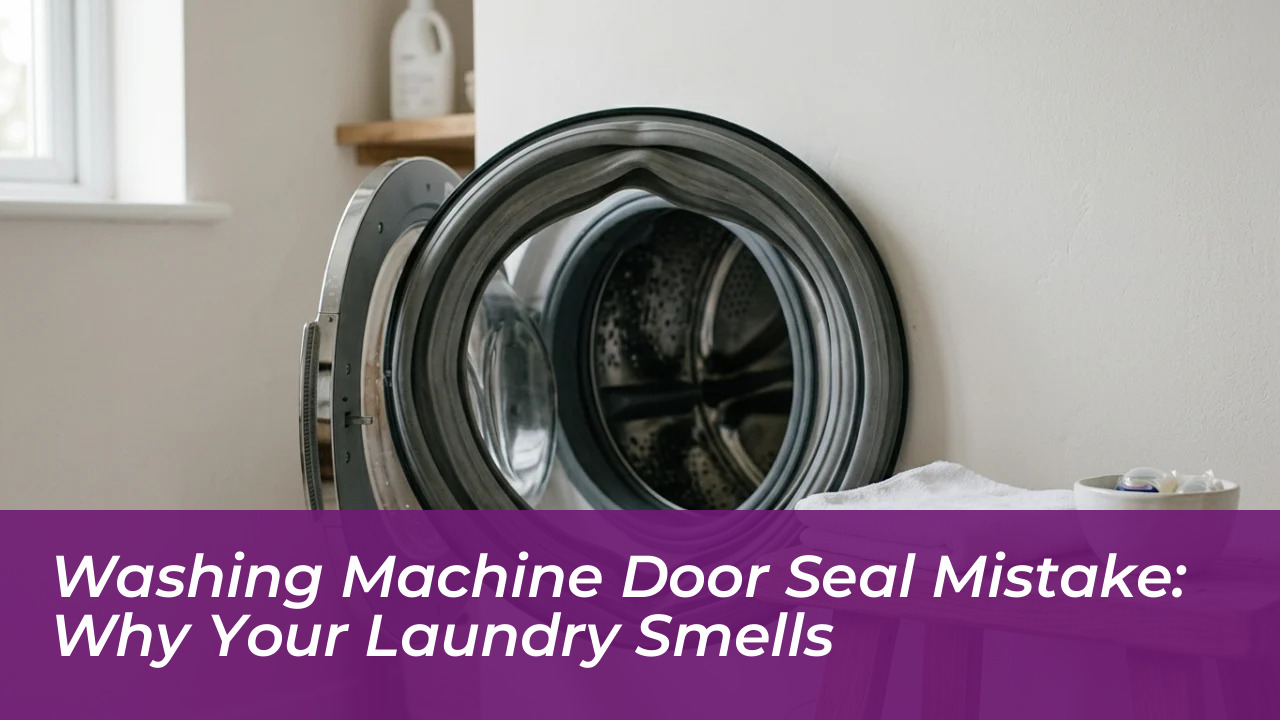

Pulling a freshly finished load of laundry out of the drum only to be greeted by a sour, damp odour rather than a fresh fragrance is an all-too-common domestic frustration. When laundry fails to smell clean, the instinct is often to blame the wash cycle, switch detergent brands, or pour in extra fabric conditioner. However, the real culprit behind that lingering musty scent is almost always lurking directly inside the appliance: the washing machine rubber seal around the door.
Every time a cycle runs, the deep folds of this front gasket trap dirty water, loosened fabric fibres, and detergent scum. Over time, this stagnant pool creates the ultimate breeding ground for microorganisms, mould, and persistent foul odours that transfer back onto your clothes during subsequent washes. Fortunately, addressing the problem does not require costly specialist gear-just a few targeted minutes of regular maintenance.
Why Your Laundry Smells of Damp Instead of Detergent
Front-loading appliances rely on a heavy-duty rubber seal to keep gallons of water securely inside the drum during operation. However, the physical geometry of these flexible folds creates a catchment area where pooled water fails to drain away naturally. Trapped moisture combined with warm room temperatures turns the gasket into an ideal microclimate for mildew.
Whenever fabrics spin, they release micro-particles of lint and hair that get swept into the rim. When these combine with residual soap, they form a slimy film. During the next wash, clean clothes repeatedly rub against this contaminated edge, picking up unpleasant odours before you even hang them up to dry. The combination of trapped moisture, fabric lint, and soap residue within appliance crevices creates the ideal breeding ground for odour-causing microorganisms.
Pouring in more fabric softener to combat the problem actually makes it worse. Overdosing liquids leaves behind a thick coating that builds up on internal components, accelerating sludge formation and trapping even more dirt.
How to Deep-Clean the Door Gasket in 4 Steps
Tackling the rubber rim requires only a gentle approach and everyday cleaning materials. Taking aggressive chemical shortcuts can permanently damage the flexible rubber, leading to leaks:
- Isolate the appliance: Always ensure the washing machine is switched off at the mains before beginning any physical cleaning around the interior.
- Clear trapped debris: Gently pull back the rubber folds with your fingers. Check thoroughly along the entire perimeter, paying close attention to the lowest point of the ring, and manually pull out trapped coins, hair, and clumps of sodden lint.
- Wipe with mild cleaner: Dip a soft microfiber cloth into lukewarm water mixed with a small dash of mild washing-up liquid. Thoroughly wipe down both sides of the rubber lips, scrubbing away accumulated grime without tearing the seal.
- Dry completely: Use an absorbent clean towel to lift any remaining soapy residue and soak up stagnant water pooled at the bottom trough until the rubber is bone dry.
If visible black mould spots or stubborn build-ups have already established themselves, use a dedicated cleaning formula specifically labelled as safe for washing machine rubber components, following manufacturer guidelines carefully.
Appliance Care Comparison
Understanding how different habits affect your appliance can save you time, money, and frustration:
- Adding extra fabric conditioner: Leaves thick chemical deposits that speed up scum and mould accumulation inside the drum.
- Clearing and drying the door seal: Eliminates the physical reservoir where odour-causing bacteria and dirty stagnant water settle.
- Leaving the appliance door ajar: Allows vital ambient airflow to dry the interior cavity between household wash days.
Preventing Damp Odours for Good
Stopping musty smells requires ongoing maintenance rather than one-off emergency fixes. In addition to wiping the door seal, remove the pull-out detergent drawer periodically to rinse away crusted powder and slimy liquid conditioner residues. It is equally important to inspect and clear the drain pump filter at the base of the machine to maintain clean outflow.
Whenever practical, empty the drum promptly as soon as a cycle ends rather than letting wet fabrics sit in darkness. Finally, leave both the machine door and the detergent dispenser drawer cracked open between uses. Allowing clean air to circulate freely ensures internal moisture evaporates completely before bacteria have time to take root.
Check your appliance door seal today to spot early signs of grime build-up. Pass these simple maintenance steps along to keep household laundry smelling fresh.
Frequently Asked Questions
Why does my washing machine seal get slimy and smell damp?
The rubber gasket folds trap water, lint, hair, and soap scum during every wash cycle. Without regular cleaning and drying, this dark, damp environment breeds mould and bacteria, causing musty odours that transfer to your clothes.
How often should I clean my washing machine door gasket?
It is best to wipe down and dry the door seal after every few washes, or at least once a week, to prevent mildew and soap scum from establishing deep roots in the rubber folds.
Can I use straight vinegar to clean my washing machine rubber seal?
While vinegar is a popular natural cleaner, appliance professionals advise against using strong acids too frequently because they can degrade and crack rubber components over time, eventually leading to leaks.
What else should I clean if my washing machine smells musty?
Aside from the door seal, you should periodically clean the pull-out detergent drawer to remove slime, run a hot monthly maintenance wash with a dedicated cleaner, and clear out the filter located behind the trap door at the base of the machine.
Should I keep the washing machine door open after a wash?
Yes. Leaving the door and the detergent drawer cracked open allows ambient air to circulate through the drum and internal cavities, ensuring that lingering moisture evaporates completely between laundry days.