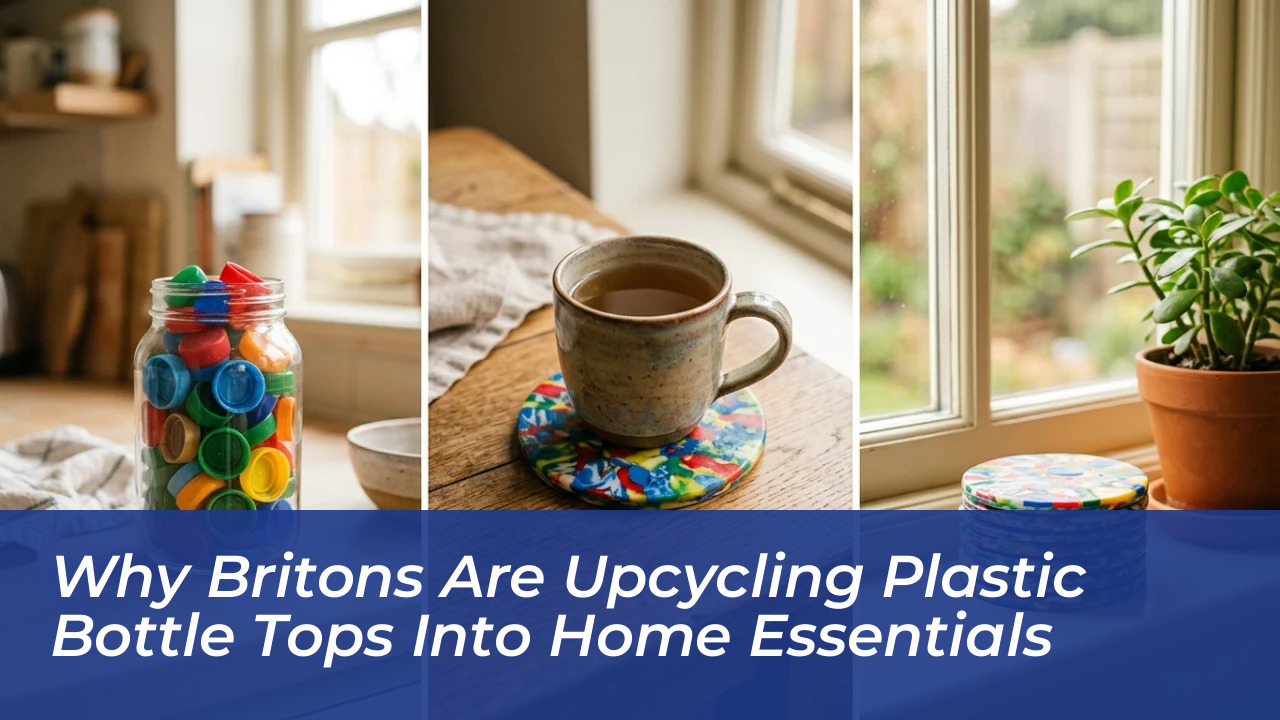

Every year, millions of colourful plastic lids bypass sorting facilities because their small size causes them to slip through commercial recycling screens. Instead of discarding these durable pieces of polypropylene and high-density polyethylene, many Britons are upcycling bottle caps into sturdy, practical home solutions.
While most local authorities advise screwing caps back onto bottles before recycling, keeping a small collection at home can eliminate the need to buy plastic organisers, coasters, and gardening accessories. With basic tools, these beverage tops can be transformed into robust household items that save money and reduce waste.
Why Everyday Bottle Tops Are a DIY Resource
Standard milk jug, cordial, and sparkling water caps are made from high-density polyethylene (HDPE, resin code 2) or polypropylene (PP, code 5). These materials are engineered for food-safe resilience and high impact resistance.
- Uniform dimensions: Standardised screw tops align cleanly into geometric patterns.
- Vibrant pigment: Industrial packaging uses saturated hues that do not fade or run when washed.
- Thermal flexibility: HDPE melts at accessible temperatures, allowing for reshaping without industrial equipment.
Functional Projects for the Home
The most successful upcycling projects replace single-use items or serve a clear purpose. By changing how you view “rubbish,” you can turn these small circular components into highly functional tools.
Heat-Pressed Coasters and Trivets
You can fuse identical plastic lids into protective heat pads for mugs and teapots. Arrange clean caps flat on a sheet of greaseproof baking parchment inside a baking tray to create a mosaic. Place another sheet of parchment over the caps and apply moderate, controlled heat using a domestic iron. This fuses the edges together. Once cooled under a heavy cutting board, the resulting slab acts as a waterproof, scratch-resistant table mat.
Storage and Organisation
The mechanical threading on standard bottle tops provides ready-made solutions for small household items:
- Airtight pantry clips: Cut the threaded neck off an empty milk jug. Feed an unsealed bag of rice or pulses through the neck, fold the bag edges over the rim, and screw the lid shut to create an airtight seal.
- Wall-mounted cable hooks: Screw a series of identical caps into a strip of reclaimed timber. These serve as low-profile hooks for charging cables and keyrings.
- Seedling trays: Shallow, wide caps with a small drainage hole punched in the bottom serve as individual seed-starting pods for indoor windowsills.
Safety Essentials
When upcycling plastic using heat, safety is the priority. Never allow plastic to smoke or scorch, and avoid contact with open flames. Always work in a well-ventilated area, such as near an open window or outdoors.
Stick strictly to caps labelled with recycling numbers 2 or 5. Other plastics, such as PVC (number 3), release harmful fumes when heated. Allow all projects to cool thoroughly before handling, as synthetic polymers retain internal heat longer than they appear to.
Transforming domestic waste into utility requires only a shift in perspective. By repurposing these small items, we can contribute to a more circular lifestyle directly from our own kitchens.