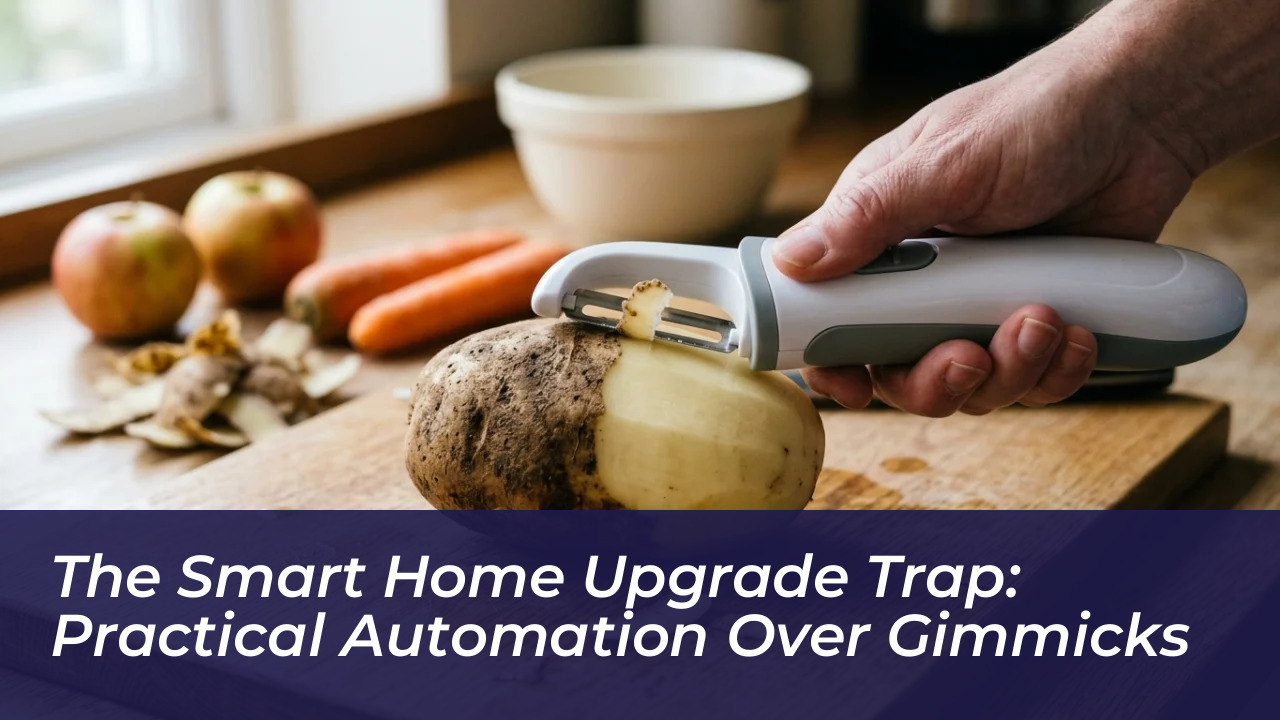

British households are undergoing a quiet mechanical revolution. Many are moving away from costly, complex whole-house installations-often marketed as “smart homes”-toward affordable, single-task automated appliances that eliminate daily friction. This shift reflects a maturing consumer appetite: UK householders now prefer hard-wearing tools engineered to reduce prep time, cut clutter, and streamline busy routines over gimmicky connected novelties that fail to integrate.
The Culinary Automation Boom: Transforming Kitchen Prep
Kitchens account for the majority of domestic hardware purchases, driven by the desire to streamline scratch cooking without sacrificing quality. Modern food preparation gadgets now feature high-torque motors and precision-engineered blades that handle everything from vegetable peeling to automated portioning in seconds.
Specialist appliances once exclusive to commercial catering are now scaled down for domestic worktops. Rather than relying on oversized food processors that require tedious assembly and cleaning, these dedicated tools focus on high efficiency within a small footprint:
- High-Speed Peeling and Slicing: Motorised peeling apparatus and automated cutters manage firm root vegetables and fruits with minimal waste.
- Specialised Extraction Systems: Cold-press citrus extractors maximise yield while keeping bitter rind oils out of the final drink.
- Repetitive Task Elimination: Automated dumpling presses, egg rollers, and measured batter dispensers turn laborious baking sessions into effortless assembly lines.
Breakfast and Beverage Systems Built for Tight Schedules
The morning rush is a stressful period for many families, prompting a surge in integrated breakfast machines and specialised brewing stations. Compact units combining dual-zone cooking with dedicated beverage brewing allow householders to prepare protein-rich meals and fresh coffee simultaneously without occupying multiple hob burners. These devices combine precision thermal controls with automated shut-off mechanisms, ensuring energy efficiency and safety.
Workspace Streamlining and Cordless Management
Beyond the kitchen, household efficiency relies on managing the “invisible clutter” generated by mobile electronics. Power distribution has evolved from unsightly extension leads into dedicated multi-device charging hubs and modular power cubes designed to sit neatly on desks. Reliable current regulation and integrated heat dissipation allow these stations to charge multiple devices safely without degrading battery longevity.
, the rise of cordless, battery-powered tools-ranging from handheld food mixers to digital measuring instruments-is eliminating the tether of fixed plug sockets, allowing flexible operation anywhere in the home.
Evaluating Real Utility: How to Choose Practical Tech
With thousands of mechanical innovations competing for attention online, discerning buyers must distinguish between transformative tools and short-lived novelties. Consumer guidance organisations recommend assessing long-term value through build materials, ease of sanitisation, and the availability of replacement parts.
Appliances that perform a singular, frequently repeated task exceptionally well-such as a precision burr grinder or an automated mandoline-invariably deliver higher satisfaction than fragile multi-tools that attempt to perform a dozen separate functions poorly.
By prioritising gadgets that solve genuine logistical bottlenecks, British householders are reclaiming both their time and their kitchen surfaces. The shift toward practical domestic convenience is redefining how we manage meals and living spaces, proving that the most valuable upgrades are often the simplest.
What do you think?
Which everyday household task do you wish could be completely automated in your own home? Share your thoughts and experiences in the comments below.