
You do not need a specialist whetstone or an expensive electric machine to restore a blunt kitchen blade. Across British kitchens, dull knives remain one of the most common causes of accidental slips, requiring excessive force to slice through basic ingredients like tomatoes or root vegetables. Consumer testing groups, including Which?, consistently highlight that a properly maintained blade is fundamentally safer than a dull one. When metal edges fold over through daily use, specific everyday materials provide the exact grit and friction required to apex the blade once again, allowing you to achieve razor-sharp performance using items already sitting in your kitchen cabinets.
Why Traditional Sharpeners Aren’t Always Necessary
Daily food preparation takes a heavy toll on stainless steel cutlery. As you chop, dice, and slice, the microscopic edge of the blade rolls over, creating a dull profile that crushes rather than cuts food. Professional sharpening gear works by shaving away metal or meticulously honing the bevel back into alignment. However, many common household objects possess the exact abrasive properties needed to mimic professional sharpening stones and steel rods. Before investing in costly workshop gear, five proven makeshift honing surfaces deliver immediate, reliable results.
5 Household Items to Sharpen a Knife Without a Sharpener
You can leverage everyday objects found around the home or office to bring a dead edge back to life. Here are the five most effective alternatives to a dedicated knife sharpener:
1. The Ceramic Tea Mug Rim
The unglazed ring on the underside of an earthenware or ceramic mug acts almost identically to a fine ceramic honing stone. Because the ring lacks enamel glaze, the exposed clay is harder than standard kitchen stainless steel.
- Place the mug upside down on a damp tea towel to prevent it slipping across the worktop.
- Tilt the blade at roughly a 20-degree angle against the unglazed ceramic rim.
- Draw the knife smoothly from heel to tip in a single sweep, repeating the motion five to ten times per side with moderate pressure.
- Wipe the blade with a clean cloth immediately afterwards to remove microscopic metal filings.
2. A Smooth Leather Belt
Barbers have relied on leather strops for centuries to maintain cut-throat razors, and the exact same principle applies to standard chef’s knives. A genuine, unstitched leather belt will not grind away heavy metal, but it effectively realigns a rolled microscopic edge and removes lingering burrs. Secure the belt tightly to a stable fixture, rub a tiny dab of mineral oil or polishing compound into the unfinished underside, and trail the blade spine-first across the leather. Trailing the blade away from the cutting edge ensures the leather polishes rather than cuts.
3. Fine-Grit Sandpaper on a Flat Surface
If a knife has developed noticeable nicks or has lost its bevel entirely, gentle stropping will not suffice. Wet-and-dry sandpaper provides a controlled, progressive abrasive surface that mimics professional water stones. Affix a sheet of 1,000-grit or 2,000-grit wet-and-dry sandpaper to a completely flat block of wood or marble chopping board using masking tape. Lubricate the paper with a splash of water, maintain a firm 15-to-20-degree angle, and draw the blade across the sheet using steady, alternating strokes.
4. The Edge of a Car Window or Glass Bottle
Toughened glass features a surprisingly hard, uniform edge capable of smoothing rough burrs on steel. In an emergency or outdoor setting, the rounded upper rim of an open car window serves as a remarkably efficient burnishing rod. Slowly slide the cutting edge diagonally along the rounded top perimeter of the glass pane. As with a traditional butcher’s steel, the glass does not shave off excessive material; instead, it straightens the curled apex of the metal back into alignment.
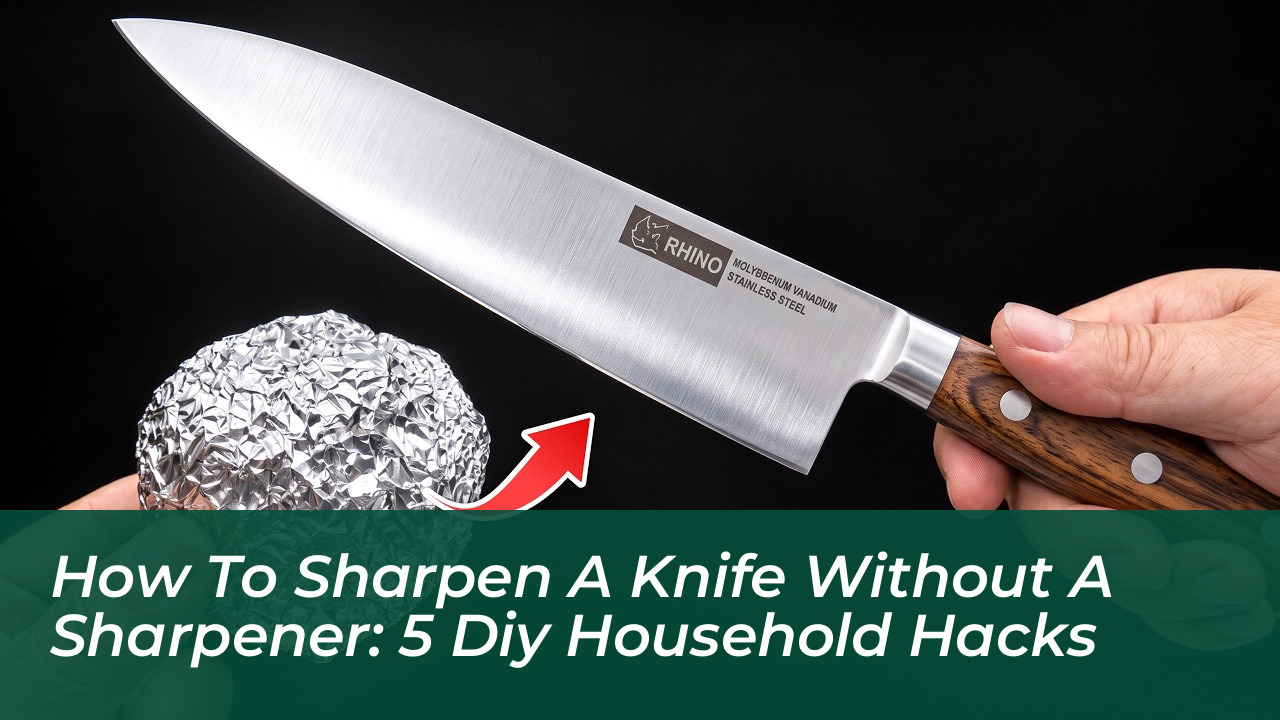
5. Folded Aluminium Foil
While aluminium foil cannot re-profile a deeply gouged edge, folding a heavy strip of household foil several times creates a functional burnishing tool. Slicing repeatedly through six to eight layers of tightly packed foil cleans away oxidation, smooths minor micro-teeth, and polishes the metal edge.
Mastering the Angle: The Key to Lasting Sharpness
The fundamental secret behind all five methods lies in maintaining a consistent bevel angle throughout each stroke. Most European-style kitchen knives require an edge profile between 15 and 20 degrees on each side. Lifting the spine too high blunts the blade immediately by flattening the apex, while holding it too flat merely scratches the polished face of the steel.
Keep wrist movements locked, apply light pressure, and let the abrasive friction do the work. Always test your sharpened blade on a sheet of scrap paper rather than running fingers along the edge.
Regular maintenance with a ceramic mug base or leather belt prevents the metal from degrading to the point where heavy grinding becomes necessary. A sharp knife makes prep work effortless while dramatically reducing slip hazards on chopping boards.
Frequently Asked Questions
Can I ruin my knife using a ceramic mug rim?
If you press down too hard or fail to maintain a steady 20-degree angle, you can scratch the blade face or roll the edge further. Use light, consistent pressure and gentle sweeps to protect your cutlery.
How often should I hone my kitchen knives?
For home cooks who prep meals daily, light honing every week or two keeps the edge aligned. Full sharpening using sandpaper or stones is typically only needed every few months.
Does aluminium foil actually sharpen a knife?
Aluminium foil does not grind a new edge onto a completely dull blade. Instead, it acts as a mild abrasive that cleans away micro-burrs and temporarily polishes the cutting edge.
What angle is best for kitchen knives?
Most standard western kitchen knives perform best at a 15 to 20-degree angle. Japanese style blades often feature a steeper, sharper angle closer to 12 to 15 degrees.
Is a sharp knife safer than a dull knife?
Yes. Dull knives require excessive force to cut through food, making them prone to slipping off ingredients and causing accidental injuries. A sharp blade cuts smoothly and predictably.