
When sudden infestations of aphids, mealybugs, and caterpillars threaten your ornamentals, vegetables, and delicate succulents, waiting days for systemic treatments to take effect is not an option. You need immediate intervention to stop sap-sucking invaders before they drain your plants. Targeted contact sprays formulated from potassium salts of fatty acids or diluted horticultural soaps neutralize these pests instantly by dissolving their protective waxy cuticles. Understanding how these mechanical contact solutions work allows growers to eradicate colonies swiftly without poisoning beneficial pollinators or degrading surrounding soil health.
The Science of Fast-Acting Contact Pest Eradication
Unlike systemic chemical poisons that circulate through a plant’s vascular system, fast-acting natural insecticides operate purely through physical disruption. When pure insecticidal soap or diluted horticultural alcohol coats a soft-bodied insect, it breaks surface tension and dissolves the external lipid layer. This process causes rapid desiccation and blocks the spiracles through which insects breathe, halting feeding damage immediately.
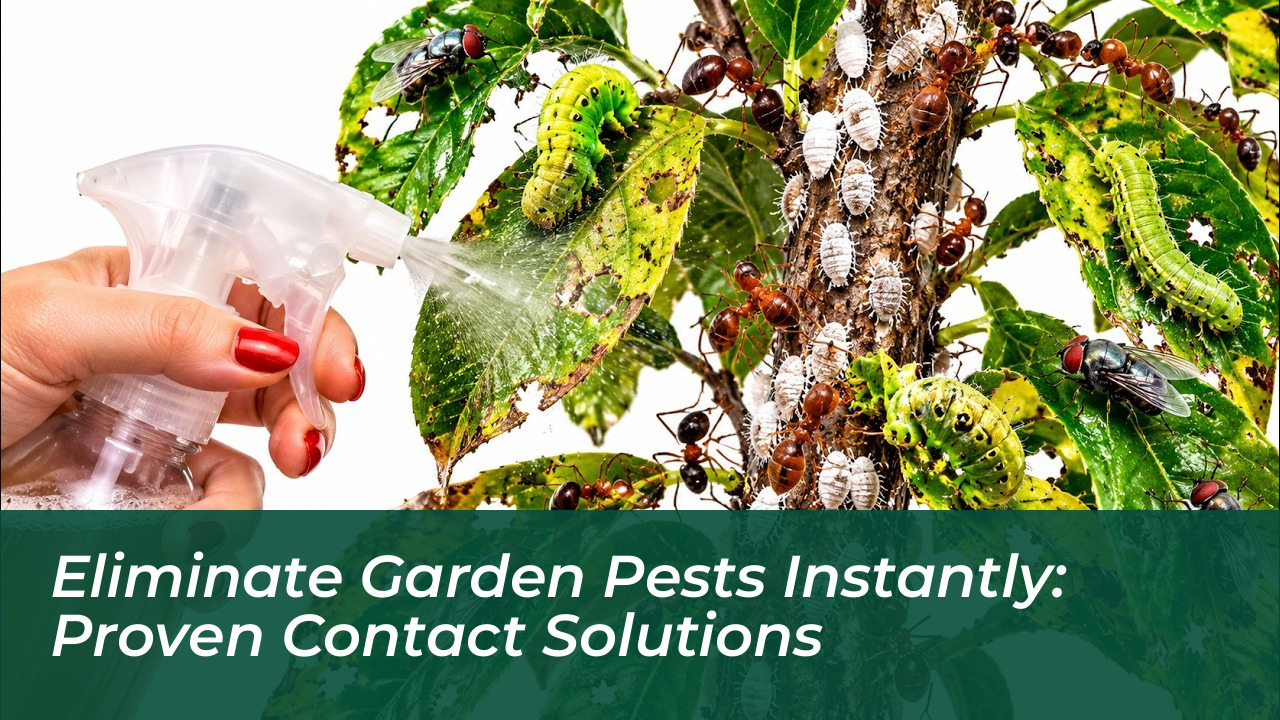
The speed of elimination depends entirely on direct contact rather than ingestion. Common garden culprits highly susceptible to this mechanical action include:
- Aphids: Rapidly multiplying sap-feeders that cluster on tender new shoots and curl foliage.
- Mealybugs: Cotton-like scale insects that hide in leaf axils and secrete sticky honeydew.
- Scale Insects: Hard and soft-shelled parasites that anchor themselves along main stems to sap plant vigor.
- Caterpillars: Voracious chewers that strip leaves overnight down to bare veins.
- Fungus Gnats and Whiteflies: Airborne nuisance pests that disturb root systems and spread plant pathogens.
- Ants: Opportunistic insects that protect aphid colonies to farm their sugary secretions.
Crafting a Fast-Acting Botanical Spray Solution
An effective multi-target contact spray relies on gentle yet potent surfactants that break water surface tension without burning sensitive foliage. Pure liquid Castile soap, derived from vegetable oils, serves as an outstanding base for home garden pest control. Combining potassium-based soap with a minor fraction of isopropyl alcohol or cold-pressed neem oil yields a comprehensive formulation capable of penetrating the protective wool of mealybugs within five seconds of contact.
Safe Application Ratios for Sensitive Foliage
To prepare an all-purpose contact spray, mix one tablespoon of pure liquid vegetable soap with one liter of tepid water. For severe mealybug or scale outbreaks, adding a single teaspoon of 70 percent isopropyl alcohol dissolves stubborn waxy coats instantly. Shake the mixture thoroughly before every application to keep the active lipids suspended evenly throughout the solution.
Always spot-test a single leaf twenty-four hours before spraying an entire collection, particularly on delicate glaucous succulents whose powdery coatings can be sensitive to detergents.
Essential Application Tactics to Prevent Recurrence
Timing your treatment determines both its immediate success and the long-term safety of your plants. Liquid solutions magnify bright sunlight, creating miniature lenses that scorch leaves if sprayed during midday heat. Treat affected foliage during early morning or late dusk when temperatures drop and direct sun cannot bake damp leaves. This window also ensures beneficial insects such as bees and ladybirds have vacated the area.
Direct the spray nozzle deliberately into hidden crevices, focusing heavily on the undersides of leaves and nodal junctions where juvenile nymphs gather. Reapply the treatment every five to seven days across two weeks to catch newly hatched eggs before they mature into reproducing adults. Consistency remains the secret weapon against stubborn infestations, as breaking the generational cycle prevents pests from establishing resistant colonies.
Frequently Asked Questions
How quickly do contact sprays kill garden pests?
Contact sprays like insecticidal soaps work in seconds to minutes upon direct physical exposure, neutralizing soft-bodied insects by dissolving their protective outer lipid layer and causing rapid desiccation.
Are homemade soap sprays safe for edible vegetables?
Yes, mild liquid Castile soap mixed with water is generally safe for edible crops. However, it is always recommended to rinse harvested fruits and vegetables thoroughly before consumption.
Why did my plant leaves burn after spraying?
Leaf burn typically happens when soap or oil mixtures are applied under direct, intense sunlight. The droplets act as magnifying lenses, scorching the foliage. Always spray during early morning or late evening.
Do contact sprays eliminate insect eggs?
Most standard contact sprays do not penetrate hard egg casings. This is why regular follow-up applications every five to seven days are necessary to catch newly hatched nymphs.
Can I use rubbing alcohol on all houseplants?
While diluted isopropyl alcohol effectively dissolves mealybug coatings, sensitive plants like ferns and certain thin-leaved tropicals can suffer leaf damage. Always perform a 24-hour spot test first.