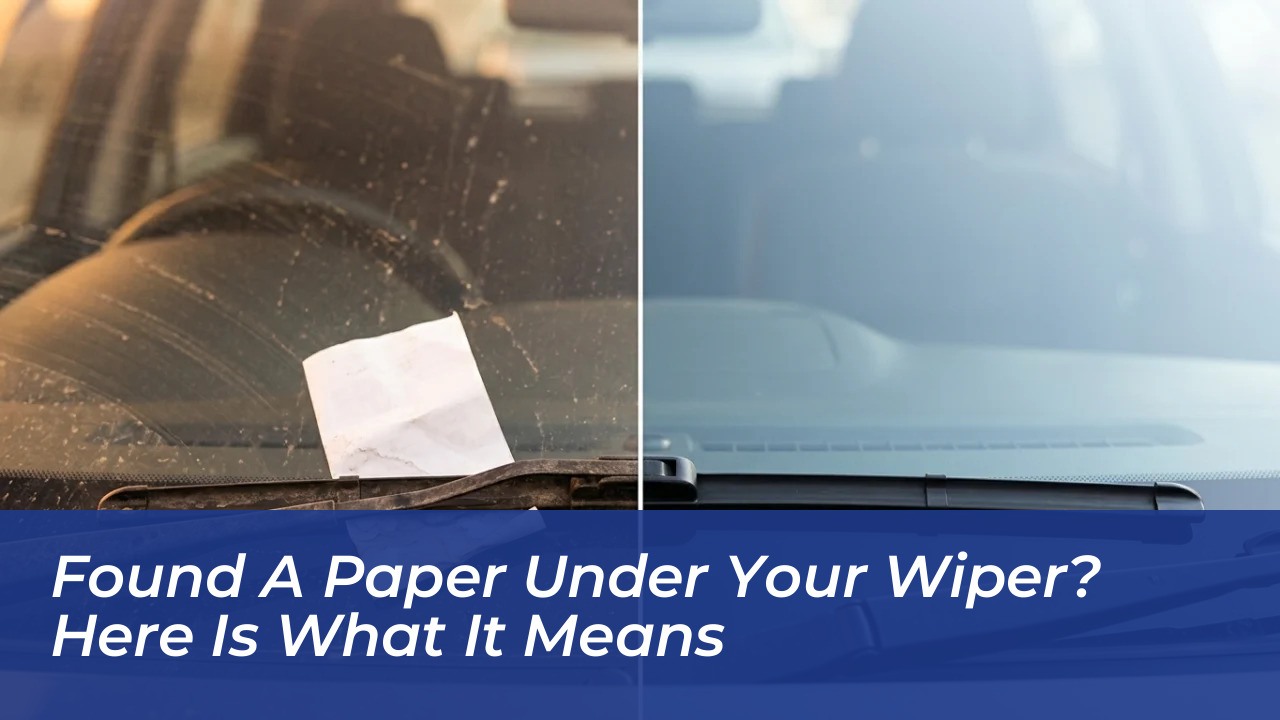

Finding a slip of paper tucked under your car windshield wiper is rarely a casual occurrence or an informal note. In almost all cases, it means local enforcement authorities have issued your vehicle a parking ticket for an alleged violation. Rather than a simple warning flyer, that printed document is an official pre-citation notice detailing an infraction, specifying strict payment deadlines, and outlining the legal steps required to resolve the issue before formal court proceedings begin.
Under statutory frameworks such as Pennsylvania’s Rule 401 of the Rules of Criminal Procedure, local law enforcement and municipal enforcement officers possess the legal authority to serve notice of a summary parking offense directly. They can hand it to the driver face-to-face or affix it securely to the vehicle’s windshield. While many motorists mistake these notices for harmless flyers that can be ignored, statutory procedures treat them as binding pre-citation deadlines. Ignoring the paper alters its legal standing entirely and can lead to severe administrative escalation.
The Legal Weight of the Paper Under Your Wiper Blade
That slip of paper serves as an initial notification offering motorists an administrative path to resolve an offense without facing an immediate court docket. Procedural codes dictate that a standard parking ticket gives vehicle owners a chance to pay a fine rather than having criminal or civil court actions initiated immediately against them.
A common misconception among drivers is that a slip left under a wiper blade carries no legal weight because it was not handed directly to the vehicle’s operator. In practice, local codes draw a sharp distinction between an initial pre-citation notice and a formal court summons. If the specified response window lapses without action, the issuing municipality or local authority escalates the case. At that stage, the simple ticket transforms into a formal court citation filed with a local judicial district.
Key Procedural Differences Under Statutory Rules
- Notice Stage (Windshield Ticket): Informal notice under procedural rules; allows settlement or dispute through local agency channels without immediate court proceedings.
- Formal Judicial Citation: Initiated after the initial notice is ignored; transitions the parking matter into formal court proceedings with potential additional late fees and court costs.
5 Immediate Steps to Take When You Spot a Wiper Notice
When you discover a written paper on your car glass, handling it correctly requires rapid verification to ensure the document is legitimate and that all deadlines are tracked properly. Follow this sequence immediately after retrieving the slip:
- Identify the issuing authority: Inspect the document carefully to identify which local government department, parking authority, or law enforcement agency issued it, and confirm the details via their verified official channels.
- Review the alleged violation details: Examine the stated reason for the infraction, vehicle registration markers, exact location, and time recorded on the slip to ensure all circumstances are accurate.
- Verify the monetary fine and deadline: Determine the exact fine amount due and take careful note of the statutory deadline to respond before penalty escalations trigger.
- Pay or contest through verified channels: If accepting the fine, submit payment following the instructions printed on the notice; if disputing the claim, utilize the agency’s official process to register an appeal.
- Do not discard or ignore the slip: Neglecting the notification triggers a citation filing under procedural rules, which can initiate formal legal proceedings against the registered owner.
Failing to review the fine terms on the paper is where drivers encounter avoidable complications, as unresolved tickets accumulate further administrative steps over time. Check your windshield thoroughly anytime your vehicle has been parked in a public zone, and keep all documentation stored until you verify that the matter is marked fully closed on official agency portals. Taking two minutes to confirm the issuing authority prevents unexpected court paperwork from arriving in your mailbox later on.
Frequently Asked Questions
What should I do if the paper under my wiper is blank or faded?
If environmental exposure has rendered the ticket unreadable, do not simply throw it away. Note your vehicle’s exact location, date, and time of parking, and contact your local municipal parking authority to check if a ticket was logged under your license plate.
Can wind blow away a parking ticket left on a windshield?
Yes, strong winds can occasionally dislodge a ticket. However, drivers are still legally responsible for the underlying infraction. If you return to your car and notice only a fragment or missing paper where enforcement officers usually place notices, check online municipal parking portals using your license plate number.
What happens if I completely ignore a windshield parking ticket?
Ignoring the initial notice causes the municipality to escalate the infraction into a formal court citation. This adds court costs, late fees, and potential registration renewal holds or bench warrants depending on local state laws.
How can I verify if a parking ticket is a scam?
Legitimate parking notices always feature the official municipal seal, a specific violation code, clear payment instructions pointing to official government websites (.gov or verified municipal portals), and specific officer identification numbers. Avoid scanning arbitrary QR codes on sus**cious notes that do not display official agency letterhead.
Can I contest a parking ticket if it was placed incorrectly?
Yes, if the enforcement officer recorded incorrect vehicle information-such as an erroneous license plate, wrong make/model, or incorrect location-you can file a formal dispute through the issuing agency’s administrative review process.