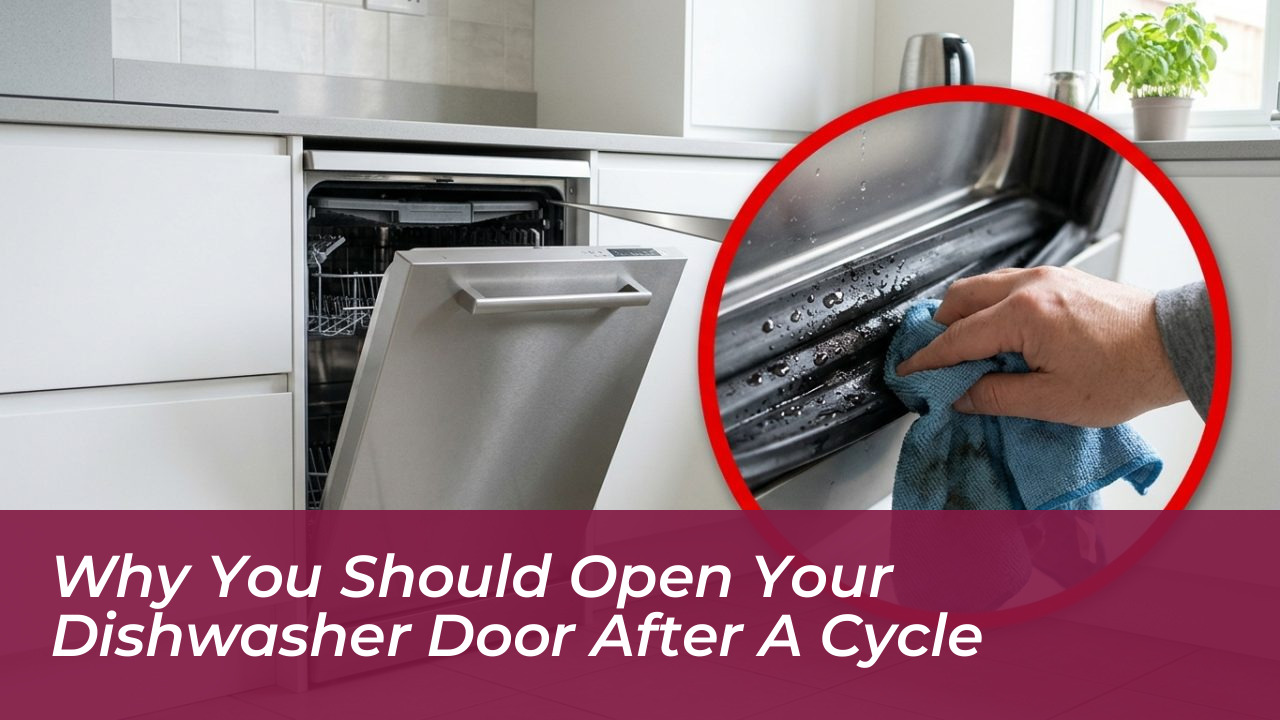

Leaving the dishwasher door shut tight after the final chime rings is the everyday habit behind most service calls regarding persistent, musty odors. Appliance technicians emphasize that keeping the tub sealed traps standing humidity, turning the interior into an incubator for bacteria and steadily degrading critical rubber seals. The zero-cost fix takes literally one second: pop the door immediately when the cycle ends, allowing the built-up steam to escape.
When a wash cycle finishes, the stainless steel or plastic tub remains a hot, saturated enclosure. Sealing that moisture inside provides the exact conditions mold spores require to colonize the machine. The primary casualties are the flexible components, as water settles directly into the rubber door gasket folds, establishing an odor source that survives subsequent high-temperature wash cycles.
The Physics of Post-Cycle Venting
Leaving the door cracked open a few inches shifts the internal physics entirely. The latent heat from the final rinse causes moisture to flash off the dishware into the surrounding room rather than condensing back onto plates and glasses. Modern premium appliances even feature motorized springs to pop their doors open automatically at the end of a run, matching the exact method long advised by field technicians.
Standing moisture inside a sealed appliance degrades rubber gaskets prematurely and creates the exact breeding ground where odor-causing mold thrives. By letting air circulate freely, you eliminate the single environmental factor necessary for mold formation: continuous standing moisture.
The Hidden Costs of a Sealed Dishwasher Tub
Allowing moisture to linger behind a latch does far more than create an unpleasant kitchen stench. Gaskets and door seals that spend weeks under constant dampness lose their structural elasticity. Over time, that chronic moisture softens the material, causing micro-tears and warping that lead to expensive floor leaks under kitchen cabinetry.
The issue mirrors what happens when front-load washing machine doors remain closed between washings. Without natural air circulation, the rubber bellows hold drops of water, collecting residues that feed biofilm growth.
A 3-Step Routine to Ventilate Safely
Cracking the door requires a sensible approach to ensure that hot, rising vapor does not damage your kitchen counters. Prolonged steam exposure directly hitting unfinished composite boards can cause swelling and structural degradation over the years. Follow these steps to vent your machine safely:
- Vent the primary plume: As soon as the cycle sounds, pull the door open completely for three to five seconds while stepping clear of the initial blast of steam.
- Prop it slightly ajar: Push the door back until it remains open two to four inches, letting ambient airflow handle the remaining moisture for a few hours.
- Protect your countertop: If the underside of your counter above the machine features exposed particleboard, apply a strip of protective foil tape to prevent moisture from bubbling the surface edge.
Households with curious toddlers can easily modify this approach without sacrificing hygiene. Instead of propping the appliance open on a busy walkway during peak hours, run the load late at night and open the door deliberately first thing in the morning.
Routine Maintenance to Keep the Wash Cavity Fresh
While regular venting handles daily dampness, basic dishwasher maintenance requires addressing two other problem zones. The removable mesh filter sitting below the lower spray arm traps solid food soils, which break down into pungent sludge if left uncleaned. Routinely washing the filter mesh under warm tap water every month eliminates the remaining source of internal odors.
Wipe down the crevices of the rubber perimeter seal using a rag dipped in mild soapy water. Service specialists consistently advise against pouring pure vinegar into normal wash cycles, because strong repeatedly eats away at soft rubber gaskets over time.
A one-second adjustment saves costly repair bills: Pop the latch as soon as you hear the completion chime to protect your seals and leave plates spotless. Inspect your door perimeter today to ensure the rubber gasket remains clean and free of trapped buildup.
Additional Loading Tips to Maximize Efficiency
Proper airflow relies on how you load the appliance as well. Overcrowding blocks water spray and prevents proper cleaning. Each item should sit in its designated slot to keep dishes stable and allow water to reach all surfaces.
- Spacing: Never stack items too tightly or nest bowls so closely that water cannot circulate between them.
- Rack Placement: Place heavy plates and pots on the bottom rack facing the center spray arm, while reserving the top rack for glasses, mugs, and plastics.
- Utensils: Alternate forks and spoons in the basket to prevent nesting, and always point sharp knife blades downward for safety.
Do you keep your dishwasher sealed or cracked open after running a load? Share your kitchen routine in the comments below!