
For years, many of us spent every October wrestling with dull serrated blades, slippery seeds, and fast-rotting jack-o’-lanterns, completely unaware that medical professionals have spent decades quietly pleading with us to stop. Across American front porches, the traditional ritual of carving into thick squash is rapidly giving way to cleaner, safer alternatives like adhesive rhinestones, soft acrylic paint, and botanical pressings. While this aesthetic shift might look like another fleeting viral trend dominating craft store aisles, it is actually driven by a much more practical reality: alarming emergency room data and the undeniable science of fruit rot. Once you examine the medical statistics and shelf-life numbers, slicing open a pumpkin simply stops making sense.
The Emergency Room Records Behind the Shift Away from the Knife
While design trends often drive seasonal decor, the movement away from kitchen knives and specialized saws is anchored in cold clinical facts. According to a comprehensive study published in the American Journal of Emergency Medicine examining hospital records across a ten-year span from 2012 to 2021, pumpkin-carving blades were responsible for an estimated 20,579 emergency room visits across the United States.
The vast majority of these injuries-nearly 88%-occur directly to the hand, with the thumb and index finger absorbing the brunt of the trauma. Pediatric and adolescent demographics carry the heaviest burden of these seasonal accidents, with girls between the ages of 10 and 19 representing the single largest victim group.
“The worst ones are tendon injuries. Even if the repair goes well, you sometimes don’t get full use of the hand back,” explains Dr. Trajan Cuellar, a hand surgeon at Sanford Health. Dr. Cuellar estimates that around 2,300 Americans make emergency room trips annually due to carving mishaps, with admissions peaking sharply right on the day before Halloween. The dangerous combination of a slippery pumpkin rind, awkward cutting angles, and excessive force creates a recurring seasonal hazard that orthopedic specialists track and dread every autumn.
From Jack-o’-Lanterns to Gem-Maxxing
Rather than abandoning seasonal displays altogether, decorators have pivoted toward no-knife alternatives that eliminate sharp tools entirely. High-profile crafters and lifestyle figures have embraced techniques ranging from fabric wraps and botanical pressings to full rhinestone coverage.
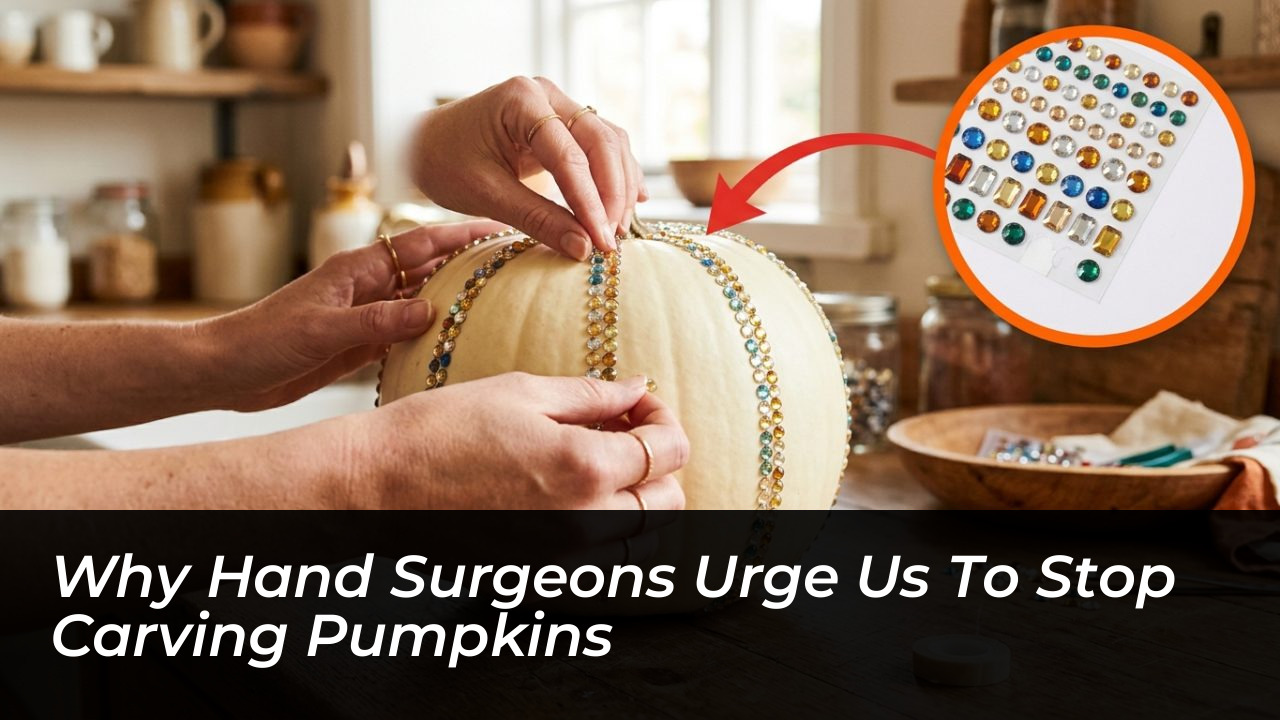
Home-decor publications have identified the bedazzled pumpkin trend, linking it to broader aesthetic movements centered on whimsy and personalization. By using flat-back rhinestones or peel-and-stick jewels attached along the natural ridges of white, green, or orange gourds, homeowners can achieve a dramatic, eye-catching display without making a single incision.
Carved vs. Intact Pumpkin Durability
Safety is not the only reason knives are staying in the drawer. The biological difference between an open rind and an intact gourd dictates whether your porch decor lasts for mere days or stretches across entire months.
According to Cornell University pumpkin expert Steve Reiners, a carved pumpkin will inevitably deteriorate in just 5 to 10 days as bacteria and fungi take hold. In contrast, a healthy, intact pumpkin endures much longer.
- Carved Jack-o’-Lantern: 5 to 10 days average lifespan
- Intact Whole Pumpkin: 8 to 12 weeks under normal conditions
- Cool-Stored Whole Gourd (45°-50°F): Up to 3 to 6 months without rotting
Research from the Utah State University Extension notes that the moment an outer skin edge is breached, ambient air introduces mold spores and accelerates internal breakdown. Meanwhile, Michigan State University Extension indicates that whole, undamaged gourds kept in cool environments can easily outlast the entire autumn season.
How to Create a No-Carve Display That Lasts Past Thanksgiving
Executing an uncut, decorated gourd requires proper preparation to protect the natural skin barrier from premature softening. Following a few foundational steps ensures your porch display stays crisp from early fall well through November:
- Select a sturdy foundation: Choose a firm squash with an intact stem, as missing stems create immediate entry points for bacteria. Always carry it by the base rather than the stem to avoid hairline fractures.
- Wash and dry thoroughly: Clean the exterior with plain water to remove field grime. Allow it to air-dry completely for at least an hour, because moisture trapped beneath paint or glue causes mold.
- Apply the right adhesives: Use specialized craft adhesive placed in small dots with tweezers, or rely on peel-and-stick gems for a zero-mess option. Avoid direct hot glue on unpainted skin if you plan to reposition stones, as heat can blister the surface.
- Choose fast-drying paint: If painting, stick strictly to water-based acrylics that dry in under an hour and rest safely on the skin barrier rather than penetrating it.
- Optimize placement: Position displays in shaded, well-ventilated areas off warm concrete to prevent early softening.
- Strip non-biodegradable elements before composting: When the season finally ends, pull off all plastic rhinestones and synthetic embellishments before discarding the pumpkin into organic compost bins.
Leaving the carving knife safely in the kitchen drawer protects your hands from unnecessary emergency room visits while allowing your fall porch display to remain intact all season long. With intact gourds lasting up to twelve weeks, transitioning to no-carve decorating successfully blends common-sense safety with prolonged durability.