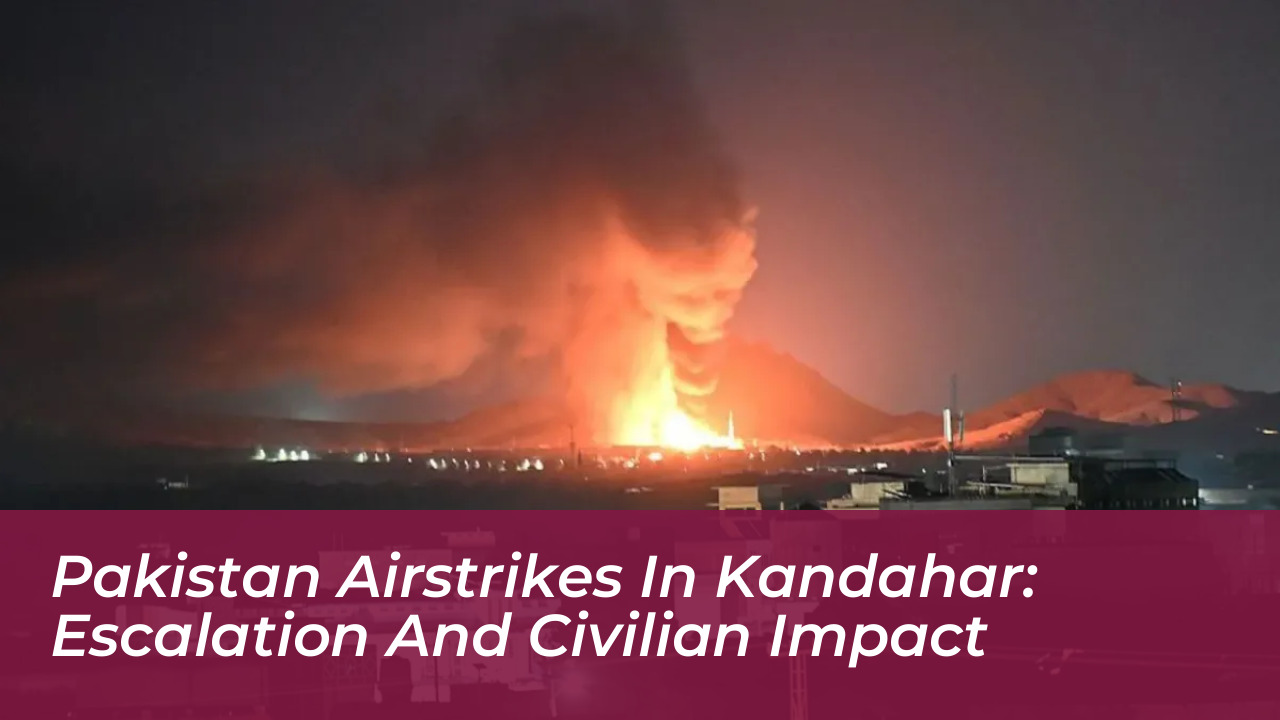
Geopolitical stability across the South Asian border region suffered a major disruption on September 24, 2026, when Pakistani airstrikes targeted multiple provinces within Afghanistan. These military operations, which included strikes in Kandahar, resulted in the confirmed deaths of four Afghan civilians. This escalation effectively ended a three-month period of relative calm that had previously characterized the fragile relationship between Kabul and Islamabad, signaling a return to high-tension border dynamics.
- Overview of the September 2026 Border Escalation
- Chronology of Recent Security Incidents
- The September 18 Attack in Pakistan
- Drone Activity and Retaliation
- Geographic Scope of the Military Operations
- Kandahar: Targeting the Taliban Power Base
- Paktia and Khost: Infrastructure and Residential Impact
- Conflicting Narratives: Precision vs. Indiscrimination
- Islamabad’s Official Stance
- Taliban and Local Eyewitness Accounts
- Historical Context and the Human Cost
- UNAMA Data on Border Violence
- The Collapse of Previous Diplomatic Frameworks
- Strategic Implications of Emerging Warfare
- The Shift Toward Drone Technology
- Economic and Infrastructure Vulnerability
- Regional Security Outlook
- Frequently Asked Questions
- Why did Pakistan conduct these airstrikes in September 2026?
- What is the official Taliban response to the strikes?
- How does the current situation affect regional trade?
- Is there a diplomatic solution in sight?
- What are the primary risks of continued drone warfare in this region?
Overview of the September 2026 Border Escalation
Recent surges in violence mark a dangerous shift in regional security. Following the airstrikes, local authorities in Afghanistan reported significant damage to both residential areas and military-adjacent infrastructure. The loss of civilian life has intensified the rhetoric from the Taliban administration, which views these actions as a direct violation of national sovereignty.
Military campaigns of this nature rarely occur in a vacuum. They follow a series of security incidents that have strained cross-border relations to a breaking point. As both nations trade accusations regarding the origins of regional militancy, the borderlands remain a flashpoint for potential future conflict, leaving local populations to bear the physical and psychological brunt of the instability.
Regional analysts suggest that the tactical shift toward aerial engagement indicates a move away from traditional ground-based skirmishes. This change complicates verification processes, as both governments now struggle to provide transparent evidence for their specific military objectives during active engagements.
Chronology of Recent Security Incidents
The September 18 Attack in Pakistan
Catalysts for the current tension can be traced back to September 18, 2026, when a devastating attack struck a police compound in northwestern Pakistan. The incident claimed the lives of at least 31 individuals, prompting an immediate and sharp response from Islamabad. Pakistani officials quickly attributed the assault to militant groups operating from within Afghan territory, a claim that the Taliban leadership in Kabul has consistently and firmly denied.
Drone Activity and Retaliation
Tensions reached a boiling point on September 23, 2026, when Pakistan reported the detection and neutralization of drones purportedly launched from Afghanistan. Islamabad viewed this as an unacceptable intrusion into its airspace and a direct security threat. By the following day, the retaliatory aerial campaign commenced, with Pakistan characterizing the strikes as a necessary measure to dismantle the infrastructure used for these drone operations.
Geographic Scope of the Military Operations
Kandahar: Targeting the Taliban Power Base
Airstrikes were strategically distributed across several provinces. Kandahar, widely recognized as the primary base of power for the current Taliban leadership, was a key target. The strikes here represent a significant escalation, as they hit the heart of the administration’s political and military influence, raising questions about the long-term strategic objectives of the Pakistani military.
Paktia and Khost: Infrastructure and Residential Impact
Operations expanded beyond Kandahar into Paktia and Khost. In Paktia, reports confirmed strikes against the 203 Mansouri Corps facility, a site of military significance. However, the situation in Khost proved more controversial, as local reports indicated that the bombardment resulted in the destruction of multiple residential homes, leading to the casualties that have fueled public outrage.
Humanitarian organizations are currently attempting to access these sites to assess the full extent of the damage. Initial reports suggest that the destruction of residential infrastructure has displaced several families, further complicating the already dire humanitarian situation in these rural provinces.

Conflicting Narratives: Precision vs. Indiscrimination
Islamabad’s Official Stance
The Pakistani Ministry of Information, led by Attaullah Tarar, maintains that the military conducted precision strikes against ten specific locations. According to official statements, these targets were strictly linked to the staging and storage of drones used in the September 23 intrusion. Islamabad insists that its actions were calibrated, proportionate, and focused exclusively on neutralizing threats to its national security.
Taliban and Local Eyewitness Accounts
Narratives from Kabul stand in stark contrast to the claims made by Islamabad. Taliban spokesperson Zabihullah Mujahid and local eyewitnesses describe the strikes as indiscriminate. Residents in Kandahar reported the terrifying sound of jets followed by massive explosions. In Khost, local accounts emphasize that the targeted areas were civilian neighborhoods, not military installations, leading the Taliban to label the operations as reckless and hostile.
Historical Context and the Human Cost
UNAMA Data on Border Violence
Cycles of violence are part of a broader, persistent trend. Data from the United Nations Assistance Mission in Afghanistan (UNAMA) covering October 2025 to June 2026 highlights the severe human cost of the border friction, documenting at least 499 civilian deaths and over 1,200 injuries. These figures underscore the reality that border skirmishes frequently result in significant civilian suffering.
The Collapse of Previous Diplomatic Frameworks
Diplomatic channels have struggled to maintain peace, as evidenced by the collapse of the March 2026 ceasefire. That agreement, which was intended to stabilize the region, fell apart amid mutual accusations of bad faith. Current mediation efforts remain stalled, largely because both sides lack a verifiable mechanism to address the presence of non-state actors operating near the Durand Line.
International observers note that the lack of a neutral third-party mediator has prevented any meaningful dialogue. Without a structured platform for communication, the risk of miscalculation remains high, potentially leading to further border incursions.
Strategic Implications of Emerging Warfare
The Shift Toward Drone Technology
Integration of unmanned aerial vehicles has fundamentally altered the nature of border skirmishes. Drone technology allows for rapid, long-distance engagement, but it also creates significant challenges regarding attribution and verification. When drones are involved, both sides find it easier to utilize misinformation, complicating efforts to de-escalate tensions before they turn into full-scale kinetic operations.
Economic and Infrastructure Vulnerability
Persistent border instability poses a direct threat to regional economic interests. Vital cross-border trade routes and potential energy pipeline projects are increasingly vulnerable to the ongoing conflict. As the security situation deteriorates, the economic integration that many regional stakeholders hope for remains elusive, replaced by a focus on military readiness and defensive posturing.
Market analysts warn that prolonged border closures will likely lead to increased inflation in local markets. The disruption of supply chains directly impacts the cost of essential goods, placing an additional burden on the populations residing in the border provinces.
Regional Security Outlook
Long-term peace requires a fundamental shift in how both nations manage intelligence sharing and border security. Currently, the lack of a joint monitoring committee leaves both governments operating in the dark, relying on reactive military movements rather than proactive diplomacy. Without a commitment to de-escalation, the cycle of retaliatory strikes will likely continue, further destabilizing the border provinces and increasing the risk of wider conflict.
Frequently Asked Questions
Why did Pakistan conduct these airstrikes in September 2026?
Pakistan stated the strikes were a retaliatory measure following a deadly attack on a police compound on September 18 and the detection of drones launched from Afghan territory on September 23.
What is the official Taliban response to the strikes?
The Taliban has condemned the strikes as a violation of their national sovereignty and has reported that the attacks caused civilian casualties in residential areas.
How does the current situation affect regional trade?
The ongoing border instability threatens to disrupt essential trade routes and discourages investment in regional energy and infrastructure projects.
Is there a diplomatic solution in sight?
Current diplomatic frameworks are struggling, as both sides have failed to establish a mutually trusted mechanism to monitor and prevent cross-border militancy.
What are the primary risks of continued drone warfare in this region?
The primary risk is the potential for rapid escalation due to misidentification of targets, which can lead to unintended civilian casualties and retaliatory cycles that are difficult to control.