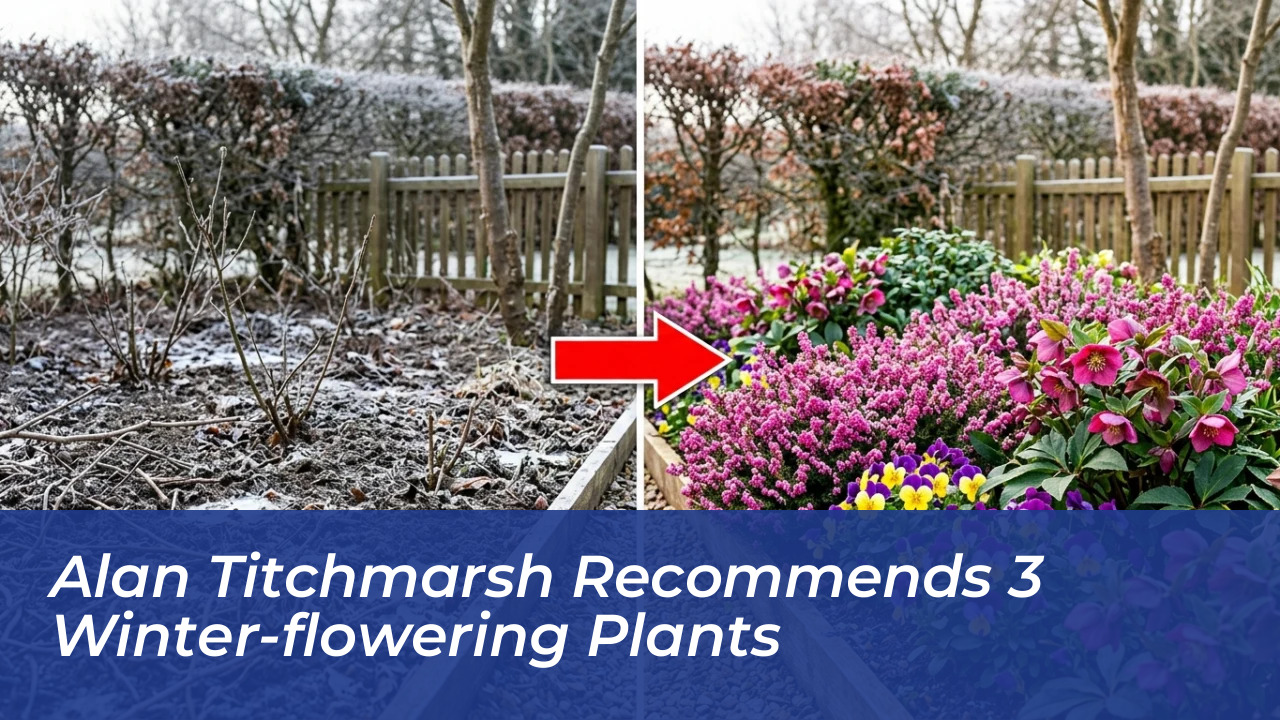

Renowned British horticulturist Alan Titchmarsh recommends planting winter-flowering heather, pansies, and hellebores in October. This keeps garden beds and patio containers blooming straight through December, January, and February. Establishing these cold-hardy varieties in early autumn guarantees steady visual interest through freezing spells and early spring thaws.
Many growers assume that when summer fades, outdoor gardening ceases until spring. Leaving cold-season beds bare is a common misconception. Several durable perennials and cold-tolerant annuals actively thrive in low temperatures, providing essential visual depth and structure when deciduous trees lose their foliage.
“It’s such a shame if the garden becomes a no-go area once autumn’s arrived. Plant things that flower right the way through the winter and you’ll always want to go out there, and they’ll lift your spirits.” – Alan Titchmarsh
1. Winter Heather for Dense Ground Cover
For gardeners looking to fill bare ground or underplant taller deciduous trees and shrubs, winter-flowering heather offers reliable performance. Titchmarsh highlights the cultivar Calluna vulgaris ‘Beauty Queen’. This plant is prized for producing dense sprays of delicate pink bells that persist through cold conditions.
Establishing these low-growing shrubs requires specific soil conditions to ensure long-term vigor. Heathers thrive exclusively in lime-free, acidic soil. They suffer in alkaline or heavy clay settings without proper organic matter incorporated beforehand.
- Spacing requirement: Space individual specimens 18 inches apart across open borders.
- Ground coverage: Planting in groups of three creates a continuous, living rug that suppresses cool-season weeds.
- Soil conditions: Requires lime-free planting media with good drainage.
2. Cold-Tolerant Pansies and Violas for Containers
Winter-flowering pansies, widely referred to as violas, deliver dependable color at the front of garden borders, in hanging baskets, and across patio planters. These compact cool-season bloomers withstand harsh frosts and bounce back quickly during brief daytime warmups.
Because they are readily available in garden centers each autumn, pansies provide instant decorative results. Their broad palette of cheerful shades makes them ideal for brightening up high-traffic entryways and window boxes where larger shrubs cannot fit.
“They come in a range of cheery colours, and they’ll flower right through to spring,” notes Titchmarsh.
3. Hardy Hellebores for Woodland and Shaded Beds
Hellebores represent an enduring evergreen perennial choice, ranking high on Titchmarsh’s list of cool-season essentials. For autumn planting, he explicitly points to the resilient hybrid Helleborus ‘Ice N’ Roses’. This plant is noted for its rich pink blossoms and leathery, weather-resistant foliage.
Optimal Growing Site and Care
Unlike many demanding landscape perennials, hellebores adapt readily to standard garden conditions. They establish successfully in any half-decent soil. They perform best beneath tree canopies or beside established woody shrubs, soaking up dappled light while resisting heavy winter rain and seasonal snow accumulation.
| Plant Selection | Primary Landscape Application |
|---|---|
| Winter Heather (Calluna vulgaris ‘Beauty Queen’) | Acidic-soil ground cover beneath shrubs and trees |
| Winter Pansies (Violas) | Patio containers, hanging baskets, and border edging |
| Hellebore (Helleborus ‘Ice N’ Roses’) | Shaded underplanting in standard garden soil |
Combining these complementary selections creates multi-tiered visual interest that defies cold weather. Regardless of rain, snow, or sudden freezes, an intentional autumn planting strategy keeps your landscape alive with color until spring perennials emerge.
Selecting cold-hardy varieties turns cold-season gardening into an active, rewarding endeavor rather than a dormant waiting period. Evaluate your landscape’s light exposure and soil acidity before heading to your local nursery for autumn planting stock.