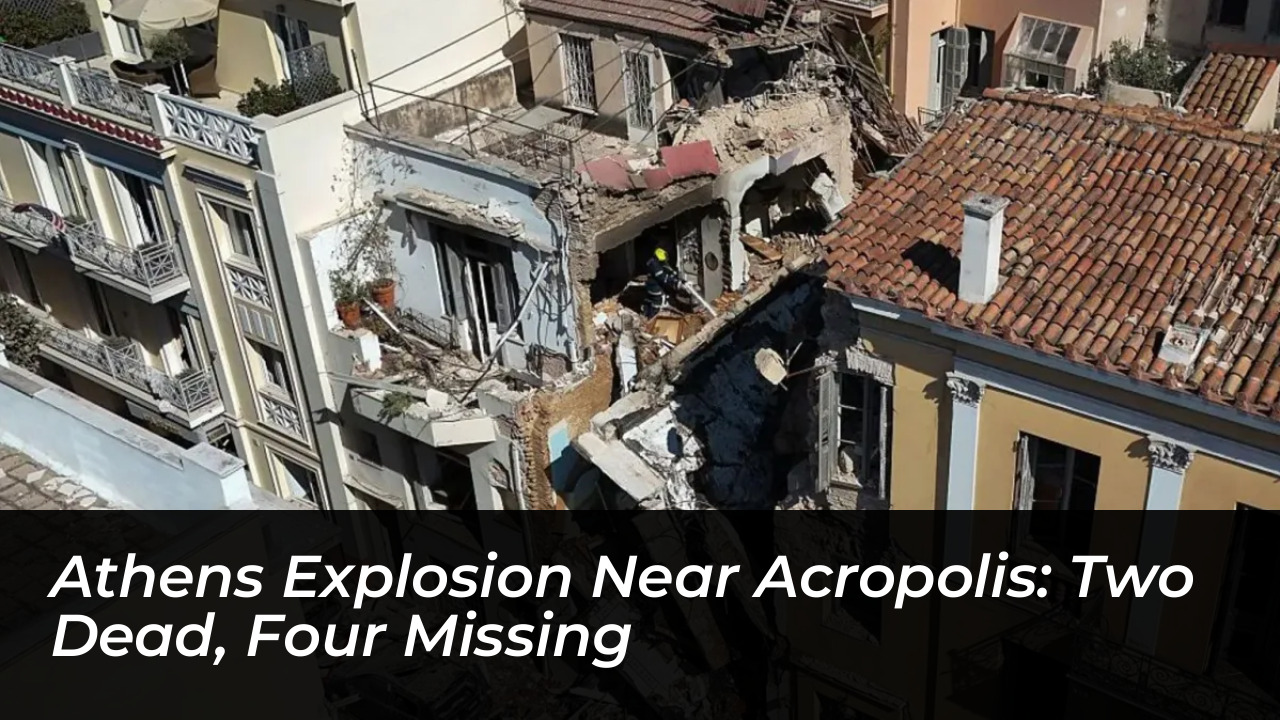
A catastrophic explosion shattered the historic Plaka district of Athens on September 25, leveling a residential structure and sending shockwaves through the Greek capital. Emergency services confirmed that two people died in the blast, while four others remain unaccounted for as rescue operations stretch into a second day. The incident occurred just blocks from the Acropolis, transforming a vibrant tourist zone into an active disaster recovery site. Heavy machinery, thermal imaging units, and specialized search dogs continue to comb through layers of pulverized concrete and twisted metal. The scale of the destruction has prompted widespread concern over urban infrastructure safety in historic European city centers where ancient structures meet modern utility networks.
- Timeline of the Emergency Response
- Casualties and Missing Persons Status
- Investigating the Cause: Suspected Gas Leak
- Damage to Historic Architecture and Neighborhood Infrastructure
- Tourist District Impact and Local Economic Fallout
- Emergency Operations and Rescue Technology Deployed
- Official Statements from Athens Leadership
- Structural Safety Standards in Historic European Cities
- Short-Term Rentals and Regulatory Scrutiny
- Psychological Impact on the Local Community
- Frequently Asked Questions
- What caused the Athens explosion near the Acropolis?
- How many casualties were reported in the blast?
- Is the Acropolis damaged?
- Are tourists among the missing?
- When did the incident occur?
Timeline of the Emergency Response
First responders received emergency calls at approximately 7:30 a.m. local time on Friday, September 25. The blast decimated a multi-storey building on Lysikratous Street, hurling debris across three adjacent city blocks. Initial reports focused primarily on structural damage and building collapse, but subsequent sweeps revealed the true severity of the crisis. By Saturday, September 26, recovery teams retrieved the bodies of a man and a young woman from the dense rubble.
Athens Mayor Haris Doukas described the catastrophe as an unbelievable disaster. Emergency crews worked through the night, periodically halting all heavy equipment to listen for faint sounds from potential survivors trapped beneath the debris.
Casualties and Missing Persons Status
The human toll of the explosion spans multiple nationalities and demographics, intensifying international attention on the recovery efforts. Official records indicate a shifting count as rescue workers sift through the collapsed domicile. Confirmed fatalities include two individuals, specifically a man and a young woman, recovered from the site on September 26. Four individuals remain unaccounted for, including tourists and long-term residents of the building.
At least three people sustained injuries, including two women pulled from an adjacent building and a passing pedestrian struck by flying debris. Public television broadcaster ERT reported that the missing occupants included an elderly British man and his Greek wife living on the upper level, alongside international visitors occupying short-term rental units on the lower floors.
Investigating the Cause: Suspected Gas Leak
While forensic teams from the Greek fire service and the arson crimes unit continue their probe, preliminary findings point toward a significant gas leak. Residents in the immediate vicinity reported smelling gas moments before the detonation occurred. Older urban neighborhoods like Plaka present unique infrastructure challenges. Narrow streets, aging subterranean utility lines, and historical building foundations complicate both routine maintenance and rapid emergency isolation.
Investigators are examining whether gas accumulated within the structure before finding an ignition source. Utility experts are reviewing pressure valves and main supply lines running beneath Lysikratous Street to determine if external factors contributed to the accumulation of gas inside the property.
Damage to Historic Architecture and Neighborhood Infrastructure
The blast radius extended far beyond the primary building footprint. Surrounding structures, including a local church and multiple residential dwellings, sustained severe window shatterages, compromised wall integrity, and roof damage. The First Greek Evangelical Church in Athens reported that every single window was destroyed, forcing congregation leaders to move upcoming Sunday services outdoors.
City engineers are currently evaluating adjacent buildings to determine whether they pose imminent collapse risks or require controlled demolition. The precarious state of neighboring masonry walls demands extreme caution before residents can return to retrieve belongings.
Tourist District Impact and Local Economic Fallout
Plaka stands as one of the most heavily visited districts in Athens, located directly at the foot of the Acropolis hill. The explosion occurred during the shoulder of the peak tourist season when thousands of foreign visitors navigate the narrow walkways daily. Local authorities cordoned off several blocks, disrupting pedestrian traffic and commercial operations.
Business owners throughout the zone face temporary closures while structural safety assessments proceed. The incident raises critical questions regarding tourist accommodation safety and municipal gas grid monitoring in dense historical sectors.
Emergency Operations and Rescue Technology Deployed
The rescue operation involves coordinated efforts across multiple municipal agencies. Fire departments deployed 30 specialized firefighters, supported by dedicated search and rescue units. Sniffer dogs trained in live-scent detection combed the unstable perimeter to locate trapped individuals, while rescuers utilized thermal imaging heat signatures to detect viable life forms beneath dense slabs of fallen concrete.
Earth-moving machinery, including excavators and heavy cranes, carefully peeled away twisted metal and roofing materials without destabilizing adjacent structures. Every movement of the heavy equipment is monitored by structural engineers to prevent secondary collapses.
Official Statements from Athens Leadership
Athens Mayor Haris Doukas addressed media representatives at the disaster site, emphasizing the complexity of the rescue mission. He noted that the structural integrity of neighboring buildings remains severely compromised. These are difficult hours. We stop whenever necessary to keep silent, so we can see if we can hear any sound made by possible survivors, stated Mayor Doukas during his evening briefing at the scene.
He confirmed that structural inspections are underway across the entire block to safeguard against secondary collapses and ensure the safety of the neighborhood.
Structural Safety Standards in Historic European Cities
The Athens explosion illuminates a broader systemic vulnerability across historic European capitals. Cities such as Rome, Paris, and Athens feature centuries-old architectural foundations retrofitted with modern municipal utilities like piped natural gas and high-voltage electrical grids. Balancing historic preservation mandates with modern safety codes remains a persistent challenge for urban planners.
Older masonry structures often lack the reinforced concrete core columns found in modern builds, making them exceptionally susceptible to internal overpressure events like gas blasts. Municipal authorities across Europe are facing renewed calls to audit these legacy utility integrations.
Short-Term Rentals and Regulatory Scrutiny
The presence of short-term rental apartments within the collapsed structure draws renewed scrutiny toward vacation rental regulations in historic districts. Local housing authorities face mounting pressure to enforce standardized safety audits across all residential properties operating in high-density tourism zones.
Key safety measures now under discussion include mandatory carbon monoxide detectors, gas shut-off valves, and fire suppression systems. Ensuring accountability among property owners who manage transient lodging is a top priority for municipal legislators.
Psychological Impact on the Local Community
Beyond physical destruction, the blast inflicts deep psychological distress on residents of Plaka. Long-term inhabitants, many of whom have occupied the neighborhood for decades, express shock at the sudden loss of life and property in an area historically regarded as secure.
Local community centers and municipal support teams have mobilized to assist displaced residents, offering temporary lodging and mental health counseling for those affected by the tragedy.
Frequently Asked Questions
What caused the Athens explosion near the Acropolis?
Preliminary findings from the Greek fire service and arson crimes unit point toward a residential gas leak as the primary cause of the detonation on Lysikratous Street.
How many casualties were reported in the blast?
The incident resulted in two confirmed fatalities, four missing persons, and at least three injuries sustained by individuals in adjacent buildings and the street.
Is the Acropolis damaged?
No damage has been reported to the Acropolis monument. The explosion occurred in the Plaka district situated at the foot of the hill, separate from the ancient archaeological site.
Are tourists among the missing?
Yes, municipal authorities confirmed that international visitors occupying short-term rental apartments within the building are among the four missing individuals.
When did the incident occur?
The catastrophic explosion took place at approximately 7:30 a.m. local time on Friday, September 25, prompting ongoing multi-day rescue and recovery operations.