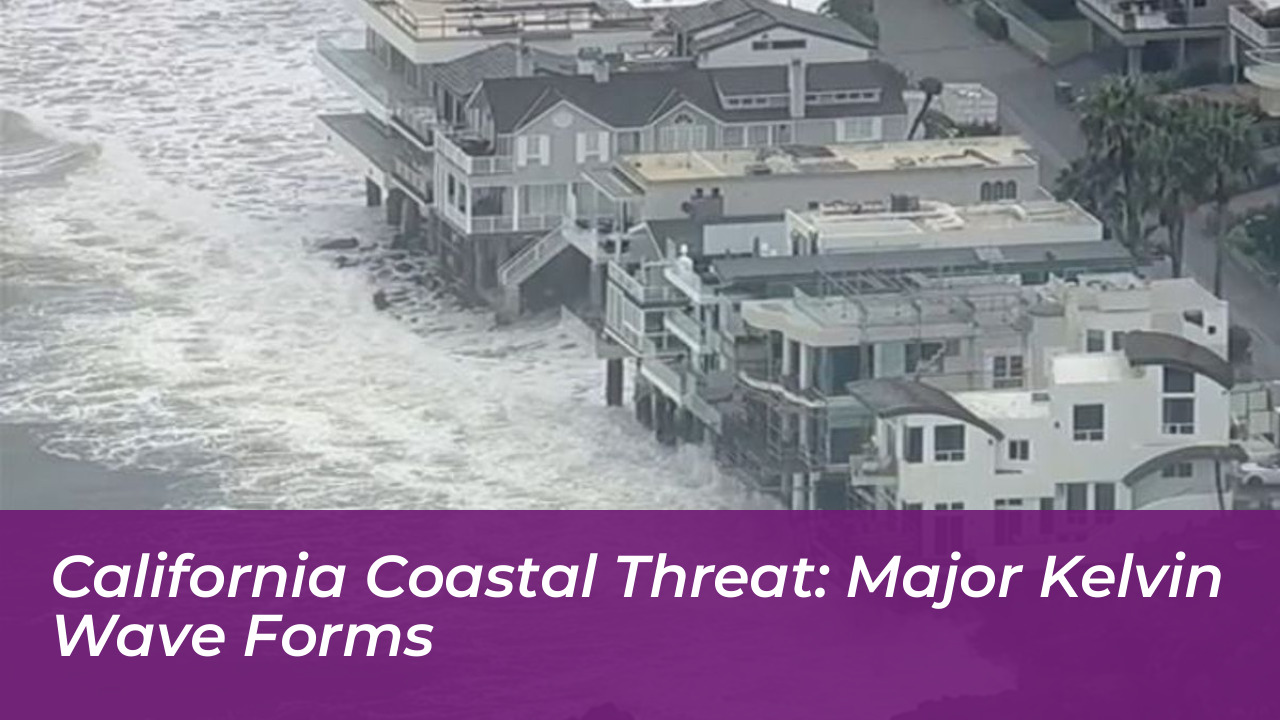
A planetary-scale, coastally trapped Kelvin wave driven by a strengthening El Niño is posing a growing flood and erosion threat to the California coastline, according to oceanographic experts. The phenomenon involves a massive pulse of warm water moving through the Pacific. It is expected to elevate baseline sea levels by 6 to 12 inches along the West Coast for several weeks or months.
While the Kelvin wave is not a destructive surface wave like a tsunami, its arrival creates a much higher baseline for the ocean. This elevated water level magnifies the impact of high tides, storm surges, and incoming winter storms. As a result, water reaches further inland and strikes coastal infrastructure with greater force.
The Kelvin Wave Phenomenon
A Kelvin wave carries energy through the ocean, shifting heat, pressure, and sea levels as it travels thousands of miles. Unlike the waves that break on a beach, this is a deep-water movement. During intense El Niño conditions, trade winds between South America and Asia weaken or reverse. This change allows warm water accumulated in the western Pacific to surge eastward toward South America, where the energy splits and travels north along the coast.
Scientists note that the current wave is part of a larger pattern of activity. NOAA has documented multiple downwelling Kelvin waves as conditions develop. These waves push the thermocline-the boundary between warm surface water and colder deep water-deeper, which helps fuel the warming of the eastern Pacific.
Coastal Threats
Kelvin waves are broad pulses of subsurface warm water that move slowly at approximately 6 mph and remain largely invisible at the surface. They differ fundamentally from tsunamis, which are series of surface waves caused by geological displacements that cause immediate, violent inundation.
The threat to California is compounded by the timing of the wave. Risk levels for coastal flooding, severe erosion, and bluff failures are projected to peak when winter storms align with seasonal king tides. Experts are particularly concerned about periods when high tides are naturally at their highest.
The potential impacts include:
- Higher water levels allow waves to strip sand from beaches more effectively, threatening coastal roads and homes.
- Low-lying areas may experience nuisance flooding or significant inundation during storm surges.
- Increased water pressure and erosion can damage seawalls, roads, and seaside communities.
- The influx of warm water can alter fisheries and affect the movement of marine life.
“A temporary rise in the baseline sea level can make those impacts worse. If a storm pushes water toward the coast while the ocean is already elevated, waves and storm surge don’t have to rise as far to reach beaches, roads, and other low-lying areas.”
State of Emergency and Preparedness
In response to the heightened risk, California Governor Gavin Newsom has declared a state of emergency to mobilize resources and aid preparation efforts. The California Coastal Commission has issued advisories for residents in exposed coastal areas to take precautions.
Officials recommend that coastal residents:
- Inspect vulnerable locations, such as retaining walls and bluffs, for signs of instability.
- Install or clear adequate drainage systems to manage increased runoff and flooding.
- Monitor local weather, tide, and coastal-flooding advisories closely.
- Secure outdoor property that could be damaged by high winds or surging water.
With the Climate Prediction Center forecasting a strong El Niño during the fall and winter, officials warn that this Kelvin wave may only be the first of several pulses to impact the region throughout the season.