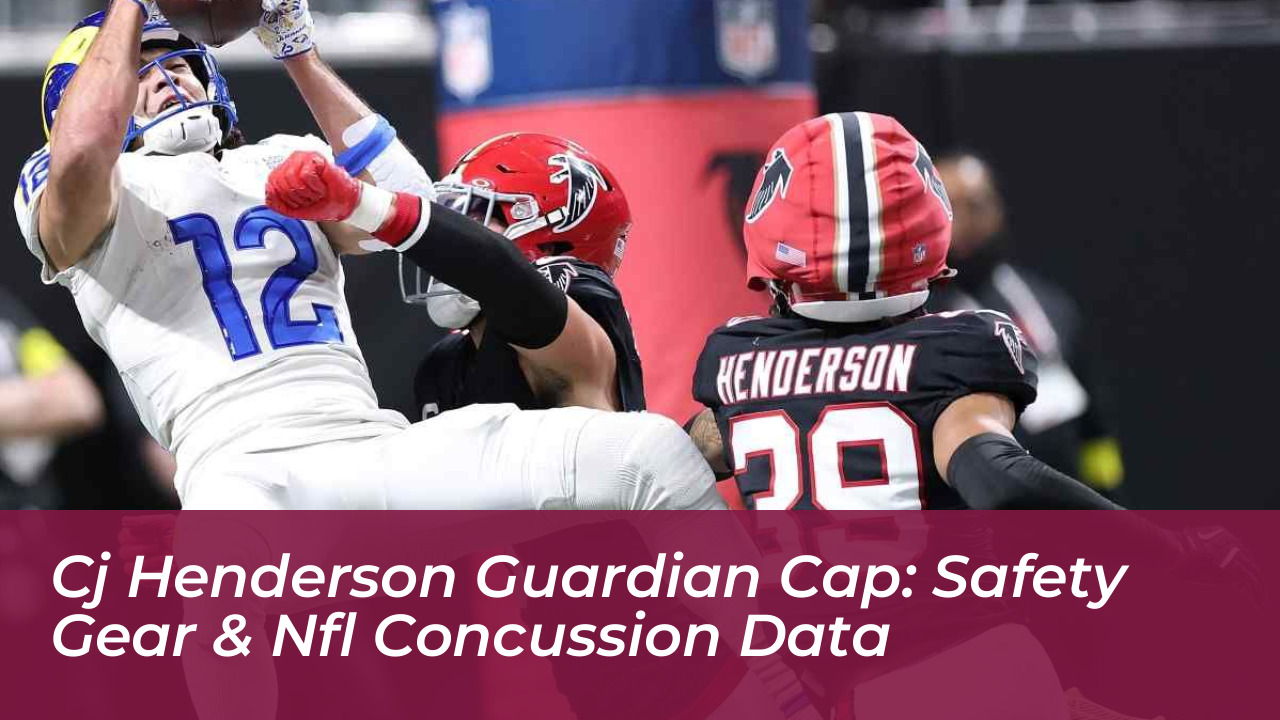
Professional football demands uncompromising physical effort from every participant on the gridiron. Because high-velocity collisions form an inherent part of the sport, player safety remains a primary focus for league executives, coaching staffs, and medical personnel. Atlanta Falcons cornerback C.J. Henderson draws significant attention not just for his defensive skills on the perimeter, but for the specialized protective gear secured over his standard regulation helmet. This unique modification highlights a broader shift toward proactive head safety measures across professional football.
- Understanding the Guardian Cap Phenomenon in the NFL
- The Shift Toward Proactive Head Safety
- Engineering and Material Science
- What is a Guardian Cap?
- Design and Construction
- Impact Force Reduction
- Evolution of Guardian Caps in Professional Football
- Why C.J. Henderson Wears the Protective Cover
- Documented Concussion History
- High-Risk Demands of the Cornerback Position
- The Science and Data Behind Concussion Reduction
- Biomechanical Impact Metrics
- League-Wide Health Outcomes
- Player Perspectives and Changing Locker Room Perceptions
- Shifting Cultural Standards
- Performance and Comfort Factors
- Impact on the Atlanta Falcons Defense
- Stabilizing the Secondary
- Setting a Standard for Younger Teammates
- Future Outlook for NFL Safety Innovations
- Next-Generation Helmet Design
- The Permanent Evolution of Athletic Longevity
- Frequently Asked Questions
- Are Guardian Caps mandatory for all NFL players during games?
- How much impact force does a Guardian Cap absorb?
- Does wearing a Guardian Cap impair player vision or speed?
Modern protective innovations continue to evolve past traditional helmet technology. While standard headgear provides baseline defense, supplementary equipment helps mitigate the severe forces generated during open-field tackles and line play. Henderson joins a growing contingent of athletes adopting extra layers of protection during live games and intensive practice sessions. Understanding why these adjustments occur requires examining the engineering behind the equipment, the medical data supporting its use, and the personal health histories driving players to make this choice.
Understanding the Guardian Cap Phenomenon in the NFL
The physical demands of professional football require continuous adaptation from athletic trainers and equipment manufacturers. Decades of medical research demonstrate that repeated sub-concussive impacts can cause long-term neurological damage. This reality forced the football industry to re-evaluate traditional headgear limitations. Standard polycarbonate shells and internal foam padding are effective at preventing skull fractures, but they often transmit raw kinetic energy directly to the brain during high-speed impacts.
To combat this transfer of force, sports scientists introduced soft-shell auxiliary covers into the daily training routine. The Atlanta Falcons and other franchises quickly integrated these tools to protect athletes during grueling practice sessions. The visible presence of these padded covers on the practice field laid the groundwork for their eventual acceptance during live television broadcasts on Sunday afternoons.
The Shift Toward Proactive Head Safety
- Moving beyond traditional helmet technology to mitigate high-velocity collision forces.
- Growing adoption of supplementary equipment during practices and live games.
Engineering and Material Science
- Calibrated density, stiffness, and energy-absorption properties of modern soft shells.
- Functioning as an initial shock absorber before impact reaches the rigid shell.
What is a Guardian Cap?
A Guardian Cap is a soft-shell protective cover engineered to fit securely over a standard, regulation NFL helmet. Constructed from a specialized outer material possessing carefully calibrated density, stiffness, and energy-absorption properties, the shell distributes and lessens the kinetic energy transferred during impacts. Rather than replacing the primary helmet, this secondary layer functions as an initial shock absorber. When two players collide, the outer layer absorbs a portion of the raw force before it reaches the rigid shell of the helmet and the skull underneath.
Independent studies and league data confirm that this simple barrier significantly dampens the severity of direct blows. By softening the peak impact force, the equipment plays a vital role in reducing the incidence of concussions and cumulative micro-traumas over the course of a grueling 18-week season. The aerodynamic design ensures that players do not experience neck fatigue or hindered peripheral vision while navigating complex passing routes.
Design and Construction
- Specialized outer materials designed to fit standard regulation NFL helmets.
- Weight distribution and aerodynamic considerations for elite athletes.
Impact Force Reduction
- How the layer distributes and lessens kinetic energy transferred during open-field tackles.
- Mitigating cumulative micro-traumas over an 18-week season.
Evolution of Guardian Caps in Professional Football
The integration of soft-shell helmet covers into professional football followed a phased, data-driven timeline. League and union health committees first authorized the use of Guardian Caps during training camp practices in 2020. The mandate expanded ahead of the 2022 preseason, requiring positional groups prone to high-impact collisions, such as linemen, tight ends, and linebackers, to wear the covers during all contact practices.
Observing positive safety results during practices prompted league officials to ease restrictions regarding regular-season games. Starting with the 2024 season, the NFL permitted any player to wear the soft-shell cover during live games by choice. While early adoption was slow due to aesthetic preferences or habit, the numbers shifted rapidly. By the 2025 season, dozens of players across multiple rosters chose to wear the extra protection during competitive games, proving that long-term health supersedes traditional visual standards.
| Season | Adoption Phase | Safety Impact and Regulations |
|---|---|---|
| 2020 | Practice Introduction | Caps introduced voluntarily for specific training camp sessions. |
| 2022 | Mandatory Preseason Use | Required for linemen, linebackers, and tight ends during all contact practices. |
| 2024 | Game-Day Authorization | Players permitted to wear soft-shell covers during regular-season and postseason games. |
| 2025-2026 | Widespread Player Choice | Over 25 players regularly wear caps in games, coinciding with record-low concussion rates. |
Why C.J. Henderson Wears the Protective Cover
For Atlanta Falcons cornerback C.J. Henderson, wearing the Guardian Cap extends beyond league trends or defensive statements. The former first-round draft pick manages a documented medical history featuring multiple diagnosed concussions throughout his professional career. During his stints with previous franchises, severe head impacts forced him to miss critical game action and enter the league concussion protocol.
Cornerbacks operate in high-risk environments, sprinting across the field to tackle explosive wide receivers in the open field or meeting pulling guards in the box. These high-speed collisions place immense stress on the cervical spine and skull. By outfitting his helmet with the additional soft shell, Henderson takes a proactive, calculated step to safeguard his long-term neurological health while maintaining his aggressive, physical playing style on the perimeter.
Documented Concussion History
- Previous head impacts during stints with past franchises.
- Proactive steps to safeguard long-term neurological health.
High-Risk Demands of the Cornerback Position
- Sprinting in open space and tackling explosive wide receivers.
- Meeting pulling guards and offensive blockers in the box.
The Science and Data Behind Concussion Reduction
Skeptics initially questioned whether an extra layer of foam and specialized polymer made a noticeable difference in elite-level competition. However, empirical tracking data released by the NFL and independent biomechanical engineers validate the effectiveness of the equipment. According to executive safety briefings, the implementation of these soft shells has contributed to a measurable decline in reported head injuries across all participating rosters.
Biomechanists estimate that impact force decreases by approximately 10 percent when only one participating player wears the protective shell, and by roughly 20 percent when both colliding athletes utilize the equipment. League-wide data reported a historic decrease in total concussions following the widespread adoption of advanced protective measures alongside the Guardian Caps NXT models. These statistics transform the soft shell from a temporary training novelty into a cornerstone of modern football safety engineering.
Biomechanical Impact Metrics
- Ten percent force reduction with a single player wearing the shell.
- Twenty percent reduction when both colliding athletes utilize the equipment.
League-Wide Health Outcomes
- Measurable decline in reported head injuries and historic concussion decreases.
- Validation of advanced protective measures and NXT models.
Player Perspectives and Changing Locker Room Perceptions
Cultural acceptance within locker rooms represents a major hurdle for any protective equipment innovation. Early resistance typically stems from concerns regarding aesthetics, weight, or field vision. However, prominent players across various positions have stepped forward as vocal advocates, shifting public opinion. Offensive linemen, defensive stalwarts, and skill-position players alike emphasize that functional safety far outweighs visual traditions.
Remarks from early adopters mirror the historical resistance faced by automotive seatbelts when first introduced to the public. As respected veterans and young rising stars continue to don the gear without experiencing performance impediments, the stigma surrounding game-day protective covers rapidly dissolves. Teammates notice that players wearing the headgear maintain elite speed and agility during every four-quarter contest.
Shifting Cultural Standards
- Comparing early resistance to historical seatbelt adoption.
- Prominent veterans and young stars advocating for functional safety.
Performance and Comfort Factors
- Maintaining visual clarity and athletic mobility while wearing extra padding.
- Dissolving the stigma associated with game-day protective headgear.
Impact on the Atlanta Falcons Defense
The Atlanta Falcons defensive unit relies on depth, versatility, and physicality to contain high-powered opposing offenses. When injuries test the depth of the secondary, coaching staffs lean heavily on experienced defensive backs to step into starting roles on the perimeter. Securing the back end of a defense requires reliable tackling and sharp coverage skills under immense pressure.
Henderson handling high-leverage defensive snaps while utilizing every available safety innovation sets a powerful example for younger teammates. Defensive backs frequently absorb heavy blows when contesting jump balls or stopping ball-carriers in space. Equipping key contributors with advanced impact-mitigation tools ensures that the secondary remains resilient, focused, and capable of executing complex game plans throughout the grueling 18-week schedule.
Stabilizing the Secondary
- Stepping into high-leverage defensive snaps and starting roles.
- Reliable tackling and coverage execution under physical stress.
Setting a Standard for Younger Teammates
- Leading by example through the utilization of modern sports science.
- Maintaining roster resilience throughout grueling four-quarter matchups.
Future Outlook for NFL Safety Innovations
The successful integration of soft-shell covers into game-day uniforms marks a permanent turning point in professional sports equipment design. Engineers are already working on next-generation helmet models that incorporate internal padding systems matching or exceeding the shock absorption performance of auxiliary covers. The ultimate goal remains eliminating preventable head trauma entirely through continuous material science and rigorous testing protocols.
As the cultural perspective shifts, safety is no longer viewed as a sign of weakness, but rather as an essential component of professional athletic longevity. The visible presence of players like C.J. Henderson wearing protective covers during live games signals a mature league prioritizing human health. This ongoing evolution will likely influence youth, collegiate, and professional sports leagues globally for generations to come.
Next-Generation Helmet Design
- Internal padding systems matching auxiliary cover performance.
- Eliminating preventable head trauma entirely through continuous material science.
The Permanent Evolution of Athletic Longevity
- Safety as an essential component of professional performance rather than a sign of weakness.
- Long-term outlook for protective headwear across all professional sports leagues.
Frequently Asked Questions
Are Guardian Caps mandatory for all NFL players during games?
No, wearing a Guardian Cap during regular-season and postseason games remains entirely optional for all players based on individual choice.
How much impact force does a Guardian Cap absorb?
Independent studies indicate that a Guardian Cap reduces impact force by roughly 10 percent for a single player, and up to 20 percent in collisions where both athletes wear them.
Does wearing a Guardian Cap impair player vision or speed?
The aerodynamic design prevents any reduction in peripheral vision, neck fatigue, or running speed for elite athletes.