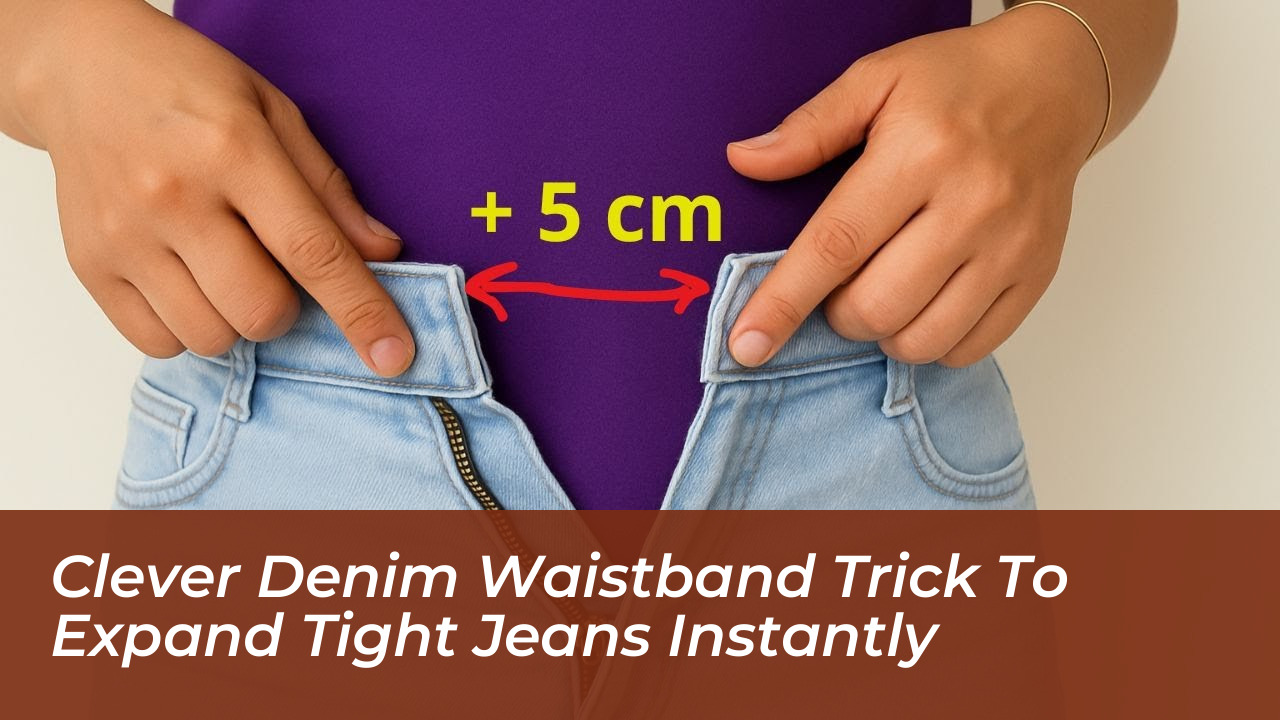

A restrictive, tight jeans waistband can be loosened by up to two full inches at home simply by inserting a hidden elastic wedge or denim gusset directly into the side seam. Rather than discarding a well-loved pair of trousers or tolerating painful constriction, this neat adjustment restores comfort in under twenty minutes using basic sewing essentials.
Fluctuating measurements and the natural tightening of cotton fibres after hot laundry cycles frequently render high-quality denim unwearable around the middle. The legs and hips may still drape impeccably, but the rigid waistband refuses to budge. With UK households increasingly turning towards practical mending to cut back on clothing waste, simple structural alterations offer an immediate, cost-effective solution.
Why Denim Waistbands Pinch (and Why Sizing Up Fails)
Denim construction relies on a double-layer band cut with the fabric grain running horizontally to prevent stretching. While this rigid design preserves the silhouette over months of wear, it leaves virtually no flexibility for natural movement or post-dinner ease. Buying the next size up is rarely an ideal remedy, as it often creates an untidy bagginess around the thighs, seat, and knees. Tailoring just the waistband keeps the tailored silhouette intact while providing targeted relief where your body actually needs it.
Taking matters into your own hands requires only four basic tools commonly found in any standard domestic sewing kit:
- A sharp seam ripper to undo heavy-duty topstitching without puncturing the surrounding fabric.
- A 5 cm strip of wide, sturdy elastic or a matching off-cut of sturdy cotton fabric.
- Heavy-duty topstitching thread in a hue matching the original manufacturer’s stitchwork.
- A strong sewing needle suitable for denim (size 90/14 or 100/16 if using a home machine).
The Hidden Gusset Method: Step-by-Step Execution
The cleanest place to add expansion is directly beneath the side belt loops, which naturally conceal the modification once finished. Begin by carefully unpicking the bottom bar-tack holding the side belt loop against the waistband.
Next, use your seam ripper to cut down through the top of the waistband at the side seam, slicing downward until you reach the main body of the trousers. Once opened, the waistband naturally springs apart into a triangular ‘V’ shape. This gap is the precise amount of extra room required to make the garment comfortable again.
Choosing Between Elastic Inserts and Denim Wedges
The type of insert chosen dictates how the finished garment behaves under daily movement. A heavy-duty woven elastic insert delivers flexible give, allowing the waist to expand seamlessly whenever you sit or bend. Position the elastic within the V-shaped gap, pin it firmly in place, and stitch down both raw edges using a secure zig-zag or tight straight stitch.
A matching denim patch, by contrast, creates a rigid, permanent expansion. If selecting this route, cut a triangle of scrap fabric slightly larger than the gap, fold raw edges under to avoid fraying, and topstitch it flush with the original denim grain.
To finish the alteration, re-anchor the detached belt loop over the newly inserted gusset. The loop acts as a structural shield, completely obscuring the added seam from sight during everyday wear.
Maintaining Structural Integrity Across Washes
Reinforcing both edges of the split waistband with a tight backstitch prevents the denim weave from running during regular wash cycles. Always turn modified jeans inside out before placing them into the washing machine to protect the seam tension from aggressive drum agitation.
Opting for a cool 30-degree cycle helps preserve the elasticity of the new insert while preventing the surrounding cotton weave from shrinking tighter over time. A well-fitted pair of jeans should adapt to your body rather than fight against it. Taking twenty minutes with a needle and thread gives bespoke tailoring results from the comfort of your living room, extending the lifespan of your wardrobe favourites without spending a penny at an alterations shop.
Frequently Asked Questions
How many inches can I actually add using the hidden gusset trick?
This method safely adds between one to two inches of total breathing room to a tight waistband without distorting the overall cut and drape of the jeans.
Is it better to use elastic or a denim patch for the insert?
Elastic offers flexible, moving comfort that stretches when you sit down, whereas a denim patch provides a rigid, permanent structural expansion that matches the original fabric.
Will the alteration be visible to others when I wear the jeans?
No. By positioning the V-shaped cut directly beneath the side belt loops and re-attaching the loop over the modification, the added seam is completely hidden from view.
Can I perform this hack without a sewing machine?
While a sewing machine provides the heavy-duty tension needed for thick denim layers, a sturdy hand-sewing needle and heavy-duty upholstery thread can achieve the same result if you use a secure backstitch.
Do I need special needles to sew through heavy denim?
Yes. It is highly recommended to use a denim needle sized 90/14 or 100/16 to easily puncture multiple layers of thick waistband material without snapping.