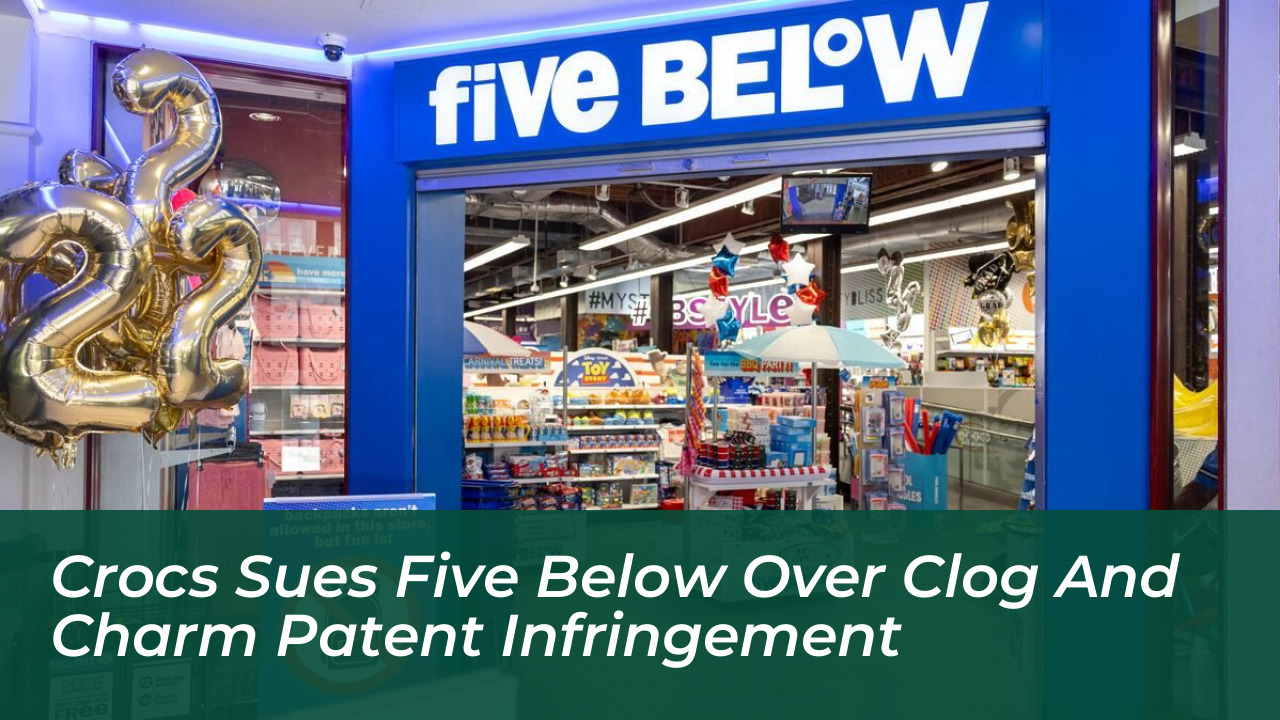
Footwear manufacturer Crocs, Inc. and its subsidiary Jibbitz, Inc. filed a comprehensive federal lawsuit against discount retail chain Five Below, Inc. Filed on September 18 in the U.S. District Court for the District of Colorado under Case No. 1:26-cv-04606, the complaint targets Five Below for selling knockoff clogs, decorative charms, and novelty accessories that allegedly copy proprietary trade dress and patented designs.
- Introduction
- Anatomy of the Lawsuit: Core Claims Against Five Below
- Targeted Products and Price Discrepancies
- Specific Design and Trade Dress Imitations
- The Multi-Pronged Intellectual Property Strategy
- Trademark and Trade Dress Protections
- Design and Utility Patents in Action
- From Cease-and-Desist to Federal Court
- Timeline of Negotiations and Missed Deadlines
- Relief Sought by Crocs and Jibbitz
- Market Context and Broader Footwear Industry Implications
- The Scale of Both Retailers
- Precedent for Modular Accessories and Dupe Culture
- Frequently Asked Questions
- When did Crocs file the lawsuit against Five Below?
- What specific products are targeted in the complaint?
- Did Crocs attempt to resolve the issue before going to court?
- What legal grounds are Crocs and Jibbitz using?
- What is Five Below’s retail model regarding pricing?
Introduction
The legal action centers on an aggressive September 18 federal lawsuit filed by Crocs, Inc. and Jibbitz, Inc. against discount retailer Five Below in the U.S. District Court for the District of Colorado. This high-profile case brings immediate attention to the intersection of mass-market discount retail and premium brand protection.
At the core of the dispute is the sale of $7 knockoff clogs, charms, and novelty accessories by Five Below. Crocs argues these low-cost items violate registered trade dress and design patent rights that protect the iconic footwear brand’s signature aesthetic and multi-component product ecosystem.
This high-stakes legal battle highlights the aggressive enforcement strategies major footwear brands use to protect multi-component product ecosystems from low-cost retail competitors. As discount chains expand their inventories with trendy alternatives, intellectual property holders increasingly utilize overlapping patent and trademark claims to defend their market share.
Anatomy of the Lawsuit: Core Claims Against Five Below
Targeted Products and Price Discrepancies
The lawsuit centers on several specific products sold across Five Below locations, most notably the Juniors Charm Clog and a quirky clog-shaped accessory known as the Novelty Shoe Purse. These items mirror the aesthetic appeal of authentic merchandise while undercutting established market pricing by a wide margin.
Five Below lists the disputed clogs for just $7 retail. By comparison, genuine children’s versions of Crocs footwear generally retail for approximately $40, while adult styles command anywhere from $50 to $75. This steep price gap drives heavy consumer demand for alternative accessories, but it also attracts intense legal scrutiny from brand owners.
Crocs argues that Five Below intentionally traded on the footwear giant’s brand equity, consumer trust, and extensive marketing investments. By offering deeply discounted alternatives that mimic popular styles, the discount retailer allegedly captures sales from budget-conscious shoppers who might otherwise purchase authentic products.
Specific Design and Trade Dress Imitations
Court documents outline several specific physical features copied by the discount retailer. The complaint details how Five Below products replicate the distinctive three-dimensional shape and boxy silhouette of the Classic Clog, down to the exact arrangement of the upper portion.
Other copied design elements include trapezoid-shaped ventilation openings on the toe box, a textured lower band wrapping around the sole, and sole configurations borrowed from newer footwear lines such as the Crocs Saru clog. These detailed replications form the foundation of the design infringement claims.
The Multi-Pronged Intellectual Property Strategy
Trademark and Trade Dress Protections
Crocs and Jibbitz have built a robust intellectual property portfolio over decades, allowing the companies to challenge different aspects of Five Below’s product line. The legal complaint relies on a multi-pronged strategy combining trademark law, design patents, and utility patents to maximize enforcement power.
Crocs asserts federal trademark registrations, including U.S. Trademark Nos. 5,149,328 and 5,273,875, which protect the non-functional, aesthetic appearance of the Classic Clog. Trade dress law safeguards the unique visual impression of a product, preventing competitors from selling items that create an unauthorized likelihood of consumer confusion.
The lawsuit asserts that Five Below’s products deceive shoppers into believing the discount retailer’s $7 shoes are manufactured, endorsed, or affiliated with Crocs. This perceived dilution of brand value damages the exclusive reputation cultivated by the footwear manufacturer.
Design and Utility Patents in Action
Beyond general trade dress, the lawsuit invokes specific design patents covering ornamental features and visual profiles. The complaint alleges that Five Below’s footwear copies the aesthetic profile of newer models, targeting the specific visual choices that define the brand’s modern catalog.
A particularly unique dimension of the lawsuit involves Jibbitz, the subsidiary responsible for decorative shoe charms. Jibbitz asserts three separate utility patents covering the mechanical system used to secure charms into molded footwear holes. System-level patent claims provide broader enforcement power than basic copyright or trademark protections alone because they cover how products function together mechanically.
From Cease-and-Desist to Federal Court
Timeline of Negotiations and Missed Deadlines
The formal legal action follows months of failed attempts to resolve the intellectual property dispute privately. Court filings reveal that Crocs took proactive steps before initiating costly federal litigation:
- March 4: Crocs issues a formal cease-and-desist letter detailing specific infringing items, including clogs, charms, and shoe purses.
- Spring and Early Summer: Five Below acknowledges receipt of the warnings twice through corporate channels but continues retail sales and marketing of the disputed merchandise.
- September 18: With negotiations stalled and inventory continuing to move, Crocs and Jibbitz file a formal complaint in the U.S. District Court for the District of Colorado.
When informal warnings fail to halt the distribution of allegedly infringing merchandise, federal litigation remains the primary recourse for brands seeking to enforce their intellectual property rights.
Relief Sought by Crocs and Jibbitz
The plaintiffs are pursuing comprehensive legal remedies to curb alleged infringement and deter similar retail practices across the discount sector. The demands outlined in the federal complaint include several strict measures:
- Permanent injunctive relief to halt the sale, marketing, and distribution of the challenged inventory.
- Monetary compensation covering actual damages, disgorgement of profits derived from the disputed products, and statutory penalties.
- Payment of all reasonable attorneys’ fees and court costs incurred during the litigation process.
- Demands for the physical destruction or surrender of all remaining infringing stock in warehouses and retail stores.
Market Context and Broader Footwear Industry Implications
The Scale of Both Retailers
The clash unfolds against a backdrop of rapid financial and physical expansion for Five Below. Operating more than 2,000 retail stores across 46 states, the Philadelphia-based discount chain continues to scale its operations with net sales growth exceeding 27 percent year-over-year.
Conversely, Crocs operates at a massive global scale, generating upwards of $4 billion in annual revenue through the sale of approximately 150 million pairs of shoes. For a brand of this magnitude, protecting signature silhouettes from low-cost market dilution is vital for maintaining premium pricing integrity.
Precedent for Modular Accessories and Dupe Culture
This lawsuit highlights how discount retail dupe culture frequently clashes with intellectual property laws. When discount competitors attempt to replicate multi-component product ecosystems, such as shoes paired with customizable charm attachments, patent holders must leverage aggressive enforcement.
The outcome of this case will set a significant precedent for how footwear brands protect modular accessories alongside core products. Brands increasingly rely on a mix of trade dress, design patents, and utility patents to create overlapping legal moats against unauthorized market alternatives.
Frequently Asked Questions
When did Crocs file the lawsuit against Five Below?
Crocs and its subsidiary Jibbitz filed the lawsuit on September 18 in the U.S. District Court for the District of Colorado, registering the case under Case No. 1:26-cv-04606.
What specific products are targeted in the complaint?
The lawsuit targets several discount items sold by Five Below, most notably the Juniors Charm Clog, the Novelty Shoe Purse, and various decorative shoe charms.
Did Crocs attempt to resolve the issue before going to court?
Yes. Crocs sent a formal cease-and-desist letter to Five Below on March 4. Although Five Below acknowledged the warnings twice during the spring, the retailer continued selling the disputed merchandise, prompting the September federal lawsuit.
What legal grounds are Crocs and Jibbitz using?
The plaintiffs are using a multi-pronged intellectual property strategy that includes federal trademark registrations for trade dress, design patents for ornamental features, and utility patents covering the mechanical charm attachment system.
What is Five Below’s retail model regarding pricing?
Five Below operates a value-driven retail model offering trend-right products, with the disputed clogs priced at approximately $7 to attract budget-conscious consumers.