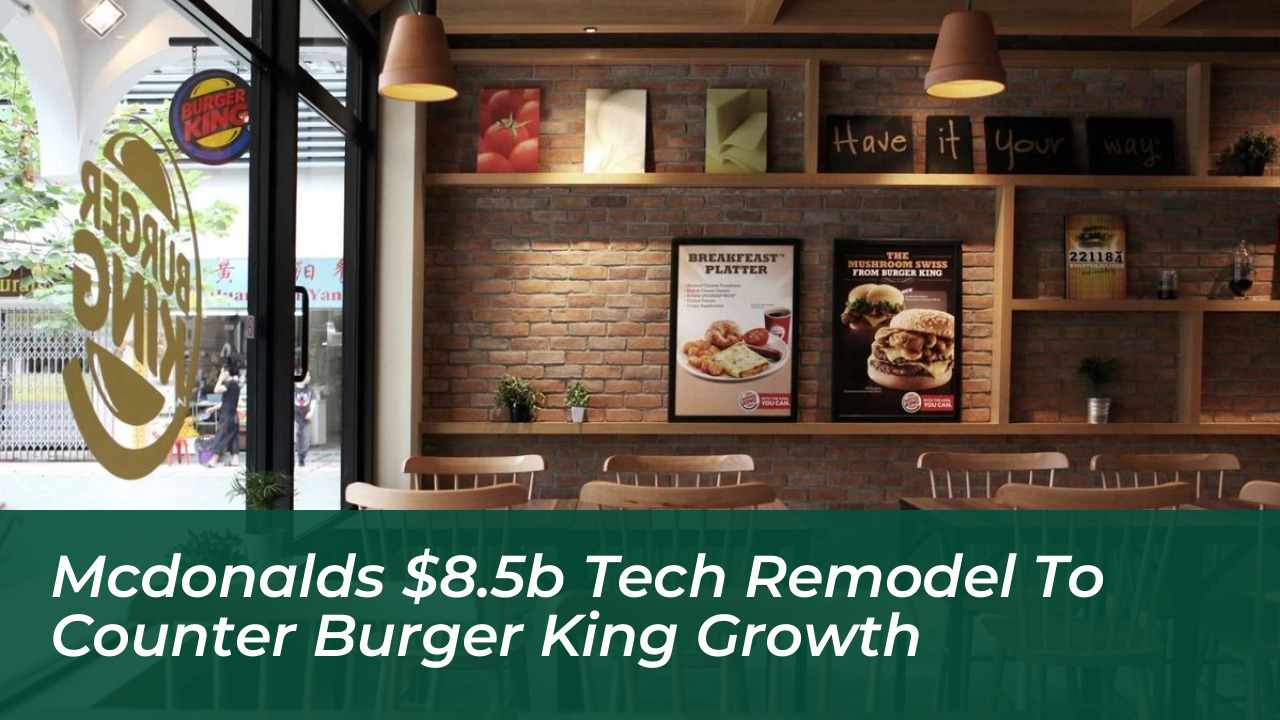
Fast food industry dynamics shift rapidly as major restaurant chains race to capture changing consumer habits and defend their market share. McDonald’s announced a sweeping multiyear capital deployment framework during its Chicago investor day, committing up to $8.5 billion through 2036 to modernize its global restaurant footprint. This strategic pivot focuses heavily on the McDonald’s Next initiative, which combines artificial intelligence, automated kitchen workflows, and menu diversification to secure long-term operational dominance.
- The Competitive Landscape and Pressure from Burger King
- Analyzing the Recent Sales Gap
- The Multiyear Capital Deployment Framework
- ArchIQ and the Artificial Intelligence Overhaul
- Automating the Drive-Thru with Archy
- Operational Efficiencies and Labor Redallocation
- Financial Mechanics and Franchisee Economics
- Cost Structures and Corporate Support
- Return on Investment and Cash Flow Projections
- Menu Diversification: Conquering Chicken and Beverage Categories
- Expanding the Global Chicken Footprint
- Upgrading the Beverage and Coffee Experience
- Adapting to Consumer Health Trends and GLP-1 Adoption
- Addressing Pharmaceutical Weight-Loss Realities
- Protein-Forward Product Pipeline
- Elevating Human Connection Through the Make It Golden Initiative
- Balancing Automation with Hospitality
- Corporate Margins, Retail Media, and Future Outlook
- Margin Expansion and G and A Optimization
- Scaling the Retail Media Network
- Frequently Asked Questions
- What is the total financial investment behind McDonald’s Next?
- How does ArchIQ improve restaurant operations?
- What menu changes are coming to McDonald’s?
- Why is McDonald’s making this strategic pivot now?
The golden arches face intense market pressure from competitors who are capturing consumer attention with aggressive product launches and value positioning. By deploying artificial intelligence tools like Archy and expanding into high-growth food categories, the corporation aims to reverse slowing sales growth and build a modern operational foundation.
The Competitive Landscape and Pressure from Burger King
Analyzing the Recent Sales Gap
Second-quarter financial results revealed U.S. same-store sales growth lagging at a modest 0.8 percent. Meanwhile, primary competitor Burger King posted an impressive 8.5 percent expansion during the same timeframe. This stark performance gap highlights market share vulnerabilities across core product categories that historically generated steady revenue for the golden arches.
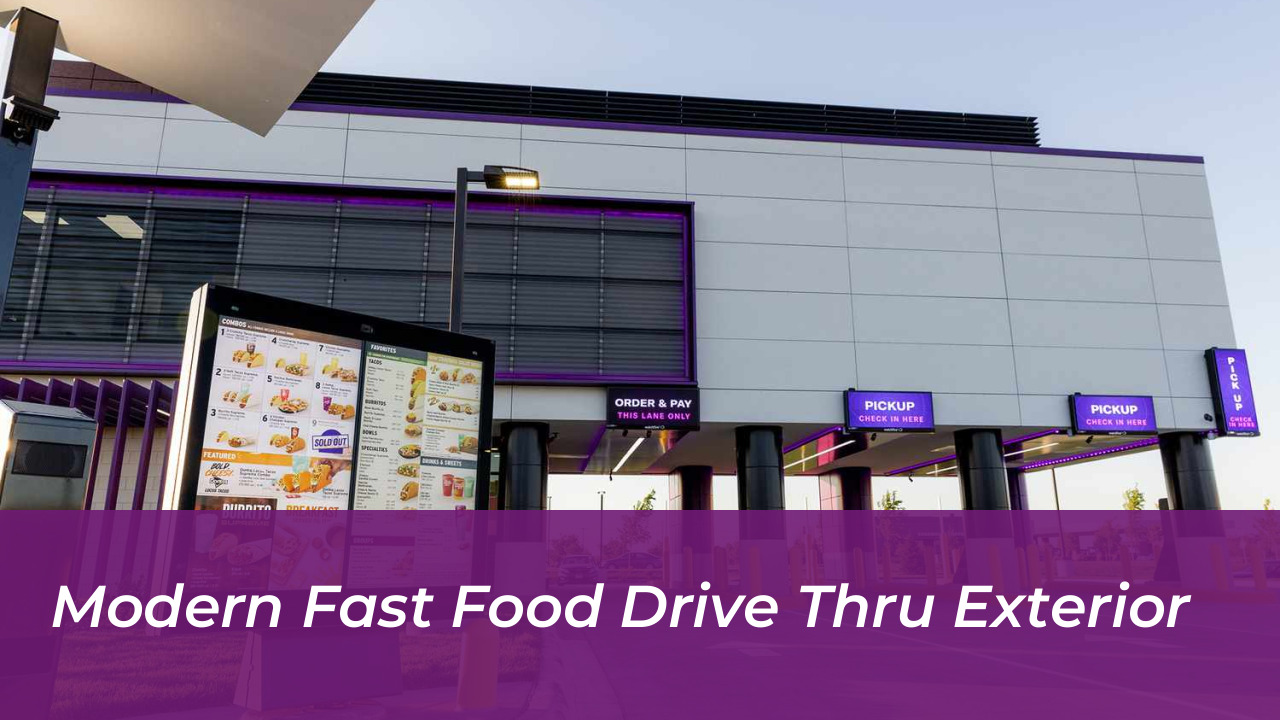
Executive leadership recognizes that slow transaction growth requires structural intervention rather than temporary promotional discounting. The competitive landscape demands faster service speeds, higher order accuracy, and a more engaging physical environment to pull foot traffic away from rival chains.
The Multiyear Capital Deployment Framework
To close this performance gap, the corporation committed up to $8.5 billion through 2036 for modernization efforts. Approximately $5 billion of this investment will reach franchisees directly by 2030 through a structured combination of rent relief and direct capital support. This proactive financial commitment injects necessary liquidity into the system, ensuring that individual operators can upgrade their stores without crippling debt.
The urgency behind modernizing the global restaurant footprint stems from rising labor costs and shifting consumer expectations. Franchisees need physical and digital upgrades to remain competitive in a landscape where convenience defines customer loyalty.
ArchIQ and the Artificial Intelligence Overhaul
Automating the Drive-Thru with Archy
At the center of this technological push is ArchIQ, a proprietary artificial intelligence platform powered by Google technology. ArchIQ automates multiple operational layers within the restaurant, starting with the drive-thru lane. The AI-powered voice assistant, named Archy, handles drive-thru orders in both English and Spanish with remarkable accuracy.
Beyond simply taking orders, Archy utilizes smart suggestive selling algorithms based on weather, time of day, and inventory levels. These automated recommendations systematically increase average check sizes without relying on human employees to upsell every customer.
Operational Efficiencies and Labor Redallocation
Automated order-taking saves an estimated 50 labor hours per restaurant week, freeing up valuable time for restaurant teams. This labor is reallocated toward hospitality and food preparation, ensuring that service remains warm and efficient. Advanced predictive tools also monitor stock levels, automate supply chain tracking, and handle algorithmic shift scheduling based on historical traffic patterns.
Integrated smart scales assess order weights to ensure food accuracy before handing items to customers. By eliminating common packing errors, restaurants reduce waste and improve customer satisfaction metrics across every shift.
Financial Mechanics and Franchisee Economics
Cost Structures and Corporate Support
Implementing these technological upgrades requires significant capital from operators. A standard U.S. drive-thru restaurant remodel costs between $400,000 and $450,000, while the incremental technology and kitchen upgrades tied to McDonald’s Next add roughly $800,000 per location. To offset these expenses, the corporation is funding $5 billion in direct support and rent relief through 2030.
Corporate financial models project that efficiency gains will generate approximately $100,000 in incremental annual cash flow for the average U.S. restaurant. Executives estimate that franchisees will recover their capital investments within a four-year window, delivering projected returns in the mid-to-high 20 percent range.
Return on Investment and Cash Flow Projections
Despite these favorable projections, historical friction regarding capital expenditure mandates remains a challenge. During previous investment cycles, franchisee participation varied, with participation in recent under-$3 value menu initiatives reaching only about two-thirds of U.S. operators. Executive leadership remains confident that collaborative planning and clear unit-level economics will secure widespread buy-in for McDonald’s Next.
Clear financial visibility helps operators understand the long-term value of adopting automation and remodeling their dining rooms. When cash flow improvements materialize, hesitation typically transforms into enthusiastic systemwide participation.
Menu Diversification: Conquering Chicken and Beverage Categories
Expanding the Global Chicken Footprint
While beef remains a foundational category, holding roughly a 40 percent share of the $50 billion global beef market, future growth relies on expanding market share in chicken and beverages. The company aims to increase its global market share in both categories by 1.5 percentage points each by 2030. Chicken represents a massive global category worth approximately $130 billion, where McDonald’s currently captures about 20 percent of sales.
To compete directly with dedicated chicken specialists like Chick-fil-A, Popeyes, and Raising Cane’s, McDonald’s plans to pilot hand-breaded chicken items in U.S. restaurants. While hand-breading requires more time and precise fryer management than pre-formed patties, leadership believes the crispier exterior and enhanced flavor profile are necessary to capture market share.
Upgrading the Beverage and Coffee Experience
The global beverage market totals $230 billion, and McDonald’s currently commands a 10 percent share, ranking as the second-largest coffee player worldwide. The company is rolling out upgraded espresso machines, expanded cold-drink platforms featuring refreshers and crafted sodas, and customizable alternative milk options. Executives view beverages no longer as simple meal add-ons, but as primary drivers for customer visits.
New beverage equipment speeds up preparation times while expanding the menu to include trendy iced drinks and specialty coffees. This upgrade appeals directly to younger demographics who frequently purchase premium beverages throughout the afternoon.
Adapting to Consumer Health Trends and GLP-1 Adoption
Addressing Pharmaceutical Weight-Loss Realities
Shifting dietary habits, particularly the rising adoption of GLP-1 weight-loss medications, have raised investor questions regarding long-term fast-food demand. Internal consumer data shared by U.S. President Skye Anderson indicates that 84 percent of households featuring at least one GLP-1 user still frequent McDonald’s locations. Rather than viewing these pharmaceutical trends as a threat, leadership frames them as an opportunity to introduce protein-forward menu options.
Consumer behavior in this segment favors items that offer high protein content without excessive carbohydrates. Adapting the menu to meet these nutritional preferences ensures that health-conscious patrons maintain their routine visits.
Protein-Forward Product Pipeline
The product pipeline includes grilled chicken sandwiches and wraps, protein-rich egg bites for all-day menus, and nutritious grain and protein bowls. Expanded customization across breakfast, lunch, and dinner allows customers to tailor their meals to specific dietary goals.
These healthier additions diversify the menu beyond traditional burgers and fries. They provide a balanced offering that attracts fitness-focused consumers and families looking for lighter meal choices.
Elevating Human Connection Through the Make It Golden Initiative
Balancing Automation with Hospitality
Technology and food quality alone cannot guarantee market dominance. To solve execution inconsistencies, McDonald’s is launching Make It Golden, a multiyear training program for corporate employees, restaurant managers, and crew members. Rolling out globally, the initiative focuses on elevating human hospitality.
Global Chief People Officer Tiffanie Boyd emphasized that as automation increases across daily life, customer expectations for genuine, high-quality human interactions rise correspondingly. By automating repetitive backend tasks via ArchIQ, crew members gain the bandwidth to deliver superior customer service.
Corporate Margins, Retail Media, and Future Outlook
Margin Expansion and G and A Optimization
Beyond restaurant-level economics, McDonald’s targets an operating margin expansion into the low-to-mid 50 percent range by 2030, improving upon the 46.1 percent reported in 2025. General and administrative spending will decrease as a percentage of systemwide sales, dropping from an estimated 2.2 percent in 2026 down to 1.9 percent by 2030, driven largely by internal artificial intelligence implementations.
Optimizing corporate overhead allows the organization to reinvest savings into digital infrastructure and brand marketing. This disciplined financial approach strengthens corporate resilience against economic downturns.
Scaling the Retail Media Network
Additionally, the company is scaling a retail media network by leveraging digital drive-thru displays to sell targeted advertising space to third-party businesses. Tested across company-owned restaurants, this initiative creates a high-margin revenue stream that mirrors established retail media models.
Digital screens transform standard menu boards into dynamic advertising platforms during off-peak hours. This capability turns physical real estate into a profitable digital advertising network.
Frequently Asked Questions
What is the total financial investment behind McDonald’s Next?
McDonald’s is committing up to $8.5 billion through 2036, allocating approximately $5 billion by 2030 to support franchisees through direct capital assistance and rent relief.
How does ArchIQ improve restaurant operations?
ArchIQ is a Google-powered artificial intelligence platform that automates drive-thru ordering via an assistant named Archy, saves about 50 labor hours weekly, optimizes inventory, automates shift scheduling, and tracks order accuracy.
What menu changes are coming to McDonald’s?
McDonald’s is introducing hand-breaded chicken options, grilled chicken wraps, upgraded coffee systems with alternative milks, and protein-forward items like egg bites and bowls to capture health-conscious consumers.
Why is McDonald’s making this strategic pivot now?
The strategic shift follows second-quarter financial reports showing U.S. same-store sales growth lagging at 0.8 percent, trailing behind competitor Burger King’s 8.5 percent expansion during the same period.